Read below or open PDF version
- Pirelli & C. S.p.A. (“Pirelli”, PIRC.MI) is a €6.7 billion Italian tire maker and Formula 1’s exclusive tire supplier. The company has told investors it would halt investment in Russia “except for spending linked to security” after the start of Russia’s invasion of Ukraine.
- Unbeknownst to investors, Pirelli generates a greater share of its profits from Russia than it ever did. According to Russian filings we obtained, about 10% of Pirelli’s profits come from its Russia business.
- Pirelli’s Kirov tire factory provides infrastructure to a neighboring Russian state-owned tire plant that produces tires for Russian military vehicles, including platforms used to launch nuclear warheads and vehicles widely used in Russia’s invasion of Ukraine.
- Through a 25% corporate stake in Pirelli’s two Russian factories, and through the Kirov plant’s location on the same industrial complex as a Russian state-owned tire factory, Russia is positioned to gain access to Pirelli’s high-tech tire production technology, a class of technology essential to the Russian military.
- Russian state influence over Pirelli in Russia may run deeper than its formal stake suggests. The only other minority shareholder, JSC Panaland, holds 9.995% of Pirelli Tyre Russia, uses the Research Institute’s domain for its corporate email, and is incorporated at the same address as the entity through which Russia holds its stake. Two people connected to Panaland have close ties to Rostec.
- When Pirelli co-owned the Kirov Tire Factory with Rostec, Russia’s state-owned defense conglomerate, the plant produced tires for the Russian military. That military business was formally transferred to full Russian state ownership, but the plant sits next to Pirelli’s own Kirov factory and, according to Russian local-government publications and our investigation, continues to rely on Pirelli’s infrastructure to produce tires for Russian military vehicles, including the RS-24 Yars nuclear-warhead launcher.
- Pirelli once even enjoyed a monopoly on supplying the Russian military. Russian Federal Antimonopoly Service decided that the Ministry of Defense violated Russian law by limiting a public tender to specific tire models that, within Russia, were produced only at Pirelli’s factories.
- Other tire manufacturers Nokian, Michelin, Continental, Goodyear, and Bridgestone all sold their Russian operations after the start of the invasion of Ukraine and accepted major write-downs as well as negative stock impacts. Pirelli is the only Western tire maker still manufacturing in the country.
- Pirelli invested €470 million in Russia. Because of the applicable Russian laws, Pirelli would recover only a fraction of that on any exit.
- Pirelli seems to have close relationships with the Kremlin. In May 2014, two months after Russia’s annexation of Crimea, Rosneft chief and longtime Putin ally Igor Sechin bought 13% of Pirelli for €552.7 million, signing the documents in Putin’s presence. Pirelli’s 2017 calendar featured Anastasia Ignatova, the stepdaughter of Rostec chief Sergey Chemezov; Pirelli’s annual calendar is a prestigious high-fashion cultural touchstone, and EU officials cited Ignatova’s appearance in it as part of the evidence supporting their refusal to lift sanctions on her.
- We found out that Pirelli has a dealer in the Russian-occupied Donetsk listed on its website, which is an apparent violation of the EU sanctions. Based on our communications, the dealer still operates and serves the Russian military invading Ukraine.
- When we asked to buy tires for a Russian military unit fighting in Ukraine, Pirelli’s Russian hotline shared a non-public email for us to put an order.
Content
Introduction
Pirelli & C. S.p.A. (“Pirelli”, PIRC.MI) is an Italian tire manufacturer and Formula 1’s exclusive tire supplier.
The Italian tire maker spent years meticulously crafting its image of a premium-quality tire house associated with sports, innovations and a “great tradition of Italian design.” Pirelli had sizable operations in Russia, as many industry peers did. In reaction to Russia’s invasion of Ukraine, Nokian, Michelin, Continental, Goodyear, and Bridgestone exited their Russia businesses, having to accept major write-offs. Pirelli, on the other hand, stated that it would halt any further investment in Russia. While Pirelli remains the only Western tire manufacturer with meaningful operations in Russia, general investor perception seems to be that Russia is a rather irrelevant part of Pirelli’s current operations. Our research portrays a different picture.
Russian filings imply that 10% of Pirelli’s net profits come from its Russian operations. Pirelli itself reports only that about 6% of its revenues come from the Russia, Middle East, Africa, and India region combined, leaving an apparently misleading impression about the real economics.
Looking at the Pirelli’s reporting of the Russian operations alongside other regions, a former Big Four auditor with 17 years’ experience in finance, including engagements at Russian subsidiaries of Western multinationals, told us, “In my experience, disclosure that narrows without explanation almost always tells you the underlying numbers moved in a direction management would prefer not to highlight.”
We suspect this growth in the Russian business may be driven by demand from the Russian invasion of Ukraine. Through our undercover investigation, for instance, we found that the tire center in occupied Ukraine listed on Pirelli’s website serves the Russian military, and that Pirelli’s employees, aware that the buyer was purchasing tires for Russian forces fighting in Ukraine, shared contact details for placing an order.
We are concerned that Pirelli’s relationship with the Russian state may pose security risks for the West. According to our research, Pirelli’s Kirov factory operates in an industrial complex that also houses a Russian state-owned tire producer controlled by a military research institute. That same institute holds a 25% stake in much of Pirelli’s Russian business. The only other minority shareholder, with a 9.99% stake, appears to have very close ties to the institute. Pirelli seems to share critical infrastructure with the institute’s factory, and we are concerned that, through this proximity and its corporate ties to the Russian state, Russia could gain access to technology that is mission-critical for advanced military equipment.
The True Size of Pirelli’s Russian Business
Pirelli’s public disclosures imply that its Russian operations are reported as much smaller than what is suggested by the Russian filings.
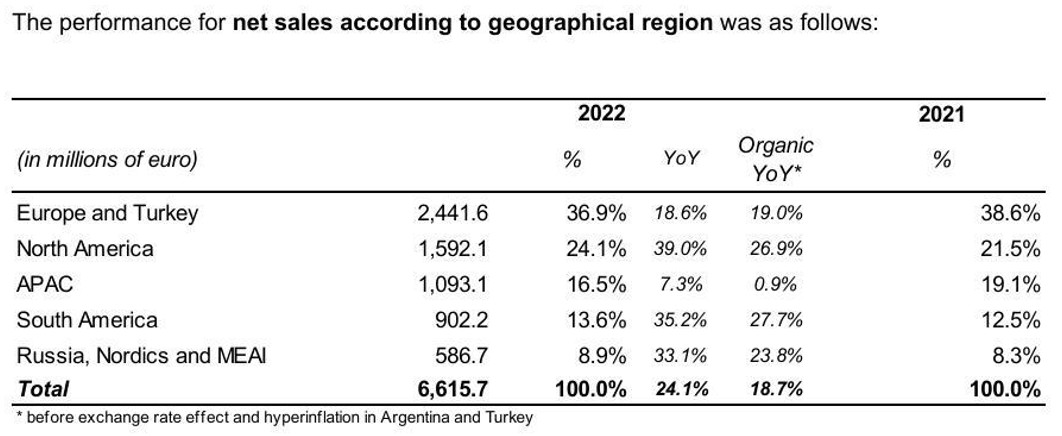
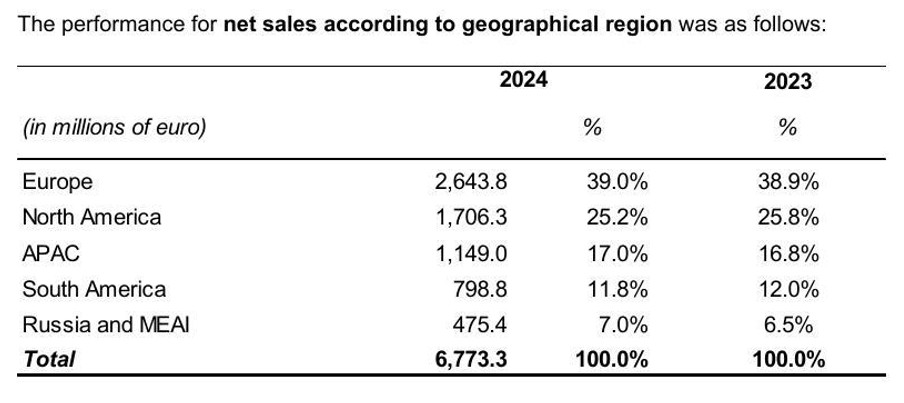
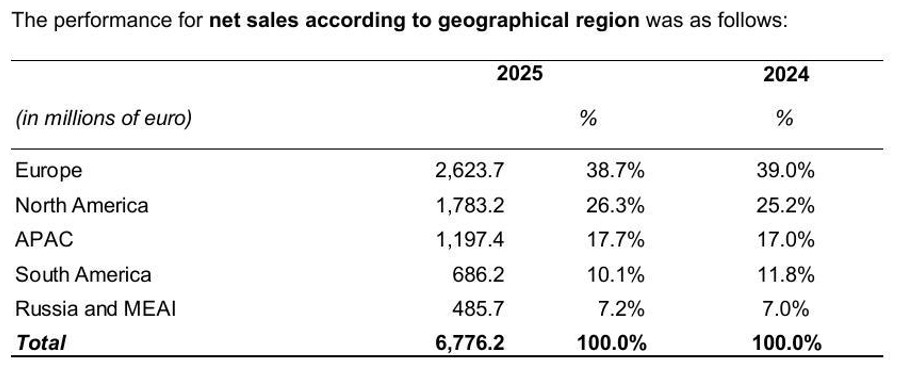
Pirelli’s net sales by geographical region, as shown in the annual reports. Source: Pirelli
Pirelli discontinued its standalone “Activities in Russia” disclosure from FY 2023 onward. In its FY 2024 annual report, Russia was folded into a broader “Russia and Middle East, Africa and India” line item. The grouping seems geographically and operationally incoherent, as Pirelli has two tire factories in Russia and none operating in the Middle East, Africa, or India.
We found the Russian filings for the relevant entities. The filings show that profit contributions from Russia are meaningfully higher than expected at 10% of the company’s overall net income.
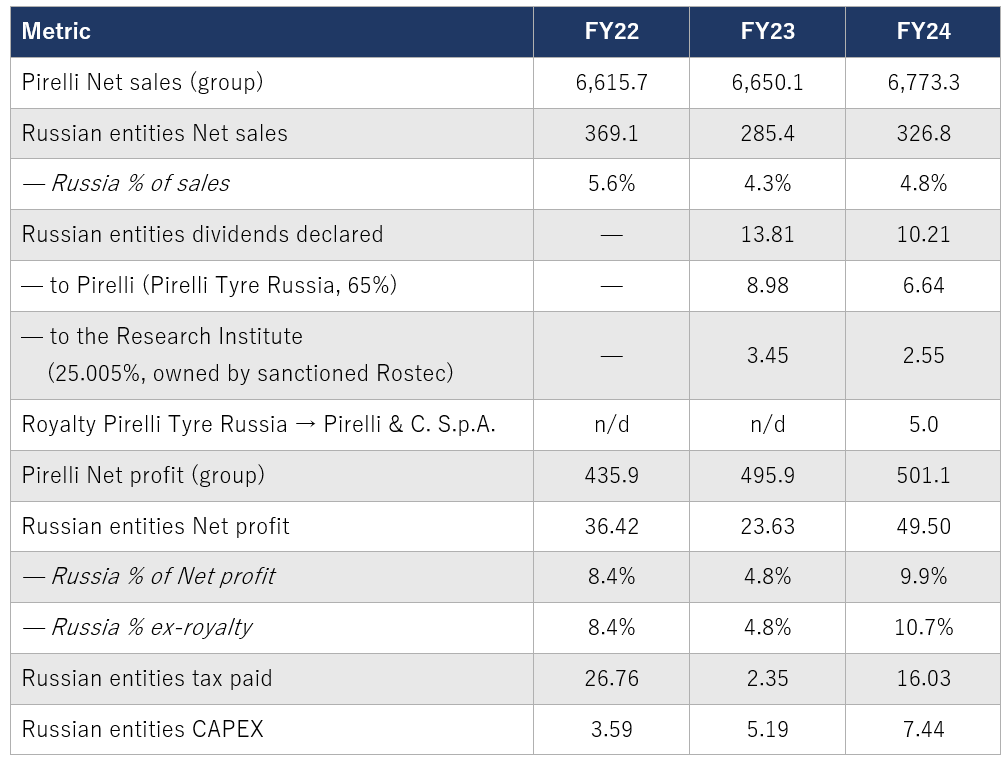
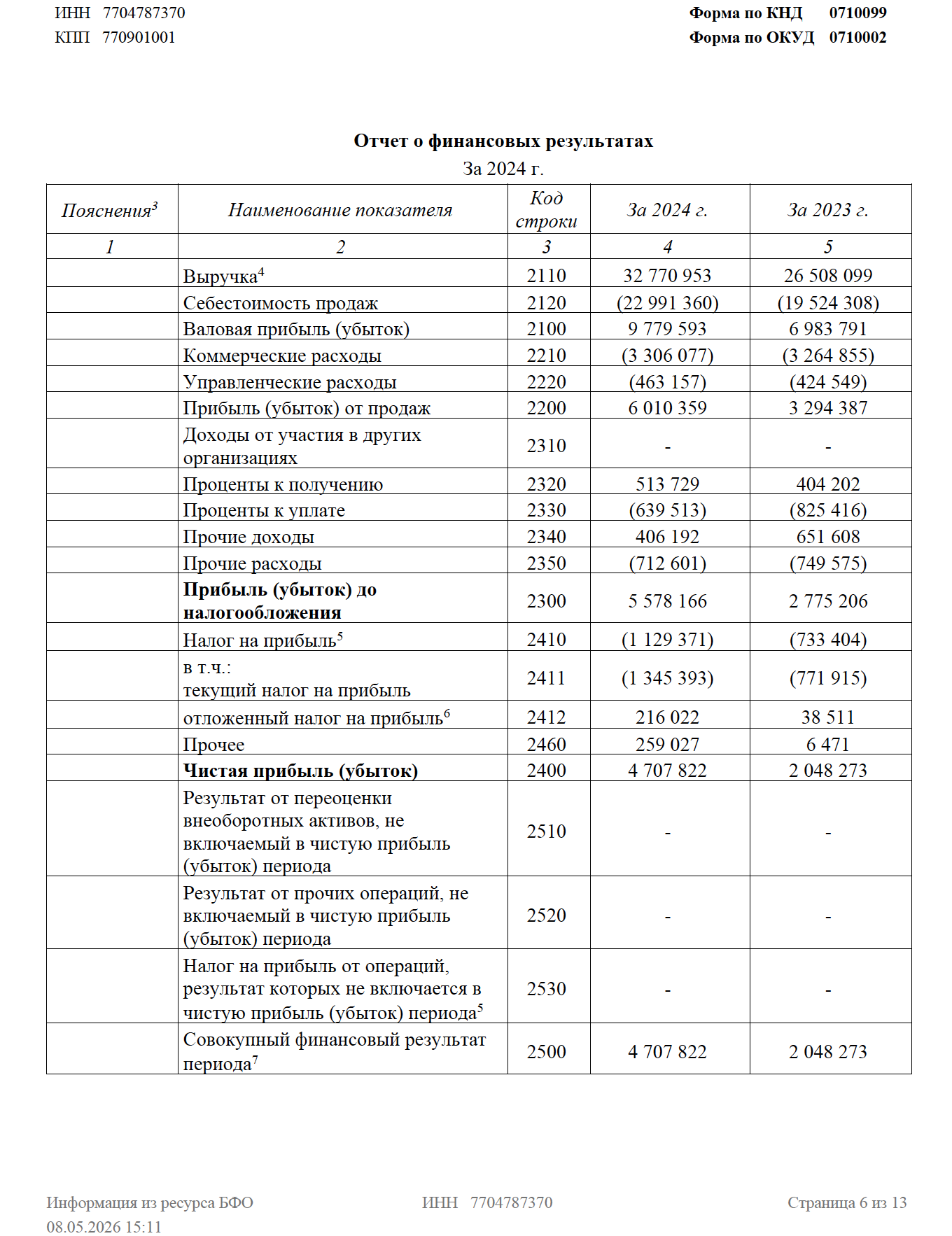
Financial statements of Pirelli Tyre Russia from 2024. See the Appendix for the full financial records under grizzlyreports.com.
“We have distribution in Russia that is consistent [with] what we said since day one (…) producing enough cash to pay wages, salaries, and social security,” then-CEO Marco Tronchetti Provera told investors in August 2022.
The reality seems to be that Russia is a much more important driver of Pirelli’s financials than the company discloses to investors.
Pirelli’s Competitors Exited Russia Cleanly, Leaving Pirelli as the Only Western Manufacturer
Nokian, Michelin, Continental, Goodyear, and Bridgestone exited Russia after Moscow’s full-scale invasion of Ukraine, leaving Pirelli as the only Western tire maker still manufacturing in the country. None of those companies recovered most of what they had invested.
In 2023, Finish tire maker Nokian Tyres closed the sale of its Vsevolozhsk plant for €286 million, down from a €400 million price the two sides had agreed on only months earlier, after Moscow introduced a rule requiring foreign sellers from “unfriendly” jurisdictions to discount their assets by at least 50% and remit 10% of proceeds to the federal budget. The same year, German tire maker Continental sold its Kaluga tire plant and associated ContiTech operations for €78.0 million, against an investment that the regional government in 2018 confirmed to have exceeded €250 million.
Nokian’s stock price took a dive when the company announced that it was selling its Russian assets. In January 2022, the share price was over €34 and has not recovered yet.
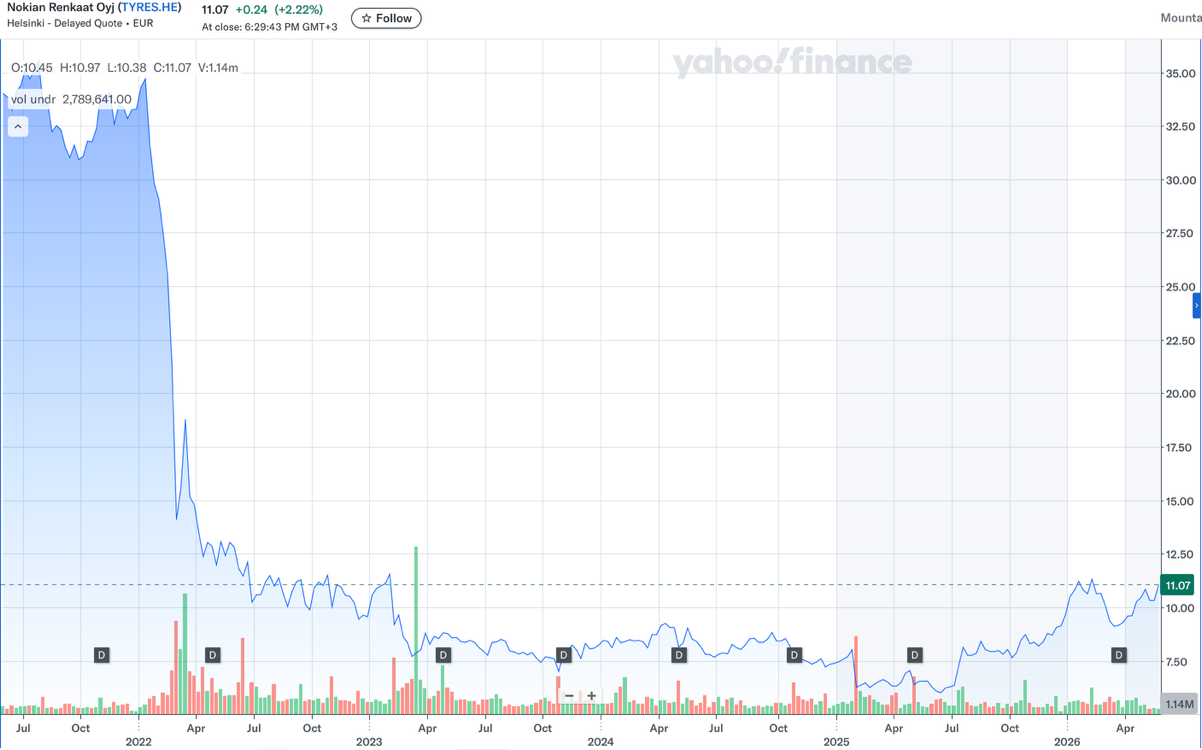
Nokian’s share price performance over the past five years. Source: Yahoo Finance
According to a July 2023 presentation by Nadezhda Stepanova, Head of Supply Chain for Russia and CIS at Pirelli Tyre Russia, Pirelli had invested €470 million in Russia.
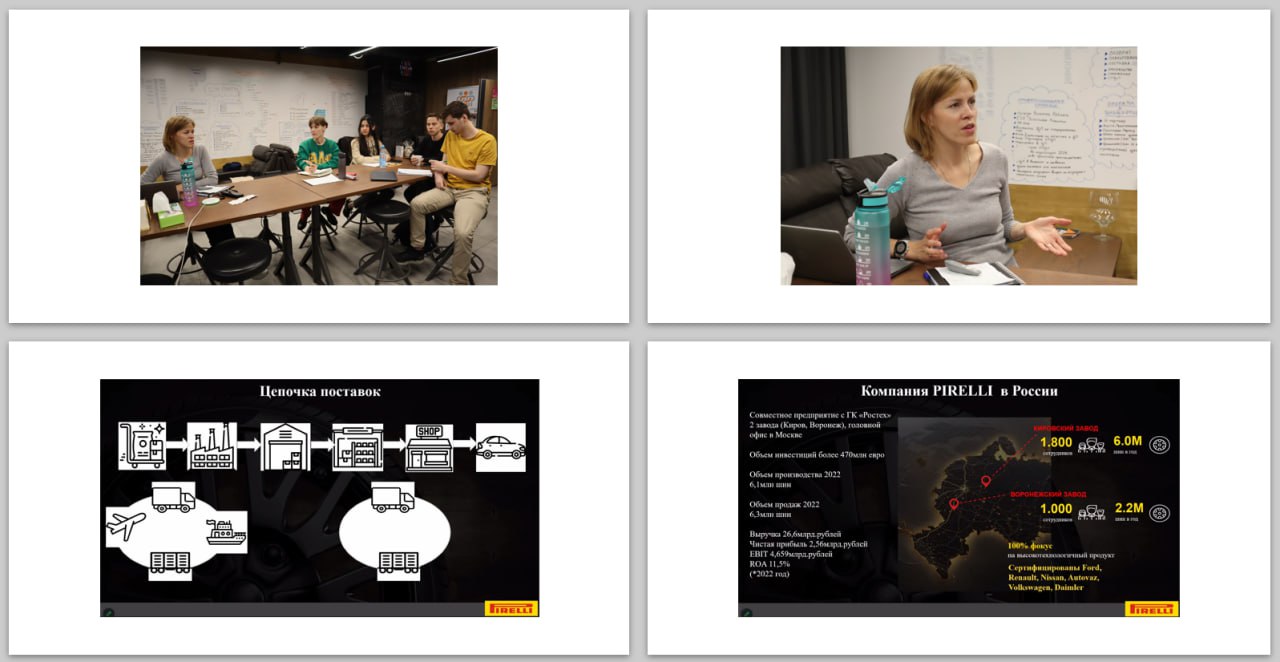
July 2023 Presentation by the Pirelli’s Head of Supply Chain for Russia and the CIS that showed that Pirelli invested €470 million in Russia. Source: Все о цепях поставок
Pirelli’s 2022 and 2024 annual reports record cumulative write-downs of about €40 million on Russian property, plant, and equipment from FY22 through FY25, equal to roughly 24% of the €169.3 million fixed-asset base at the start of the period.
Pirelli’s impairment looks modest set against the heavily discounted sales by Nokian Tyres and Continental. Pirelli now operates under even harsher Russian rules that impose a mandatory 60% discount to appraised market value and a 35% federal-budget contribution on any exit by an “unfriendly state” investor. Italy is, alongside Finland and Germany, on the list of the “unfriendly states”.
It seems to us that Pirelli has avoided exiting Russia because doing so would have meant taking a meaningful write-off as well as losing a significant profit stream. Competitors did the right thing and bit the bullet by exiting Russia.
Pirelli’s Proximity to Russia’s Industrial War Complex
Pirelli’s Kirov factory shares premises and infrastructure with JSC Scientific Research Institute of Rubber and Polymer Products (“the Research Institute”), a Russian R&D institute fully owned by sanctioned Russian state corporation Rostec. The Research Institute also holds a 25.005% stake in Pirelli Tyre Russia, whose assets include Pirelli’s factories in Kirov and Voronezh.
The Research Institute’s actual influence may be greater: the only other minority shareholder, JSC Panaland, holds 9.995% of Pirelli Tyre Russia and uses the Research Institute’s domain for its corporate email, as listed by the Russian corporate data service Checko. Panaland also has the same incorporation address as the Research Institute: 42 Krasnobogatyrskaya Street, Moscow.
Panaland is connected to two people who have close ties to Rostec.
Vasilios Ziakas, named in Panaland financial statements as the ultimate beneficial owner of the Cyprus entity Panaland Limited, whose 9.995% stake was domesticated into the Russian Panalend-K entity in August 2025, is known as a “Chemesov’s [Rostec CEO] man” and used to be tied to Samara’s FC Krylia Sovetov.
Yuri Makeev, the formal minority participant in the Russian Panaland entity, is identified in Rostec’s own materials and in the Kirov regional government’s readout as an advisor to the deputy general director of Rostec for economics and finance, named in that capacity precisely in the context of the Pirelli Kirov Tyre Plant venture, and per further reporting he ran FC Krylia Sovetov.

Panaland’s address as shown in the Russian State Information Resource of Accounting and Financial Reporting. Source: State Information Resource of Accounting and Financial Reporting
The Research Institute’s address and email address, as shown on its website. Source: Research Institute
The Rostec-owned Research Institute is not named in any Pirelli annual report. The EU and the United States sanctioned Rostec in 2022. Rostec manages hundreds of enterprises that produce more than half of Russia’s weapons and military equipment and support the development, manufacture, and export of high-tech products for Russia’s military-industrial complex. Rostec’s head is a longtime friend of Putin from their time in the KGB.
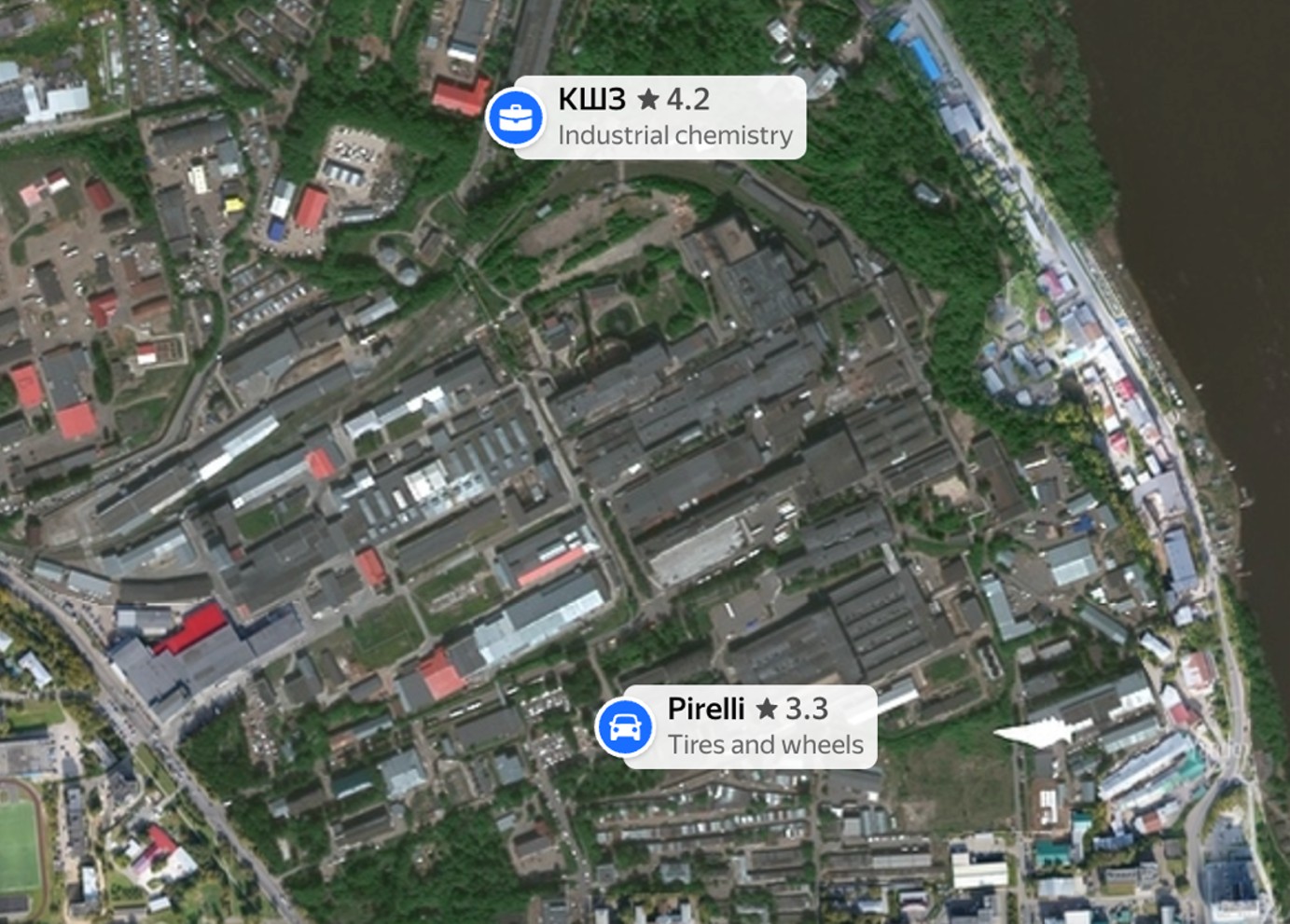
Top: the Research Institute’s tire factory. Bottom: the Pirelli’s Kirov tire factory. Source: Yandex Maps.
The Research Institute produces tires for the Russian military and has an explicit goal of scaling up production of large-format tires for military equipment, according to the Kirov Tire Factory’s hiring website.
A Russian Telegram group also posted in late 2025 that the Research Institute had donated tires for military vehicles used in Russia’s invasion of Ukraine. The Institute has also developed experimental tires for trucks operating on what the Russian source calls the “line of combat contact.”
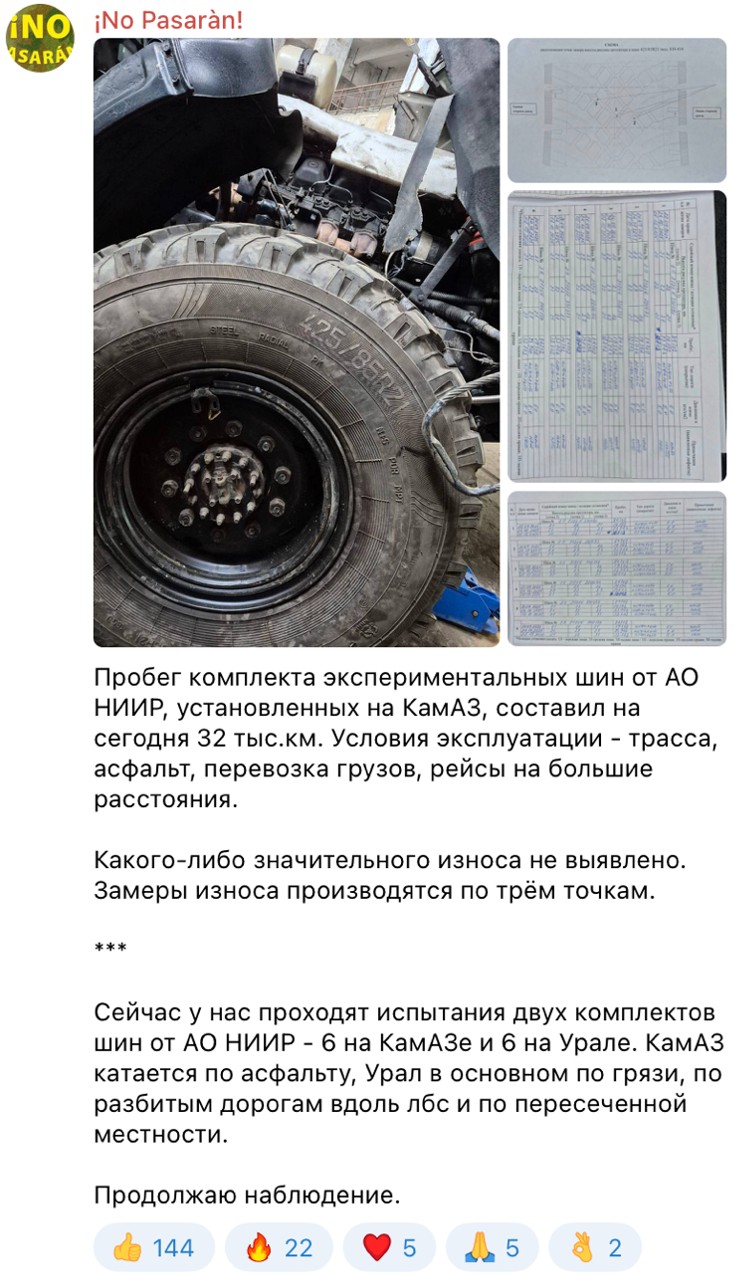
“The mileage of the experimental tire set from JSC NIIR, installed on a KamAZ, has reached 32,000 km to date. Operating conditions: highway, asphalt, freight haulage, long-distance routes. No significant wear has been identified. Wear measurements are taken at three points. *** We are currently running tests on two tire sets from JSC NIIR — 6 on a KamAZ and 6 on a Ural. The KamAZ operates on asphalt, while the Ural runs mainly on mud, on torn-up roads along the line of contact [the battlefield in Ukraine], and across off-road terrain. Continuing observation.” Translated from Russian by Grizzly Research. Source: ¡No Pasarán!
Pirelli is also fine with hiring veterans of the Russian invasion of Ukraine.
Our undercover analyst called HR at Pirelli’s Kirov factory posing as a member of the Russian military currently fighting in Ukraine whose contract would end soon and who wanted to move to Kirov for work. The analyst several times emphasised that they have a criminal conviction in Ukraine for the Bucha massacre, referring to the killings in Bucha, Ukraine where Russian forces committed some of their worst atrocities during the full-scale invasion.
It did not seem to bother Pirelli’s HR.
HR then told us Pirelli has recently hired veterans of the Russian invasion of Ukraine and that, despite the conviction in Ukraine, the usual hiring procedures would apply. They then listed the documents needed to apply for and shared the latest vacancies.
Shocked by the results of the call, we went further and called Pirelli’s Russian hotline, again posing as a member of the Russian military, and requested to purchase tires for our unit. The person who answered told us they do not take orders by phone but shared an internal email address where we could place our order.
The Adjacent Research Institute Seems Unable to Operate as a Standalone
Facility Without Pirelli’s InfrastructureThe adjacent Research Institute plant may not be able to operate as a standalone facility without Pirelli’s infrastructure.
In 2020, the Kirov Tyre Plant’s VKontakte group acknowledged that it and the Pirelli plant are interdependent “in some aspects,” while maintaining that the two remain separate entities.
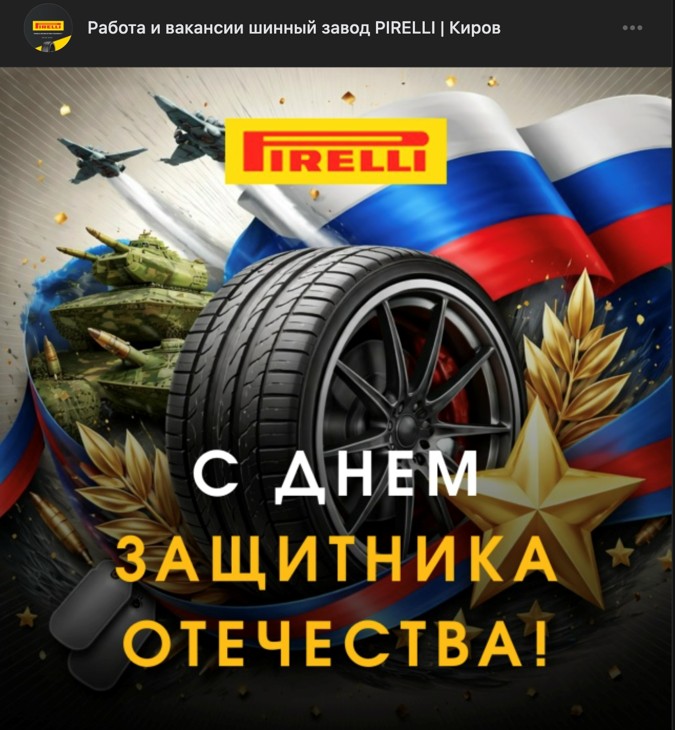
The picture above reads in Russian, “Happy Defender of the Fatherland Day!” Source: Работа и вакансии шинный завод PIRELLI | Киров (Pirelli’s Kirov Factory group in the Russian social media)
Official Russian documents show that it would be very hard if not impossible for the Research Institute’s factory to function if not for the infrastructure of Pirelli.
A 2023 Russian arbitrage court decision shows that the Research Institute’s factory received thermal energy through pipes running from Pirelli’s plant, leaving it dependent on Pirelli’s infrastructure for tire vulcanization.
That dependency appears to extend beyond heat.
An official Kirov regional government document on electricity consumption lists Pirelli’s Kirov factory and the Research Institute’s factory together on a single combined line, while every other consumer in the table is listed separately. The combined entry suggests that the two facilities may also be operationally interdependent, or at least jointly connected, for electricity supply.
In its vacancies, the Research Institute mentions that its workers can enter their workplace through Pirelli’s factory entrance.
The Research Institute’s factory appears to do little, if any, public marketing. One plausible explanation is that it relies on demand from the Russian military following the invasion of Ukraine.
For instance, the Kirov Tire Factory’s website lost its domain, and in February 2026 the domain was used to sell drugs. Yet the Kirov Tire Factory name and logo are still used for hiring. As of June 2026, the Research Institute does not appear to maintain an active website for its Kirov Tire Factory.
Important Military Equipment is Produced in Kirov
Under Pirelli’s co-ownership, the factory produced tires for Russian military vehicles, including the RS-24 Yars nuclear-warhead launcher, the Tigr armored vehicle, the BTR-82AM, and the BTR-60P. The Tigr armored vehicle, the BTR-82AM, and the BTR-60P have all been used in Russia’s invasion of Ukraine.
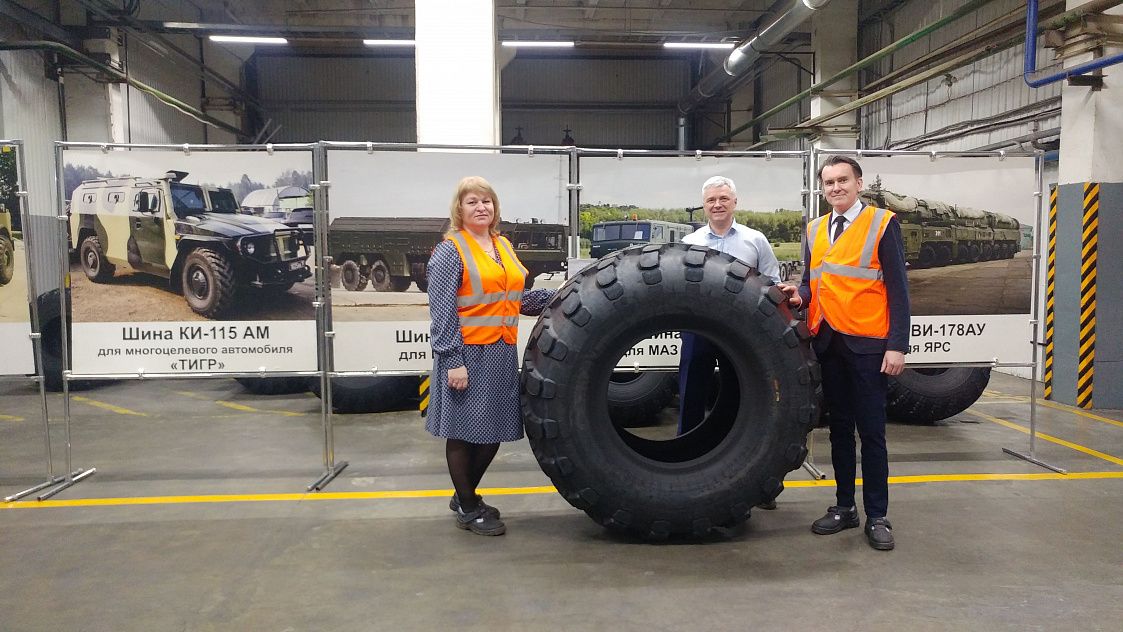
Banners showcasing Russian military vehicles that use tires produced by the Kirov Tire Factory, while still co-owned by Pirelli. Source: Rostec, November 19, 2019.
In a November 2019 display promoted by state conglomerate Rostec, the Kirov Tire Factory showcased tires used on some of Russia’s leading military vehicle platforms, ranging from the Tigr armored vehicle, shown at top left, to the MZKT transporter that carries the RS 24 Yars intercontinental ballistic missile, shown at top right.
We called the Research Institute to ask whether the tire models shown in the photo above could be purchased. According to the employee who answered, the VI-178AY tire, shown at top right as used by a Russian nuclear-warhead launcher, is “in production” and used “exclusively by the Strategic Rocket Forces,” which control Russia’s land-based intercontinental ballistic missiles. It can be bought only with authorization from the Russian Ministry of Defense, which we were invited to send to an internal email address they shared with us.
The employee gave the same instructions for the K115-AM tire, shown in the photo above on a Tigr military vehicle, telling us to obtain authorization from the Ministry of Defense and send it to the same address.
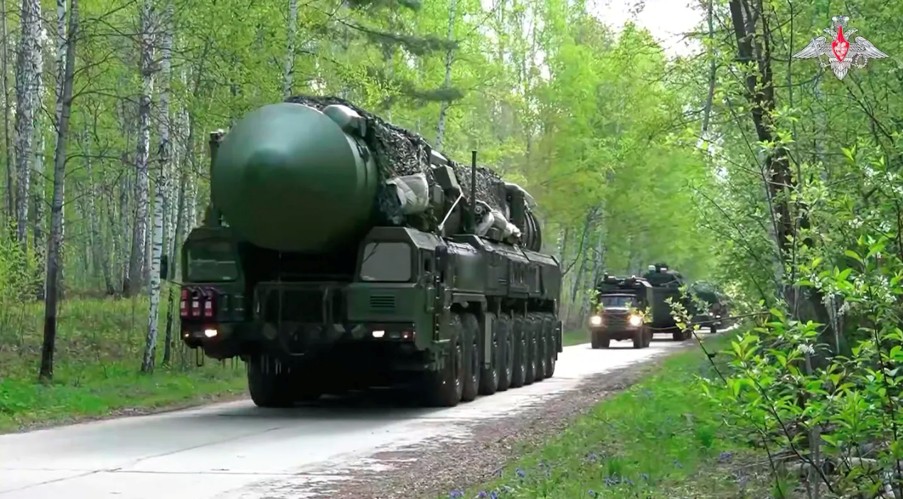
A Yars intercontinental ballistic missile showed during drills by Russia’s nuclear forces in Belarus in May 2026. Source: Russian Defense Ministry Press Service.
Before Russia restricted public disclosure of military procurement in 2018, public records provided visibility into the Kirov Tire Factory’s role in supplying the Russian military. Those records show that the Kirov Tire Factory, in which Pirelli then held a stake, participated in public procurement for Russia’s Ministry of Defense and used to win public tenders organized by the Research Institute.
Pirelli once seemed to enjoy a monopoly for supplying the Russian military. Russian Antimonopoly Service held that the Ministry of Defense violated Russian law by limiting a public tender to specific tire models that, within Russia, were produced only at Pirelli’s Kirov and Voronezh factories.
In March 2025, the authorities of the Kirov Oblast published photos from a visit to the Kirov Tire Plant indicating that the factory has continued to produce tires for the Russian military. The photos appear to show that the plant has continued to produce tires for Russian military platforms, those used by the Russian nuclear warheads’ launchers.
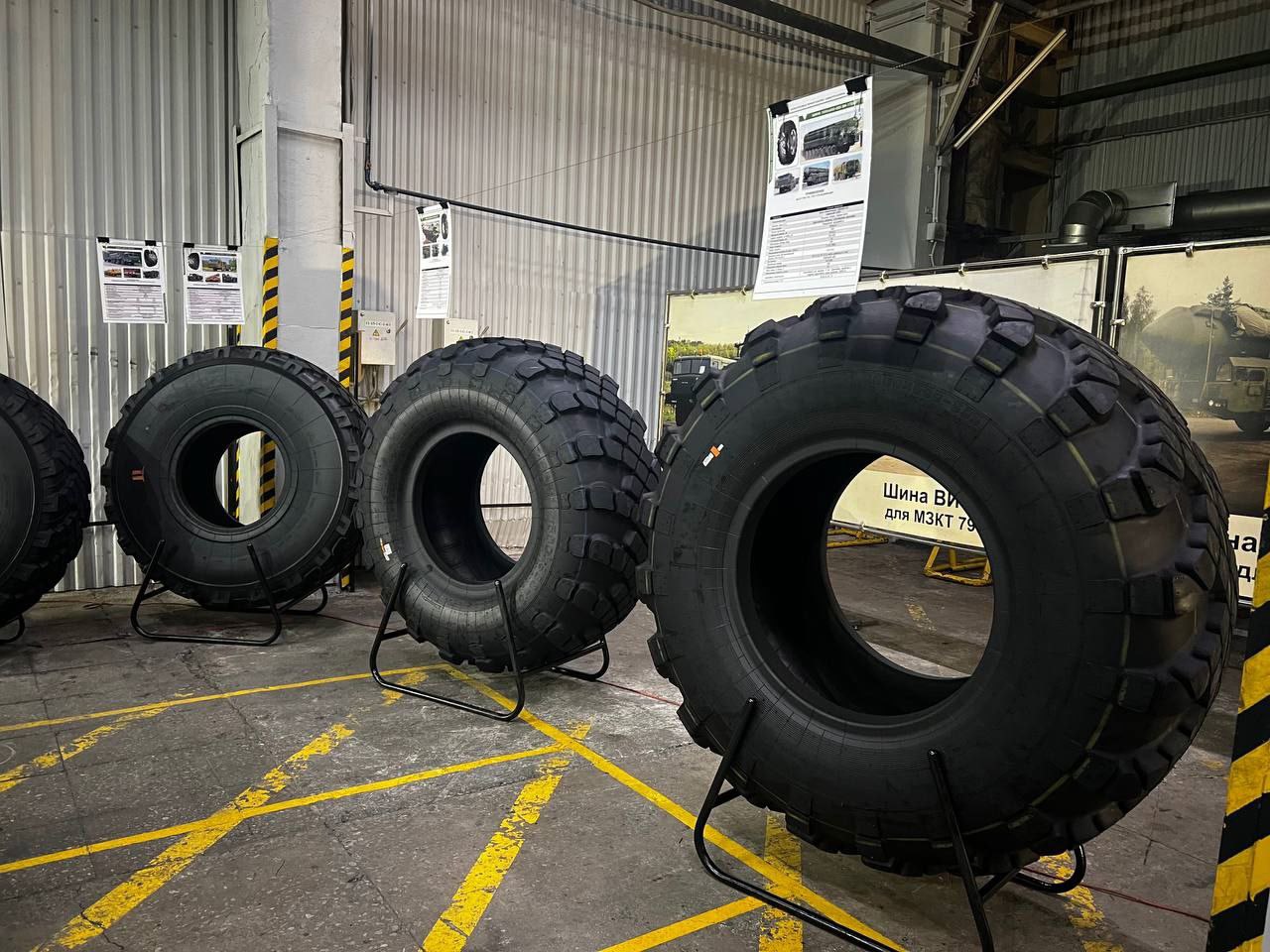
In March 2025, the Ministry of Industry, Entrepreneurship and Trade of Kirov Oblast published photos from a visit to the Kirov Tire Plant. Source: Ministry of Industry and Trade of Kirov Oblast.
Tires for Military Jets Will Now Come From the Kirov Tire Factory
So far Russia has struggled to produce tires for its military aviation, importing 85% of its aircraft tires, the Economic Security Council of Ukraine reports. Kirov Tire Factory seeks to change that.
In 2023, the Kirov City Council adopted a decision to allocate land for aviation-tire production roughly two kilometers from the entrance to Pirelli’s Kirov factory.
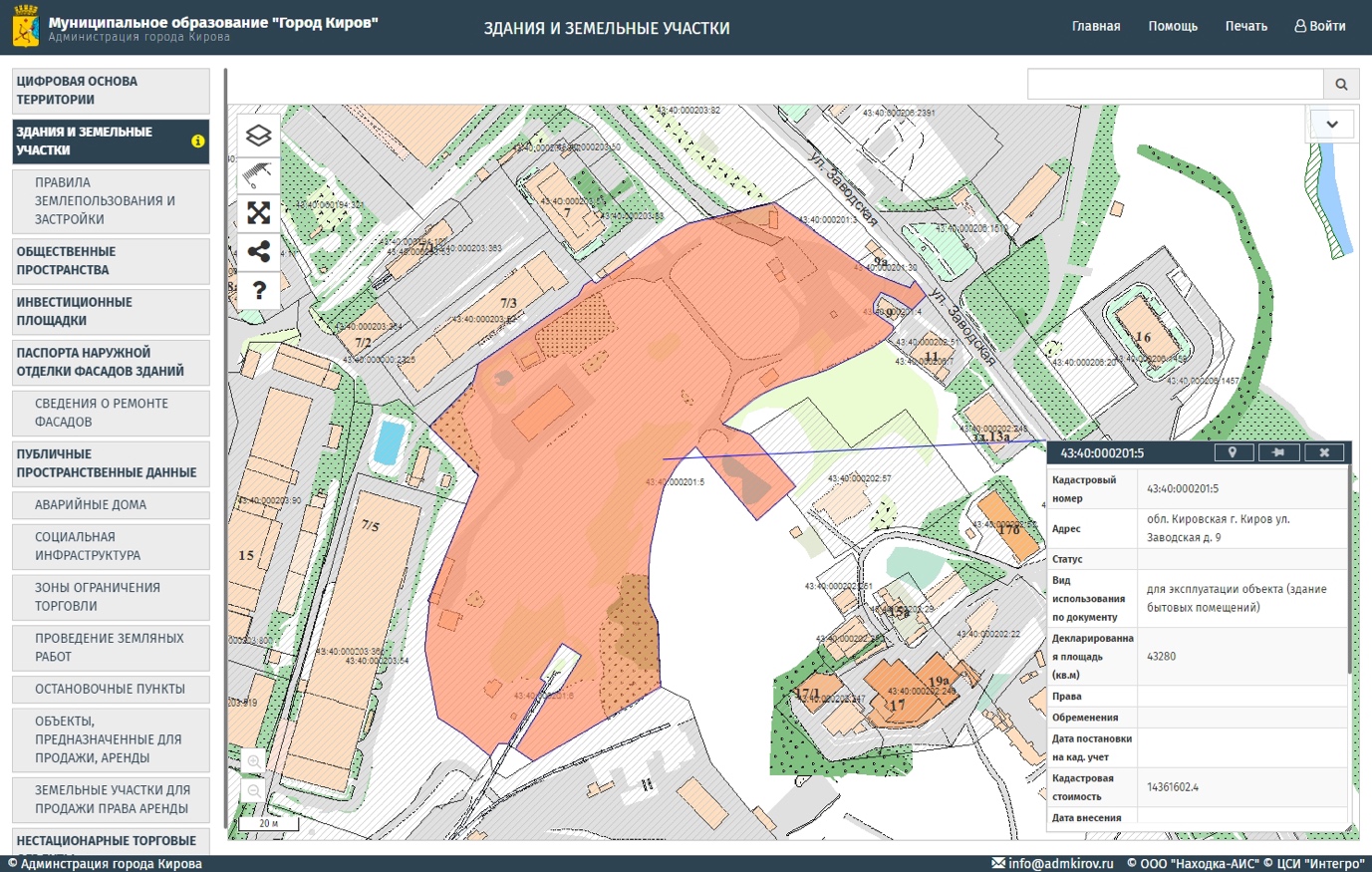
Cadastral map of Kirov, Russia showing a land parcel allegedly dedicated to production of the aviation tires. Source: Строим Киров
In August 2022, the chief executive of sanctioned Zavod Selmash visited the Kirov Tire Factory. The footage shows a land parcel, highlighted in yellow, apparently dedicated to aviation-tire production. That parcel appears physically attached to the Research Institute’s Kirov tire plant, which sits next to Pirelli’s factory.
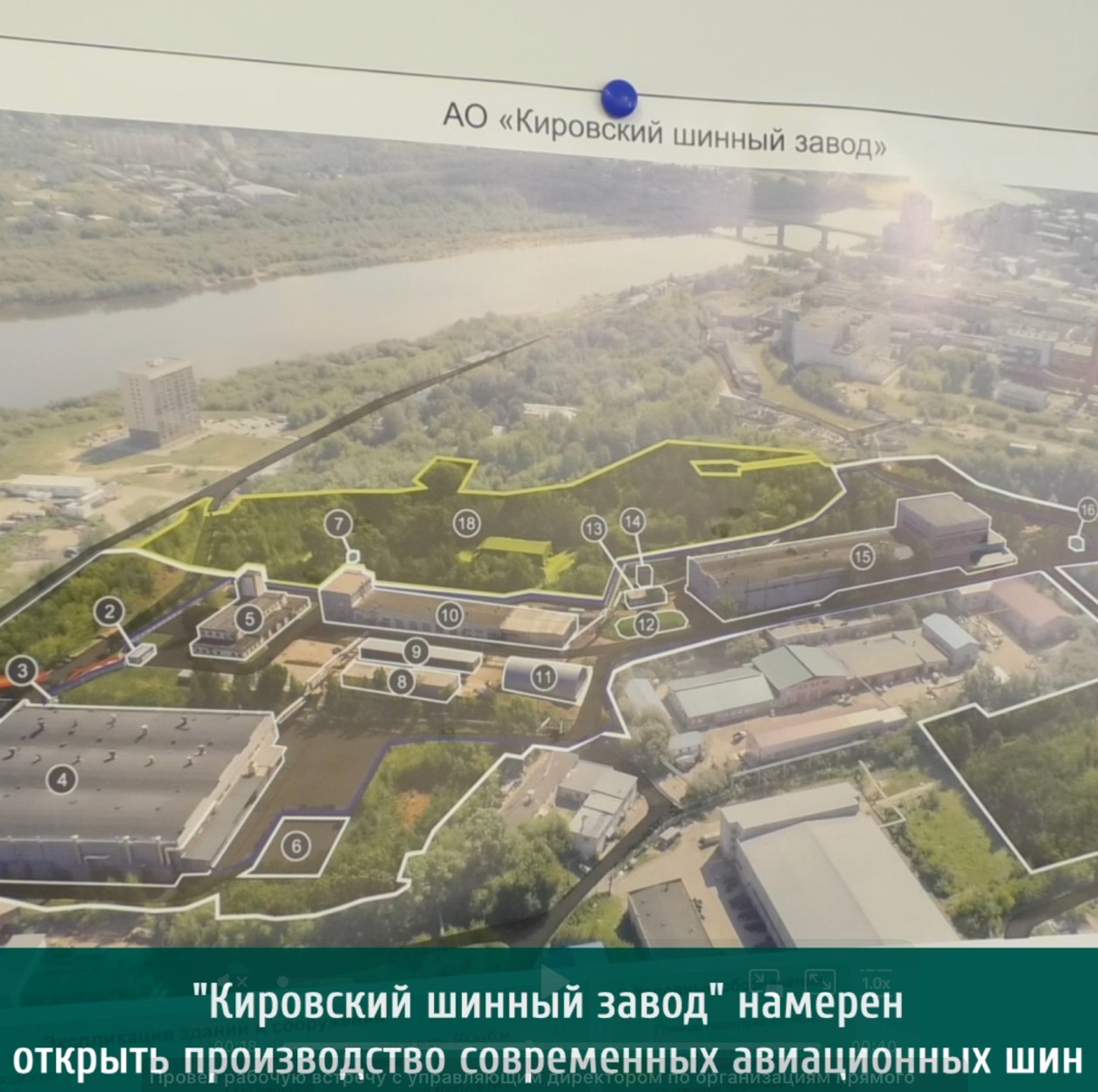
A map of the Kirov tire plant from a video of the August 2022 visit by the chief executive of sanctioned Zavod Selmash, with yellow likely marking the parcel for aviation tire production and white likely showing the broader Kirov Tire Factory grounds. Source: Александр Чурин
The European Union’s 20th sanctions package, published in April 2026, includes rubber and vulcanised rubber products, restricting inputs used in tire production for Russia’s military. Over 50% of Pirelli Tyre Russia’s imports used to come from Germany and Romania, where Pirelli has its factories. In late 2025, Pirelli’s technical export in Russia recognized that Pirelli’s production in Russia depends on many imported components.
However, despite increasing sanctions pressure, we found that Pirelli is openly violating EU sanctions imposed on Russia by having a tire center in Russian-occupied Donetsk listed on its official website.
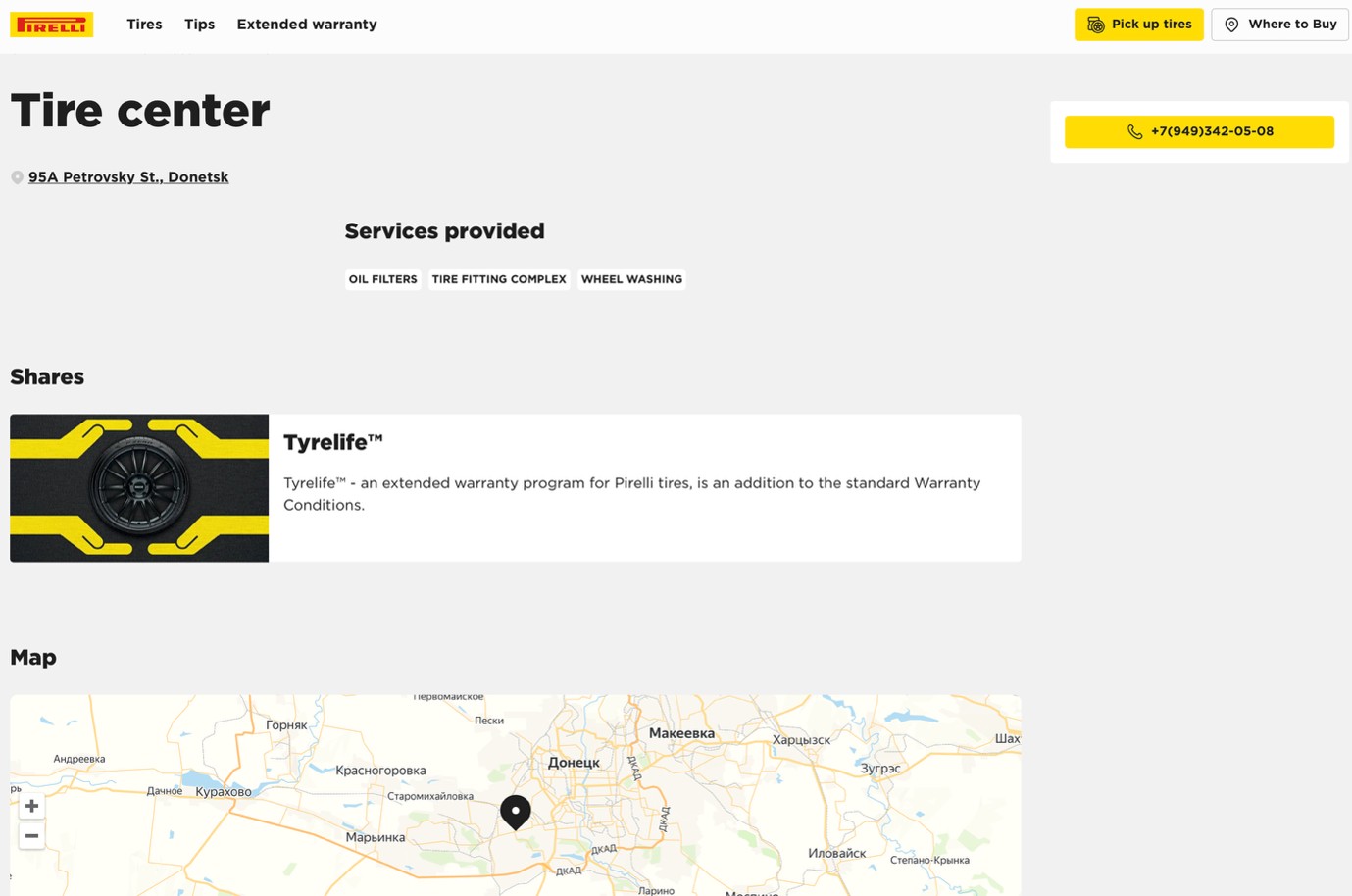
Screengrab from the Pirelli’s Russian website. Source: Pirelli.
Our Analysts called the number listed on Pirelli’s website. The men who answered confirmed they offered services and were based in Donetsk. Asked whether members of the Russian military received a discount, they said no. There was no point, since every customer was one. As they put it, “here all are participants of the Special Military Operation,” the Kremlin’s euphemism for its invasion of Ukraine.
This seems to be not an isolated incident of the sanctions breach. To circumvent the sanctions imposed on Russia, Pirelli sold tires to Belarus in apparent breach of sanctions, the Belarusian Investigative Center reported. Pirelli did not respond to the reporters’ questions.
In the technological isolation that closed around Russia after 2022, its corporate stake in Pirelli and its access to the industrial facility in Kirov may be its window into the high-technology tire production that Russia cannot invent for itself.
The tires that hold ice at forty below, that carry mining trucks across rock, and that keep military vehicles moving across terrain designed to stop them are the product of decades of polymer chemistry, thermal management, and sensor integration. The evidence shows that Russia cannot produce the tires it needs at home, which has made it dependent on Chinese tires for military aviation, domestic imports, and its military vehicles.
Even as Chinese producers moved aggressively into the Russian market after Western brands withdrew, with Russia’s tire market itself growing and Chinese firms posting double-digit gains, Pirelli’s Russian business continued to grow. When Russian buyers were offered cheaper, lesser-known Chinese tires and chose to pay more for Pirelli instead, they were telling the market something about quality.
Pirelli, in short, holds a quality advantage that is recognized inside Russia itself, according to the Pirelli’s technical expert in Russia. In 2022, Russian military vehicles got stuck in the Ukrainian mud when they used Chinese tires. Russia would not want to repeat that humiliation.
Pirelli is ranked fifth in the World Leading Tyremaker Ranking 2025 by Tyre Press, with all larger companies being Western or Japanese. Of the 34 companies listed, none is Russian. We think the implication is straightforward: on its own, Russia has no access to modern tire technology.
Ties to the Kremlin
For over a decade, Pirelli has enjoyed mutually beneficial relations with the Russian government and its elites.
Apparently, these relations still exist.
In May 2014, two months after Russia annexed Crimea, Igor Sechin, Rosneft’s powerful chief executive and a longtime Putin ally, bought 13% of Pirelli for €552.7 million, all in Putin’s presence. Before the full-scale invasion of Ukraine, several Russian oligarchs close to the Kremlin owned small stakes in Pirelli.
Pirelli’s 2017 calendar even featured Anastasia Ignatova, the stepdaughter of Rostec chief Sergey Chemezov. EU officials reportedly argued that her inclusion was plausibly linked to Pirelli’s partnership with Rostec. The episode became part of the evidence used to support the EU’s refusal to lift sanctions on Ignatova, on the theory that she benefited from Chemezov’s position at Rostec.
After Russia sent its tanks towards Kyiv, Pirelli was able to preserve its Russian business because of corporate ties to Rostec. “I spoke with the site director, and he certainly isn’t panicking. This is partly because the company is co-owned by Rostec, a major Russian organization with strong state backing. I am confident that this will ensure the plant’s viability,” local media quoted Voronezh Governor Alexander in response to a question about the future of Pirelli’s Voronezh operations after Russia invaded Ukraine.
Pirelli appears to keep a low profile in Russia and does not make moves that the Russian authorities would not like. For instance, in 2022 Pirelli replied that it is obliged, like any other company in Russia, to follow Russian laws on mobilization. Unlike some other companies, Pirelli did not state that it had filed a request for exemption from military service for its 2000 employees.
Conclusion
Pirelli is unlikely to resolve its Russia exposure easily. Selling its Russian assets would require a political approval process from the Russian state, and Pirelli would probably recover only a fraction of the roughly €470 million it has invested in the country, similar to its competitors. Staying, meanwhile, leaves the company tied to Rostec through the Russian Research Institute’s stake and related infrastructure. Rostec is not going to stop supporting R&D for Russia’s war in Ukraine, and Russia’s military economy still badly needs tire production capacity and know-how.
We believe the longer Pirellis stays in Russia, the more the status quo could become a liability. Pirelli’s carefully cultivated image as the tire of choice for the world’s most prestigious motorsports and we see this image at risk once the public wakes up to Pirelli’s role in the Russian war machine. “It is surprising and clear that Pirelli has no moral compass,” a former professional racing driver told us after reviewing our findings. Pirelli might be best advised to take the financial hit and truly distance itself from its Russian operations.
Appendix
Please find our Appendix attached.