
Read below or open PDF version, or auto-translated Swedish PDF version.
- Sinch AB (STO: SINCH) is a Sweden-based company that operates as a Communications Platform as a Service (CPaaS) provider that enables businesses to communicate with customers via SMS, rich messaging (RCS/WhatsApp), voice, video, email, and verification services through APIs.
- Sinch acquired Inteliquent, which we believe to be a key financial driver for Sinch. Our analysis reveals Inteliquent to be the single biggest enabler of scam and robocalls in the Western Hemisphere, with the business facing a regulatory scrutiny.
- While investors seem mostly unaware about the scam call issues related to Inteliquent, regulators around the world are not. The Anti-Robocall Task Force led by the Attorney Generals of Indiana, North Carolina, and Ohio found in December 2025 that Inteliquent is responsible for almost half the robocalls in the US. We see regulators closing in on the company, which we expect will materially hurt Sinch’s financials. None of this has been disclosed to investors yet.
- We consulted with experts and found high-quality research the scam reporting community has done. Sinch and its subsidiaries were consistently exposed as the worst industry players and key enablers of the scam call industry.
- Our analysis of Sinch’s subsidiaries from a consumer perspective indicates that they are among the most frequently cited for enabling scam and robocalls. In particular, consumers seem most upset about Sinch for the lack of enforcement against fraudulent callers.
- Sinch’s system involves layers between itself and the fraudulent users of its service. This does not change the fact that it is within Sinch’s power and responsibility to stop the abuse.
- We believe Sinch’s compliance team is inadequate both in scale and effectiveness given the volume of scam and robocalls its platform can enable, especially relative to peer operators. This aligns with the feedback we have gotten from consumers and industry experts who complain about Sinch’s enforcement against fraudsters.
- We are highly concerned that Sinch may be consciously turning a blind eye to fraudulent users of its services. While grey market business often appears financially attractive, it introduces significant risks that investors may underappreciate.
- Scam calls are not jokes but a serious matter that destroys many lives. The victims of these scams are usually vulnerable, often elderly people, which makes the scams in our opinion particularly disgusting and regulatory protection even more important.
Content
Introduction
Sinch AB (formerly CLX Communications AB) is a Sweden-based provider of cloud communication services, operating as a CPaaS (Communication Platform as a Service). The company generates revenue through three segments:
- API Platform: Offers messaging, email, voice, and verification APIs for technical teams, including management tools and integration with major cloud solutions like Salesforce and Microsoft Teams.
- Applications: Designed for business users such as marketing and customer success teams, removing the need for in-house or external developers.
- Network Connectivity: Provides telecom operators and CSPs with services to connect to Sinch’s global network and manage voice and messaging traffic efficiently.
The company grew through a roll-up strategy, completing all their acquisitions by the end of 2021.
Though the company has been making acquisitions since the mid 2010’s, most of these acquisitions have been smaller in acquisition price and bolt on.
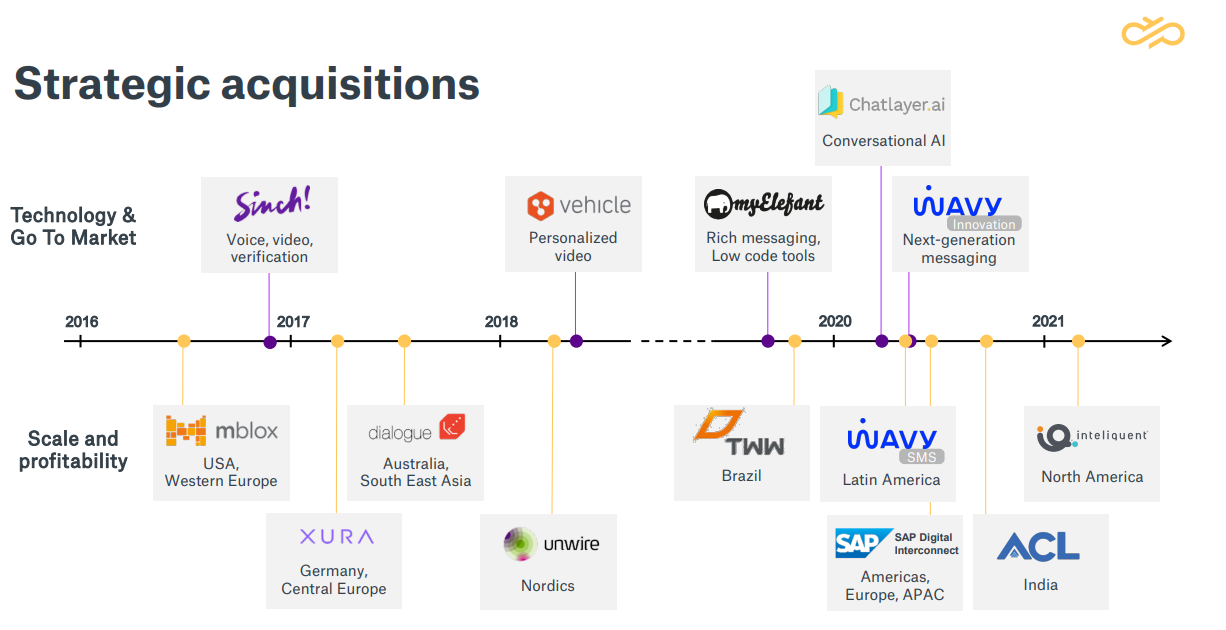
Source: Sinch Feb 2021 Investor Presentation
The company rebranded as Sinch AB in early 2019, saying that the company “has used the Sinch trading name for its real-time voice and video products since the acquisition of Sinch AB in December 2016”, highlighting the growing reliance of the API segment, then called real-time voice and video products.
Apparently, Sinch needed a lifeline, as CLX had lent SEK 1.5 million to Sinch through a convertible loan for working capital. Additionally, the SEK 130 million acquisition enterprise value seems cheap compared to the SEK900 million in revenue Sinch generated in 2016.
Inteliquent – Sinch’s Golden Goose
Continuing its acquisition strategy, the company completed its largest purchase with Inteliquent in early 2021 for a total consideration of $1.14 billion USD. Inteliquent says they are the largest independent voice communications provider in the United States. We believe this was the transformative acquisition that helped boost Sinch’s financial results in the following years.
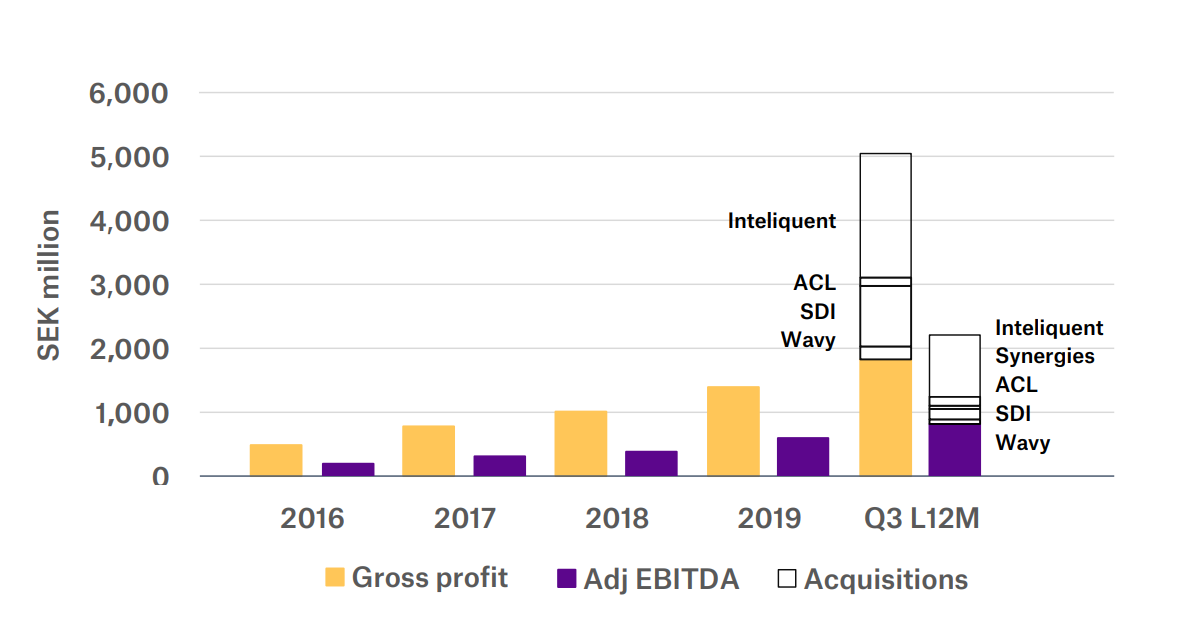
Source: Sinch Feb 2021 Investor Presentation
The acquisition took the better part of 2021, with Sinch announcing the acquisition on February 17th, 2021, and finally closing the deal in December 2021.
Underscoring the importance of this acquisition the company stated that the Inteliquent acquisition
“made Sinch the largest independent voice network in the United States. Inteliquent is one of the major backbones of any voice calling provider in the US and is also trusted by the major US mobile operators to power their peer-to-peer calling.”
Inteliquent and its subsidiaries Onvoy, and Neutral Tandem, are not traditional cell phone carriers. Rather than selling phone plans directly to consumers, the company primarily operates in the wholesale communications market, supplying the underlying network connectivity that carriers, cloud-communications platforms, and enterprises use to deliver phone calls and text messages. Its customers include wireless carriers, cable operators, VoIP providers, and large technology platforms that need reliable voice connectivity.
The second way Inteliquent makes money is by selling phone numbers in bulk to other traditional cellphone carriers. This is done by Inteliquent acquiring blocks of phone numbers from numbering authorities. Inteliquent maintains inventory covering every state and county in the United States, enabling the company to provide numbers to customers who need specific area code phone numbers.
Based on our financial analysis we believe that Inteliquent is Sinch’s golden goose. While Sinch does not disclose revenue by subsidiary, we can see that Sinch’s financials show that total revenue increased significantly following the Inteliquent acquisition, from SEK 16.17 billion to SEK 27.72 billion. Of the SEK 11.5 billion increase, North America accounted for SEK 8.8 billion, or approximately 76% of the total growth.
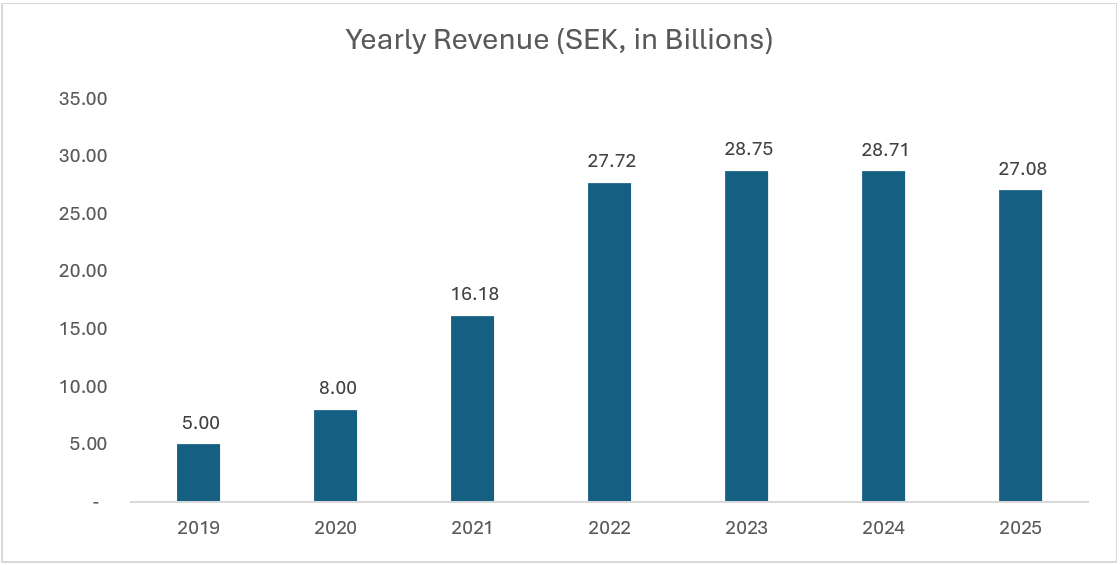
Compiled from Company Sources
According to Sinch’s acquisition news release, they stated that
“In the twelve months ended December 31, 2020, Inteliquent recorded revenues of USD 533 million, Gross Profit of USD 256 million, EBITDA of USD 135 million, and capex of 32 million. Adjusted for a Covid-related uplift that is considered to be temporary, revenues are estimated to have been around USD 499 million, Gross Profit around USD 233 million, and adjusted EBITDA around USD 112 million.”
Assuming no growth in Inteliquent’s business over two full fiscal years, $553 million USD equates to approximately SEK 4.9 billion, this would represent about 55% of the SEK 8.8 billion increase in North American revenue. Once again, assuming 0 growth in 2 full years.
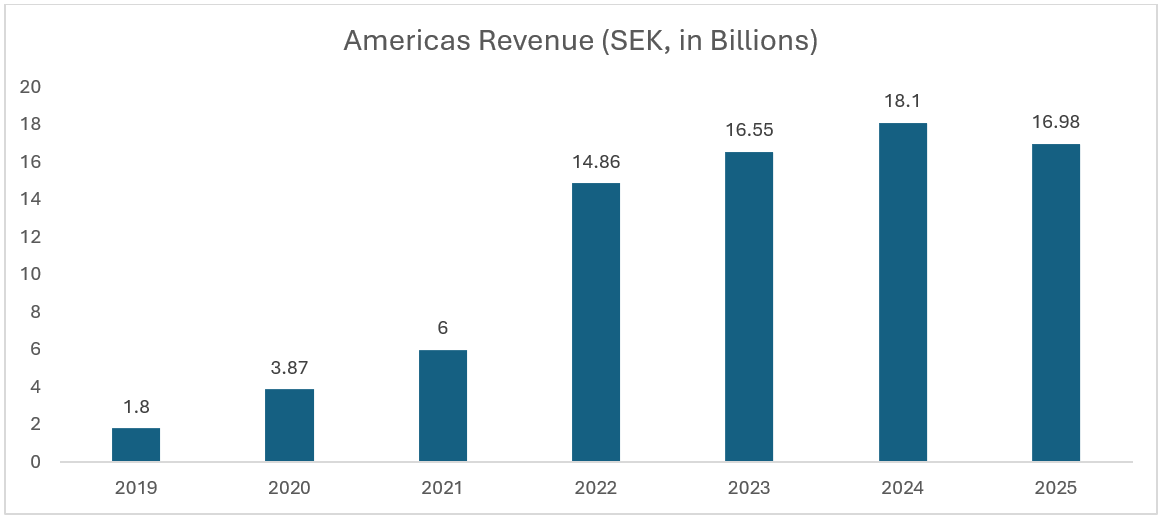
Looking at the segmented revenue, Americas revenue more than doubled from SEK 6 billion to SEK 14.8b in 2022, the first year Inteliquent’s financials were fully consolidated in Sinch’s financial results.
Compiled from Company Sources
As a result of the acquisition, Americas revenue segment jumped from roughly 37% of total revenues to 53% of total revenues immediately after the Inteliquent acquisition and has continued to grow to over 62% of Sinch’s total revenues.
Additionally, the Americas revenue growth has generally outpaced all other geographic segments, suggesting it to be the company’s most important revenue segment.

Compiled from Company Sources
Why We Believe Sinch Plays a Major Role in Enabling Scam Calls
We investigated Sinch, its subsidiaries and compared practices to industry competitors. Our conclusion is clear. We think Sinch’s services are used to conduct the biggest chunk of scam and robocalls in the US.
We base our conclusions on our investigation that looks at Sinch from four different angles: the consumer experience, the regulatory landscape, the views of industry experts, and the company’s internal perspective.
Sinch Faces Increased Regulatory Scrutiny
In May 2022, months after Sinch closed the acquisition of Inteliquent, the US Federal Trade Commission (FTC) sent Inteliquent a warning letter, stating that the company was facilitating illegal robocalls originating from overseas scam operations.
The 8-page document concluded:
“ITG [USTelecom’s Industry Traceback Group] previously notified you of these calls and provided you access to supporting data identifying each call—including a recording of the illegal robocall” and that “the numerous traceback notices directed to Inteliquent, Inc. indicate that you are apparently routing and transmitting illegal robocall traffic knowingly.”— May 2022, FTC Warning Letter
It appears that the early warning signs of Inteliquent’s insufficient fraud and abuse detection capabilities were already evident.
Then in 2023, the Social Security Administration Office of the Inspector General conducted an investigation called “Operation Upstream Carrier Without a Paddle“ that sought to determine whether gateway telecom providers were allowing fraudulent robocall traffic to pass through their networks while earning fees from that traffic. They subpoenaed Inteliquent, and ultimately, reached a settlement agreement with the company and paid a small civil monetary penalty.
At the same time, Sinch was getting attention from regulators outside the US. In May 2023, a report by the Australian Communications and Media Authority (ACMA) found that Sinch’s Australian subsidiary Sinch Australia Pty Ltd (Sinch), “allowed SMS to be sent using text-based sender IDs without sufficient checks to ensure they were being used legitimately.”
We think the most significant regulatory investigation that is threating Sinch’s business is the Anti-Robocall Multistate Task Force, led by the Attorney Generals of Indiana, North Carolina, and Ohio but includes all state AGs. The bipartisan task force is currently investigating Inteliquent for allegedly enabling nearly 50% of US-robocalls. The statements by the Attorney Generals offices imply that Sinch and its subsidiaries are the single biggest enabler of robocalls in the US. The latest notice about the investigation from December 2025 suggests that the investigation is ramping up.
The task force notice warned Inteliquent that it was transmitting “billions of fraudulent robocalls” and ordered it to stop relaying illegal traffic.
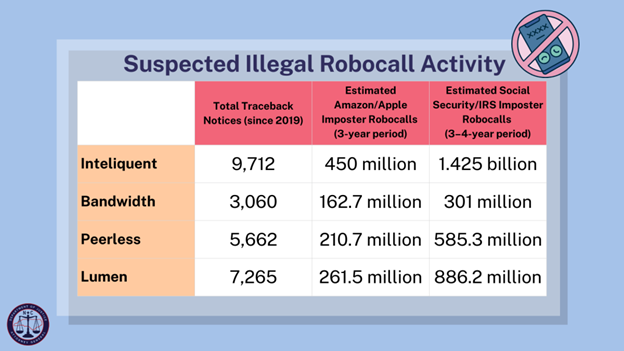
In the 8-page notice that was sent to Inteliquent, the task force noted that of the 9,712 traceback notices sent to Inteliquent since 2019,
“At least 5,728 of those traceback notices were sent to Inteliquent since August 2022, which is after the Task Force first reached out about its concerns regarding Inteliquent’s call traffic, and notices are still being issued in 2025.” – December 2025, AG Letter
A traceback notice is an official alert from industry investigators indicating that a company transmitted a call tied to a suspected illegal robocall campaign.
Source: Attorney General Jeff Jackson News Release
According to the notice, Inteliquent is responsible for roughly 45% of the total amount of Amazon, Apple, and government imposter robocalls measured by the task force. We find this to be a ridiculously high number.

Source: Compiled from the 8-page notice
The task force’s notice states:
“Further, analysis of a portion of Inteliquent’s likely involvement in the routing of nationwide call traffic concerning Amazon/Apple imposter robocalls was assessed. Between October 2021 and November 2024, among a nationwide sample of approximately 2 million transcribed and recorded Amazon/Apple imposter robocalls, over 900,700 of these Amazon/Apple imposter robocalls were estimated to be facilitated by Inteliquent. Thus, of the over 1 billion estimated Amazon/Apple imposter robocalls reaching consumers across the country in this sample during this period, approximately 450 million of these scam robocalls were estimated to be facilitated by Inteliquent.” – December 2025, AG Letter
And
“A similar analysis of Inteliquent’s likely involvement in the routing of nationwide call traffic concerning SSA/IRS government imposter robocalls was assessed. Between May 2020 and November 2024, among a nationwide sample of approximately 6.2 million transcribed and recorded SSA/IRS government imposter robocalls, more than 2.85 million of these SSA/IRS government imposter robocalls were estimated to be facilitated by Inteliquent. Thus, of the over 3.1 billion estimated SSA/IRS government imposter robocalls reaching consumers across the country in this sample during this period, approximately 1.425 billion of these scam robocalls were estimated to be facilitated by Inteliquent.” – December 2025, AG Letter
Other sources report figures that are even higher than those cited by the Industry Traceback Group (ITG) and the Attorneys General in their formal notices.
In 2022, a class action lawsuit was filed against Inteliquent and Onvoy, accusing the companies of failing to take adequate action to stop robocalls directed at federal student loan borrowers. The plaintiffs in this lawsuit were individuals who received robocalls and direct voicemails containing prerecorded, deceptive, and misleading messages. These messages featured artificial voices and were sent to their telephones using “spoofed” telephone numbers designed to disguise the true origin of the calls.
The plaintiffs asserts that approximately 60% of all robocalls and spam calls placed in the United States are routed through the Onvoy network to U.S. consumers’ telephones. This allegation underscores the extent of Inteliquent and Onvoy’s involvement in transmitting unwanted and potentially fraudulent communications.
“Upon information and belief, 60% of all spam telephone calls in the United States are delivered to consumers’ phones using Onvoy’s network. Upon information and belief and investigation by counsel, approximately 60% of all robocalls placed in the United States are delivered by the Onvoy network to US consumers’ telephones.” 2022 Class Action Lawsuit Excerpt.
The plaintiffs voluntarily dismissed the lawsuit, which we interpret as an indication that the matter was likely resolved out of court, allowing Inteliquent and Onvoy to avoid admitting liability.
The numbers above clearly point at Sinch as the most prominent enabler of scam calls.
Looking at YouMail’s Robocall Index, we see that there were 52.8 billion and 52.5 billion robocalls in the USA in 2024 and 2025 respectively. This suggests, if the numbers in the class action claim are correct, that Inteliquent could be processing over 23 billion fraudulent phone calls on their network annually. This figure reflects robocalls only and excludes fraud- or phishing-related calls, as well as any spam text messages.
It is noteworthy that Sinch has not reported any of these regulatory matters in their filings, including the December 2025 notice from the Anti-Robocall Task Force. The communication indicates that Inteliquent has been in ongoing dialogue with the task force, which suggests sufficient opportunity for the company to make appropriate disclosures to investors regarding the inquiry and its scope.
The Most Abused CPaaS Provider According to Consumers
Since the acquisition of Inteliquent, Sinch and its subsidiaries have been, according to our analysis, the most frequently complained about companies in the industry.
Our analysis draws on two data sources: online forums where scam trackers and individuals report phone numbers used in scams, and phone number lookup websites where users go to flag numbers as spam or fraudulent.
One of the more prominent forums we identified is Scammer.Info, a message board community where users report, discuss, and share information about spam and fraudulent callers. ScamWarners.com and ScamSurvivors.com serve a similar purpose, offering comparable forums focused on reporting and discussing scam-related activity.
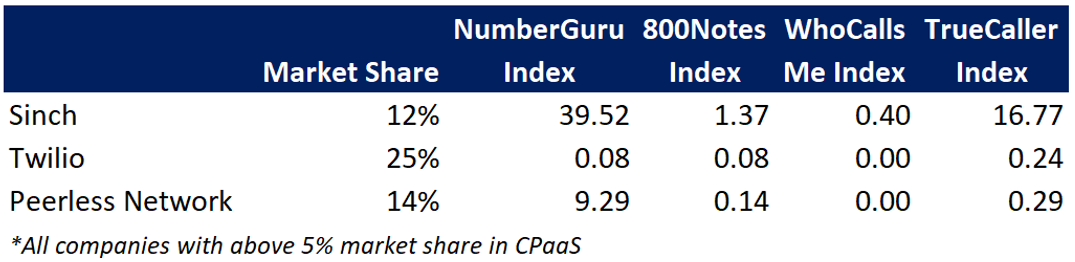
Searching these websites for keywords of Sinch and its subsidiaries and comparing it to peers, we find that Sinch has a significantly higher number of results with over 800 compared to Twilio which had 450 results come up.

On some of the more popular scam-related subreddits, such as r/ScamNumbers and r/Scams, the results are consistent. There are significantly higher amounts of posts relating to individuals receiving scam calls or text messages from phone numbers associated with Sinch and its subsidiaries.
Further, an analysis done on phone number lookup websites shows us that Sinch and its subsidiaries are constantly flagged and looked up by individuals at a higher rate than their peers.

Doing the same analysis but limiting the search results to the past year shows that results for peers materially decreased, suggesting that their peers have a focus on reducing scam calls throughout their network.

We developed an index that weights these results based on each company’s estimated market share above 5%, according to Metrigy. This allows for a more “apples-to-apples” comparison of the relative exposure of each CPaaS provider to spam call activity. This once again showcases that Sinch ranks significantly higher than its peers. We believe this is a fair and appropriate comparison, as all the companies operate within the CPaaS sector.
Some more individual examples, a post on Twitter/X shows that Onvoy’s system was used to send out a racist text messages to black individuals a day after the 2024 American election. Showing just how far reaching the Inteliquent/Onvoy network is.
Discussions on Reddit’s r/ScamNumbers community raises the question, “Why do scammers all use SINCH?” One user explained,
“Sinch has a poor reputation in the VOIP wholesale sector. They tend to ignore reports about fraudulent or criminal behavior by their customers, choosing instead to sell large quantities of numbers for profit. Even popular apps like TextNow rely on Sinch numbers, which scammers sometimes exploit.”
Scammer.Info host several posts discussing Sinch, Inteliquent, Onvoy, and Neutral Tandem. Some entries are quite detailed, offering insight into the extensive efforts scam hunters make to remove phone numbers from Sinch’s networks. For instance, a December 2023 post titled “Sinch: Fraud Support Experience (Case Study)” describes the poster’s experience with Sinch:
“In my experience, Sinch’s customer support regarding fraud reports—whether submitted via email or web forms—has been disappointing. Neither Sinch nor its wholesalers offer consumers updates on cases filed through their webforms.”
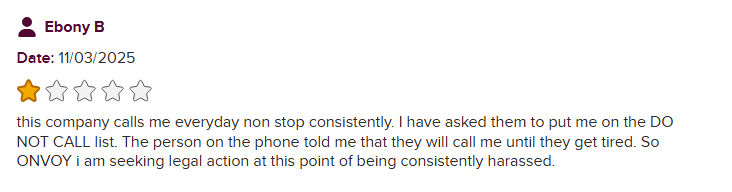
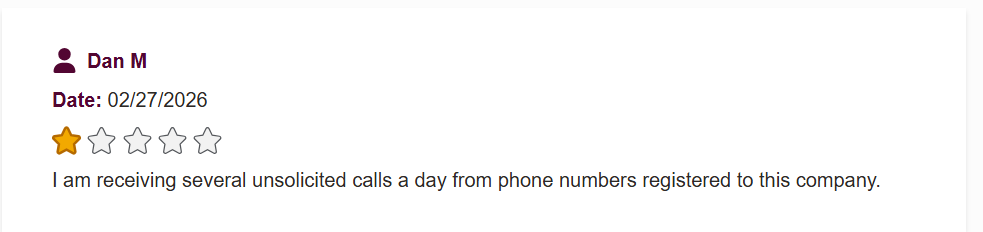
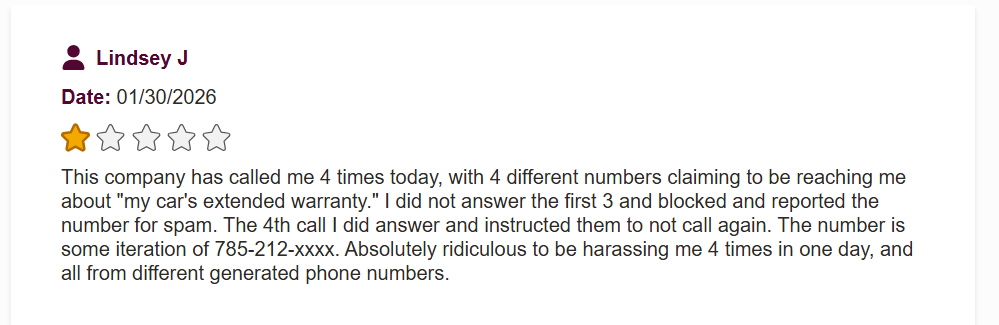
Looking at Inteliquent BBB’s page, the company boasts 1.04 stars out of 5 and has several complaints, with many reviews describing the company as the largest perpetrator of scam calls.
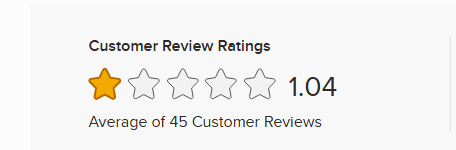
Some of these complaints describe individuals who are listed on the National Do Not Call Registry yet continue to receive spam calls from numbers associated with the Inteliquent phone numbers or the Onvoy network.
Sinch From the Perspective of Industry Experts and Scam Hunters
We consulted with industry experts who described to us a pattern of abuse related to Sinch’s subsidiary Inteliquent and Onvoy. Sinch seems to be set up to enable scam and Robocallers while making it harder for consumers to alert Sinch of the scam or robocalls being made on their networks. Sinch has a single report abuse webform and does not answer or make communications through their fraud abuse emails if contacted directly.
This only works because Sinch sometimes has layers in between itself and the final user that abuses services for scam calls. Sinch sells its services in big bundles to companies, such as Verizon or AT&T, who then in turn might sell the service to illegitimate end users. This does not change the fact that it is within Sinch’s power to stop the abuse.
We want to highlight one public industry expert report that we found especially compelling.
A group of activist scam hunters that call themselves Demurrage recently put out a nearly 200-page document tilted ”Sinch: A Closer Look At Consistent Avoidance & Lack of Communication (A Case Study Conducted By The Demurrage Team).” This new report, dated December 2025, is the sequel to a 2024 report entitled “Sinch: A Case Study.”
The report states that:
“The initial report documented blocks of numbers on the Onvoy network used to facilitate Spectrum and later Xfinity customer support scams, all acquired by scammers operating out of illegal call centers in Pakistan. It highlighted Sinch’s lack of communication, the limitations of its sole reporting method, the Sinch webform, and compared it with other telecom providers that acted quickly and offered accessible reporting channels to the average consumer. This updated report confirms that the issues identified in 2024 remain unresolved.” December 2025, Demurrage Report
The report provides hundreds of screenshots exposing the company by showing that Sinch continues to allow these bad actors onto their platform. Demurrage go on to explain how poorly Sinch handles reporting these fraudulent numbers to the company. Demurrage state that they tried to report “PayPal refund scam involving an MS Teams number, using the email address [email protected]. A screenshot and a recording of the scammer answering the call were included.” Sinch didn’t even bother to respond to their message, Demurrage say that this is in direct opposition of other telecoms like Lumen act, who they say, “immediately place a temporary block on a reported number before forwarding the case to the wholesaler.” Lumen communicates with consumers throughout the process and typically resolves fraudulent traffic within minutes.
Demurrage’s team eventually got a response, that was more than worrying to them. Sinch’s fraud operations responded saying that the number is associated with “a larger volume issue with a single customer.” Suggesting that Sinch didn’t do a proper KYC check and ultimately sold a block of phone numbers to someone who later used them in attempted scams.
Another issue the Demurrage report highlights are the VOIP providers that utilize either the Inteliquent or Onvoy network. Their report confirms that one of the “least responsive providers on the Sinch network when addressing fraud” in Talkatone uses the Onvoy network to connect their calls.
According to their own website, Talkatone is a free VoIP app for iOS and Android that provides a dedicated U.S. or Canada phone number, allowing users to make unlimited, free Wi-Fi calling and texting to those regions.
Instead of Talkatone taking actions, or forwarding fraudulent activity to Sinch, the company “routinely denies ownership of reported numbers and refuses to act, claiming that unspecified “laws” prevent it from shutting down fraudulent numbers” and telling the user that they must have filed a legal claim before any investigation can occur.
This illustrates what we mean when we say the company can have multiple layers between itself and the end user, allowing Sinch to deflect responsibility onto intermediaries such as Talkatone for inadequate KYC practices. In our view, Sinch should take a more proactive stance by terminating access for any users abusing its network. As the largest voice communications provider, we would expect the company to maintain robust and well-resourced anti-fraud, compliance, and KYC/KYT functions.
We want to end this part with two quotes from the conclusion of the Demurrage report,
“The time for warnings has passed. Sinch must address these issues directly. The company needs a monitored, dedicated email channel for fraud reporting and must maintain open communication with consumers regarding the status and outcomes of their reports. Many of Sinch’s competitors already do this, and there is no justification for Sinch’s continued lack of engagement.” December 2025, Demurrage Report
And
“Sinch has become the most frequently abused telecom provider for scammer callback numbers, and without substantial reforms, this problem will only worsen in 2026 and beyond.” December 2025, Demurrage Report
Sinch’s Compliance Team Is Near Non-Existent
We inquired with former employees and industry experts about the compliance policies of Sinch. We were met with several negative comments, one expert told us that Inteliquent, Onvoy, and Neutral Tandem have been the worst in scam reporting communities for a long time, and scam hunters routinely complain about the entities more than any other company involved.
One former employee, who worked at Inteliquent when it was a standalone business, stated that there were only one or two individuals that worked on compliance issues. Experts also noted that Sinch, among the other CPaaS companies would utilize industry compliance groups if needed.
We found these comments interesting, because according to Inteliquent, the company is the “largest independent voice communications provider in the United States.” We would expect the company to have a robust compliance, fraud detection and know-your-customer/traffic teams that is adequate for its size.
To our surprise, a comprehensive LinkedIn SalesNavigator search for individuals working for Sinch who have job titles related to fraud, KYC or compliance resulted in only 20 individuals. Apparently, the compliance team was only about 8 people with the other 12 individuals seemingly being one-off roles in the company. Additionally, we searched for Inteliquent employees with the same keyword search, but we found no results.
We compared our findings with Sinch’s largest competitor, Twilio. Although Twilio generates roughly twice the revenue, we believe this is still an appropriate comparison, as Sinch would be expected to employ more personnel in compliance, fraud, and KYC functions, given its position in CPaaS alongside Inteliquent’s role as the largest wholesale voice interconnection and infrastructure provider in the U.S.
Twilio has a significantly larger total number of employees with job titles relating to fraud, KYC or compliance with 149 people. Twilio has multiple, large-scale teams for each of these divisions. Twilio had over 91 employees with job titles referencing compliance and nearly a 55-person dedicated compliance team.
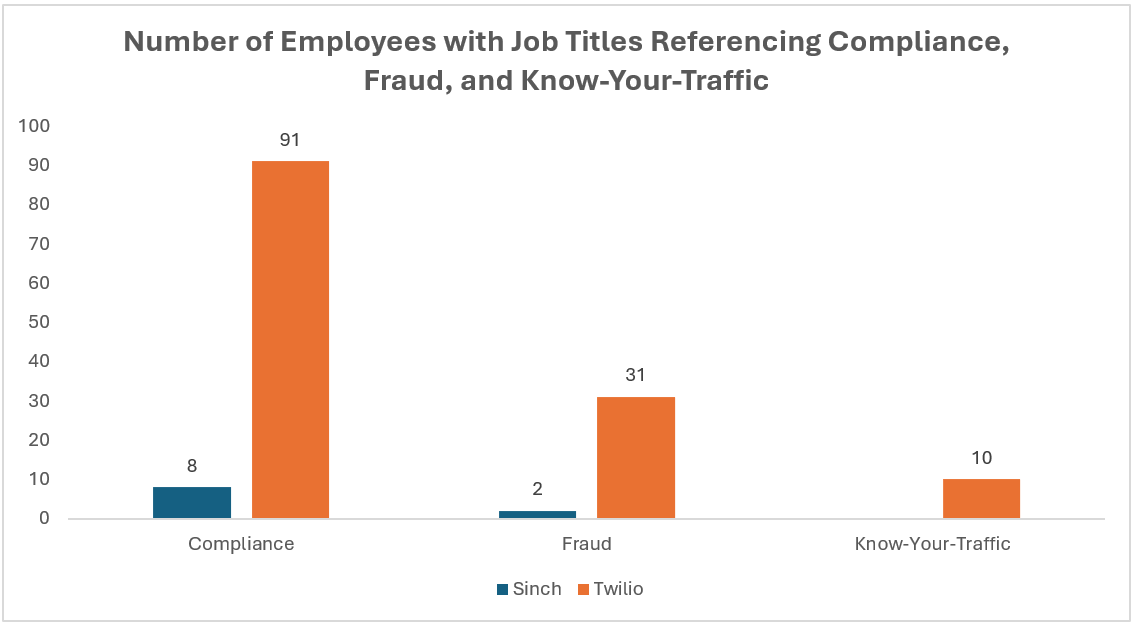
Expanding our analysis by including other comparable companies such as Infobip and Bandwidth Inc., we observed that they had a similar number of employees in each category but still a higher total number of total employees than Sinch working in some sort of fraud, KYC or compliance role.
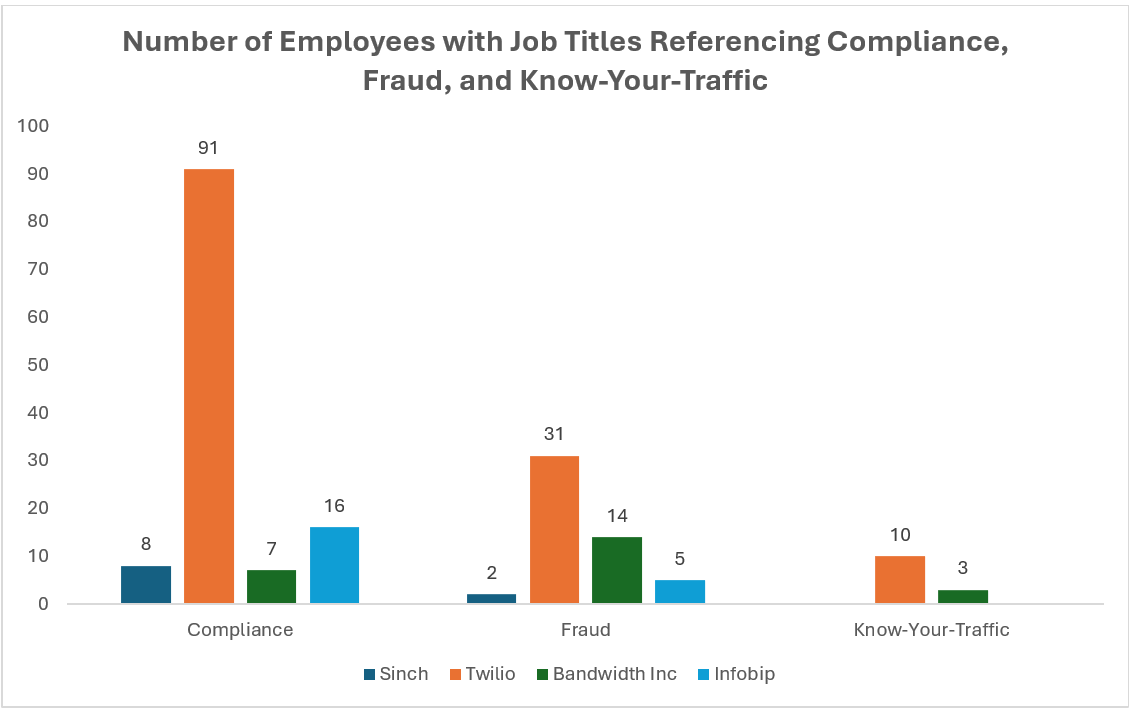
We believe that, as a company that effectively controls a critical portion of the telecommunications highway, and who has a competitive share in the CPaaS sector, the standard for compliance, fraud prevention, and know-your-customer/traffic teams should be materially higher than that of its peers.
These data points align with the experiences described by customers and industry experts who call out Sinch for being noticeably slow in addressing fraud concerns. We find Sinch’s compliance efforts utterly inadequate. We believe the controls may be insufficient by design, as Inteliquent appears to profit significantly from illicit scam and robocall activity by selling blocks of phone numbers to bad actors and routing the calls they generate. It is an unfortunate reality of business that catering to grey-area or illegal clients often has the best profit margins.
Given Sinch’s significant market share in the CPaaS sector, and the scale of Inteliquent and Onvoy as leading wholesale voice interconnection and infrastructure providers in the U.S. we would expect the company and its subsidiaries to be among the more frequently targeted platforms for abuse. This, in turn, would put an emphasis on compliance, anti-fraud, and know-your-customer jobs. However, our analysis shows that the company appears to place relatively limited focus on these roles.
We expect that Sinch will try to rebuttal our findings with the idea that they lean greatly on industry partners and therefore they do not require a large in-house team. However, this position appears questionable, as Inteliquent compliance mechanisms seem at the least ineffective. We would expect a dedicated internal compliance team comparable to that of Twilio.
We see that Sinch frequently cites its compliance with STIR/SHAKEN regulations, a framework introduced by the FCC in 2022 requiring calls to be digitally signed with an attestation level (A, B, or C). After consulting with industry experts, we believe that SITR/SHAKEN compliance does not shield Sinch from legal consequences and does not change the fact that it is within Sinch’s power to police the fraudulent traffic.
Scam Calls Are No Joking Matter
According to the FTC, fraud has become a nearly $16 billion industry in the USA and continues to grow, as stated by Lois Greisman, Associate Director of the FTC’s Division of Marketing Practices. This figure represents a significant increase compared to the previous year, which saw 2.6 million fraud reports and over $12 billion in reported losses. Since 2020, reported fraud losses have increased by approximately 430%.
Imposter scams comprised more than $3.5 billion, or 22% of the total reported losses, making them the most frequently reported type of fraud. It is likely that these numbers underestimate the true extent of losses, as many victims may be reluctant to report incidents due to embarrassment.
Data compiled by Commsrisk from the FTC indicates that scam-related losses by phone calls and text messages continue to rise, reaching $540 million in the third quarter of 2025.
A simple Google or YouTube search reveals numerous cases of individuals losing their life savings through phone and text scams. One of the most common schemes is the grandparents’ scam. It targets elderly people where scammers call and pretend to be a grandchild in trouble, typically claiming to be arrested, injured, or stranded and urgently begs for money. The scammers will often say something vague like “it’s me!” and let the grandparents supply the name themselves. The key manipulation is a demand for secrecy (“don’t tell Mom and Dad”), which prevents the victim from verifying the story. With payment requested through untraceable methods like gift cards or wire transfers.
In 2025, the RCMP apprehended an individual suspected to be the leader of a grandparent scam network, reportedly responsible for illicit gains of over $30 million from American seniors.
A Reddit user recounted that his grandmother lost approximately $40,000 responding to a fraudulent text about a compromised account. A CBC article highlighted a case in which a senior lost nearly C$800,000 following a pop-up computer scam and subsequent fraudulent phone calls.
Our point is that the victims are usually vulnerable people, especially elderly, which makes this situation particularly disgusting.
Conclusion
Sinch AB has evolved into one of the largest facilitators of scam calls in the Western Hemisphere through its ownership of Inteliquent. Despite the apparently attractive financial results generated by this activity, the company faces intensifying regulatory scrutiny, inadequate compliance controls, and growing reputational damage.
We believe regulators are now closing in, with meaningful enforcement actions likely in the near term. Such interventions carry the potential to materially impair Sinch’s revenue, profitability, and valuation. In our view, the market significantly underappreciates these risks. We note that Sinch has not communicated the risks or recent regulatory intervention against the company to investors.
Investors should carefully weigh the substantial downside presented by Sinch’s exposure to the scam call ecosystem against any perceived growth opportunities.