

- Microvast Holdings, Inc. (MVST) is a battery company that portrays hundreds of millions in revenue and exciting new clients to investors. We believe the company is fabricating a significant part of its business and capabilities.
- We conducted extensive on-the-ground due diligence on MVST’s main production facilities and cross-checked that data with satellite images. We literally counted for weeks the trucks going in and out, employees coming and leaving, cars in the parking lot, etc.
- We observed MVST’s Ludwigsfelde/Berlin plant extensively since its supposed production start in March 2021, where up to 250 people should be working to service MVST’s growing European market. After 41 random observations during business hours, we saw only two semi-trucks docked; for 39 out of the 41 visits, all 5 docks and 10 semi-truck lots were unused. The employee parking lot was filled with less than 30 cars on average and never exceeded 50 cars.
- MVST’s largest production facility is in China where over 2,500 employees are supposedly working, according to the company’s disclosure. Our site observations, along with Chinese Local Government documents indicate that the facility in fact only employs a shrinking group of approximately 1,400 people.
- MVST failed all of its U.S. business initiatives and lost dozens of millions of shareholders’ money in the process. Management has not been able to get a US based production facility off the ground.
- Given the devastatingly low activity levels over an extended period of time that cannot align with the financials MVST presents to investors, we must conclude that MVST’s reported financial statements cannot be relied upon.
- We looked deeper into MVST’s announced clients and partnerships and found that the vast majority (>95%) of MVST’s commercial counterparts outside of China, sometimes described as major wins or breakthrough partnerships, are tiny startups or prototype partnerships showing insignificant economic opportunities.
- MVST had been denied a $200 million grant for the construction of its U.S. facility due to its suspected ties with the Chinese government in the company. MVST’s management has explicitly and vehemently denied any involvement by the CCP. We found the paper trail that unrefutably proves that the Chinese government is in fact a shareholder in MVST’s main Chinese subsidiary.
- Our investigation has uncovered numerous, well-documented, and substantial falsehoods, which have been signed off by the same auditor we have seen in past frauds like “Gaotu Techedu Inc.” (GOTU, previous ticker: GSX).
Introduction
Microvast Holdings, Inc. is a publicly traded U.S.-based company (NASDAQ: MVST) founded in 2006 and headquartered in Stafford, Texas. It specializes in designing, developing, and manufacturing advanced lithium‑ion battery components and systems for electric commercial vehicles and utility-scale energy storage. MVST operates its main production facilities in China, and Germany. The U.S. production facilities are currently insignificant and expansion has halted as of February 2024.
The devastatingly low levels of activity at MVST’s production plants that we observed over extended periods of time do not align with the financials the company portrays to investors. On top of this, we found that the majority of MVST’s counterparts outside of China represent insignificant economic opportunities, many of them being tiny startups. We also uncovered undeniable proof that ties MVST to the Chinese Communist Party, an allegation that the company has explicitly denied.
On-The-Ground Due Diligence of MVST’s Factories Reveal an Alarmingly Low Level of Activity
We conducted extensive on-the-ground due diligence on all of MVST’s significant production facilities and cross-checked that data with satellite images. For weeks, we tracked the number of trucks going in and out, employees coming and leaving, cars in the parking lot, etc. Our investigation spans over multiple years in some cases. On-site visits, local government documents and satellite pictures reveal that MVST’s German facility is operating at only a fraction of the claimed activity. We also estimate that MVST’s Chinese facilities operates at an activity level that is about half of what the company is portraying.
MVST’s German Facility Seems to Just be a Facade
In 2020, MVST announced the construction of a 170,000 square-foot facility located in Ludwigsfelde, Germany that initially had a production capacity of 1.5GWh per year and then should have been expanded to up to 6GWh years later. The total capacity was set to be 250 workers. The first production line was scheduled to open in March 2021.
This project was also announced through a video presentation published by the company on social media. Management proudly touted how construction went well and was ahead of schedule even during difficult periods due to coronavirus related restrictions. The Economic Minister of Brandenburg, and Mayor of Ludwigsfelde praised Microvast for creating sustainable and innovative jobs in the area. The government even supported the construction of the facility with a subsidy payment of €4,023,000 along with other subsidies for the industrial park and general infrastructure.
“From 2021, lithium-ion battery systems for electric vehicles will be produced here.”
“For Brandenburg in particular, the building of the Microvast headquarters is an economic blessing. 250 jobs will be created, plus a company that works in a future-oriented and innovative way. In short, Microvast and Brandenburg are a good match.”
– Translated from the promotional video.
MVST’s German facility has received repeated comparisons to Tesla’s Gigafactory. One article describes MVST as more organized than Tesla but sharing the spotlight.
We extensively observed MVST’s Ludwigsfelde/Berlin plant since the start of production in March 2021. Out of 41 random observations during business hours, we saw a semi-truck docked at one of the facility’s fifteen dedicated spots only twice. Thus, all spots were almost always empty.
During business hours, the employee parking lot of 100 dedicated car parking spots was utilized less than 30% on average, with up to 4 cars being company vehicles that stayed on site over the weekends. We never observed more than 50% utilization. In other words, the factory was never even close to fully staffed during its existence, and only rare guest occasions cause more than 40 parking spaces to be used. Employees are also unlikely to be using public transportation, since the bus stop built when the facility first opened was never activated and has never been serviced by any bus route.
In addition to site visits, we collected satellite images during business hours. We included all satellite images from workdays in Germany with sufficiently high resolution and where clouds didn’t block the view to create a representative sample.
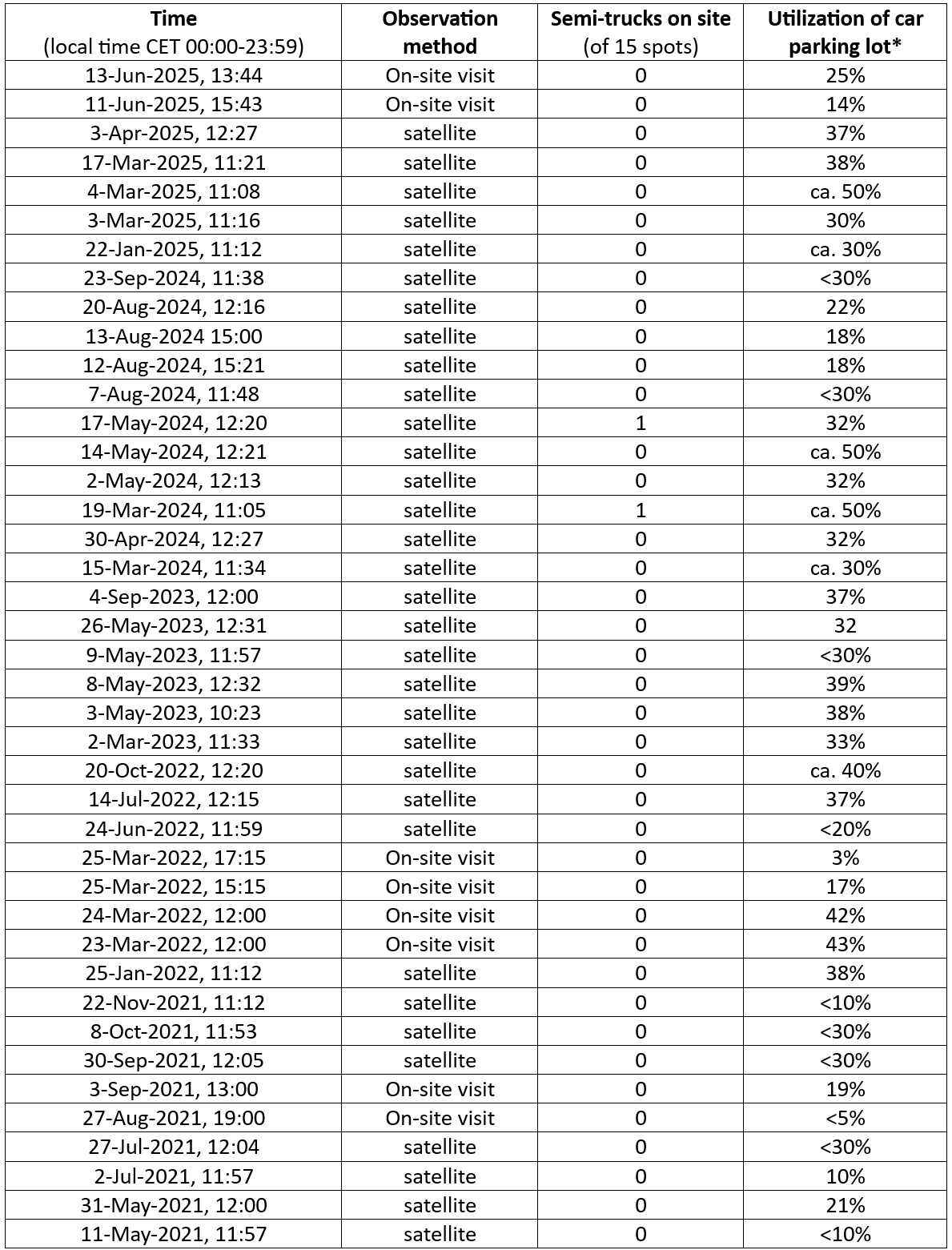
* Due to shadows, a small part of the car parking lot is not always fully visible to satellite images.
Source: Airbus, Maxar, TripleSat
Finally, we contacted the company to try and get an appointment to visit the facility, but never got an answer.
Below are some of the most recent pictures our investigator took during the past couple of months. It shows the general state of activity in the German facility since it was built, almost inactive. We also noticed the absence of any waste within the dumpsters.
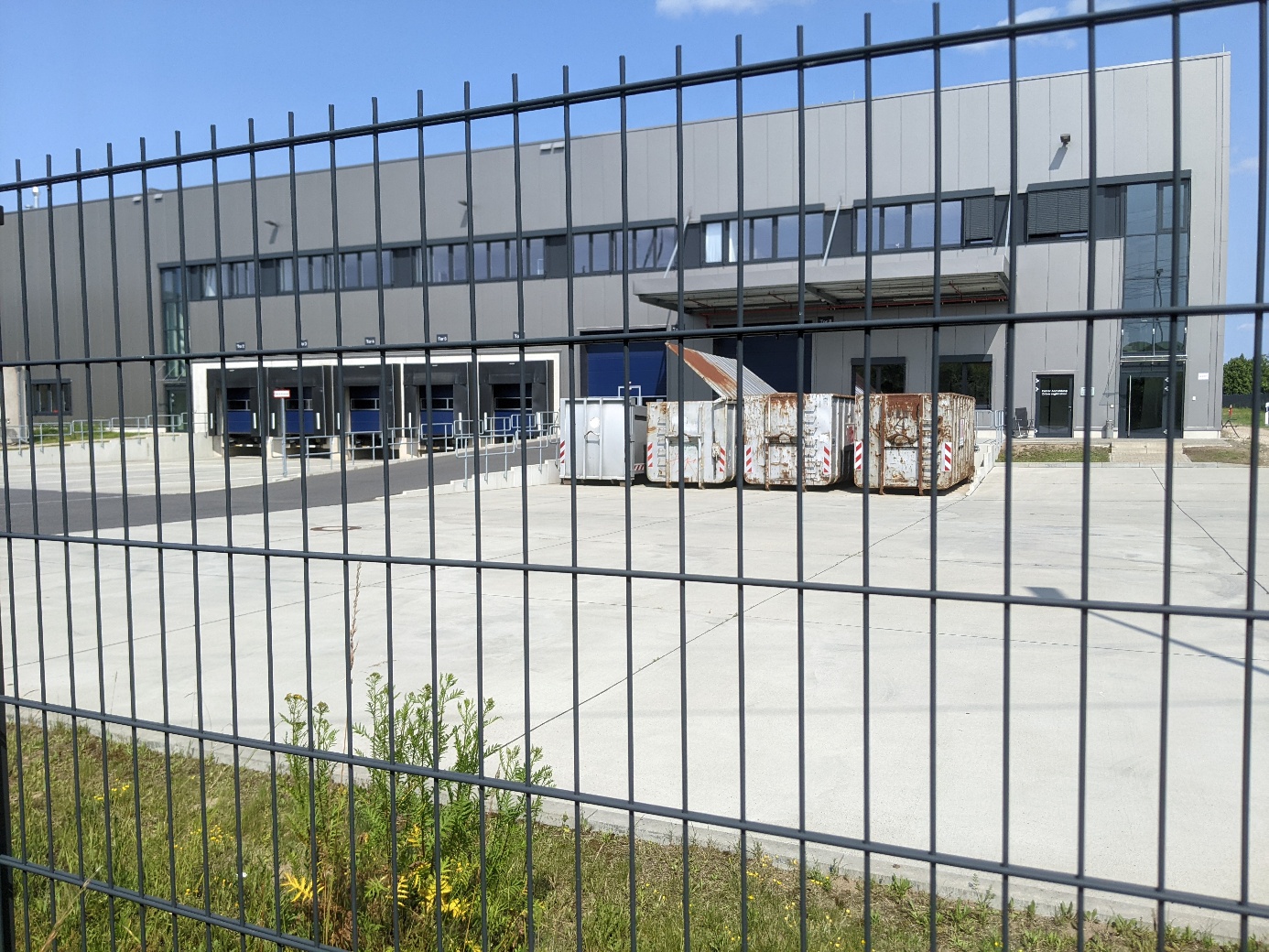
June 2025, view of the unused docks during working hours.

June 2025, view of the parking lot during working hours. We counted less than 15 cars.
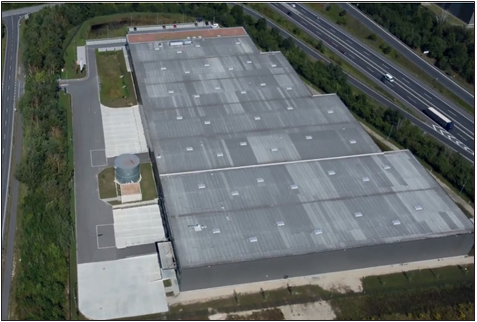
August 2021, drone view of the facility during working hours. No truck docked, few cars on the parking lot.
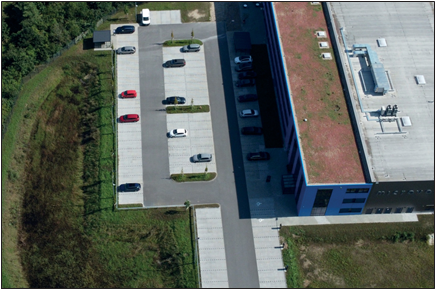
August 2021, drone view of the facility during working hours. Few cars on the parking lot.
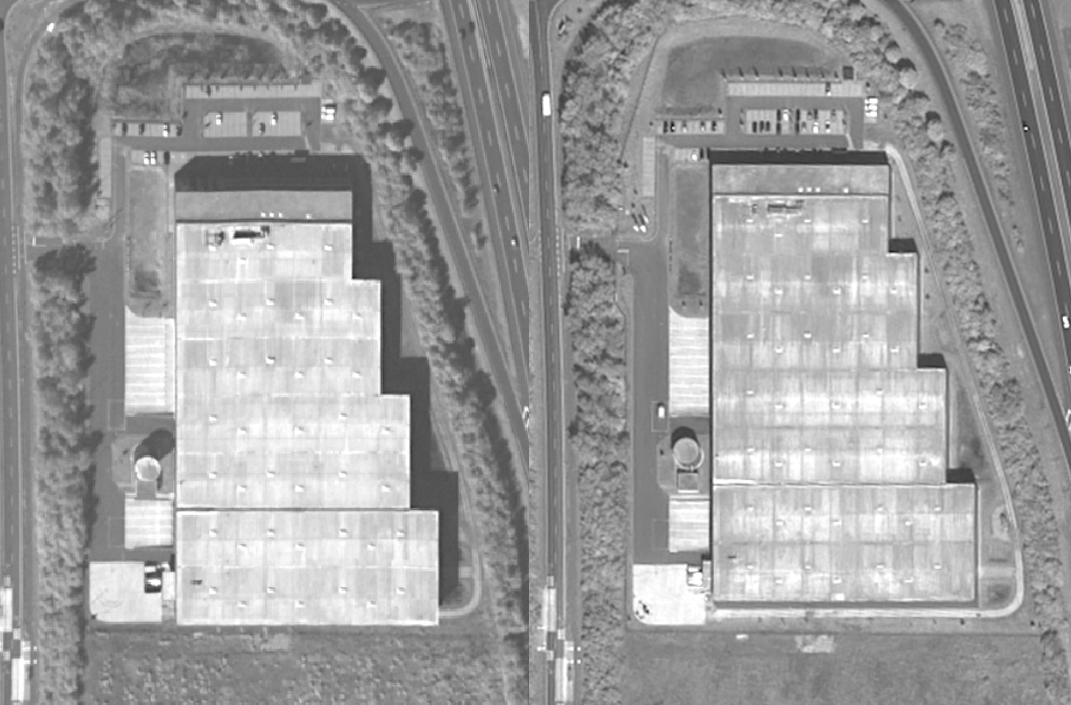
Two examples from our satellite surveillance. Left: Monday, August 12, 2024, 3:21pm local time. Right: Thursday, May 2, 2024, 12:13pm local time.
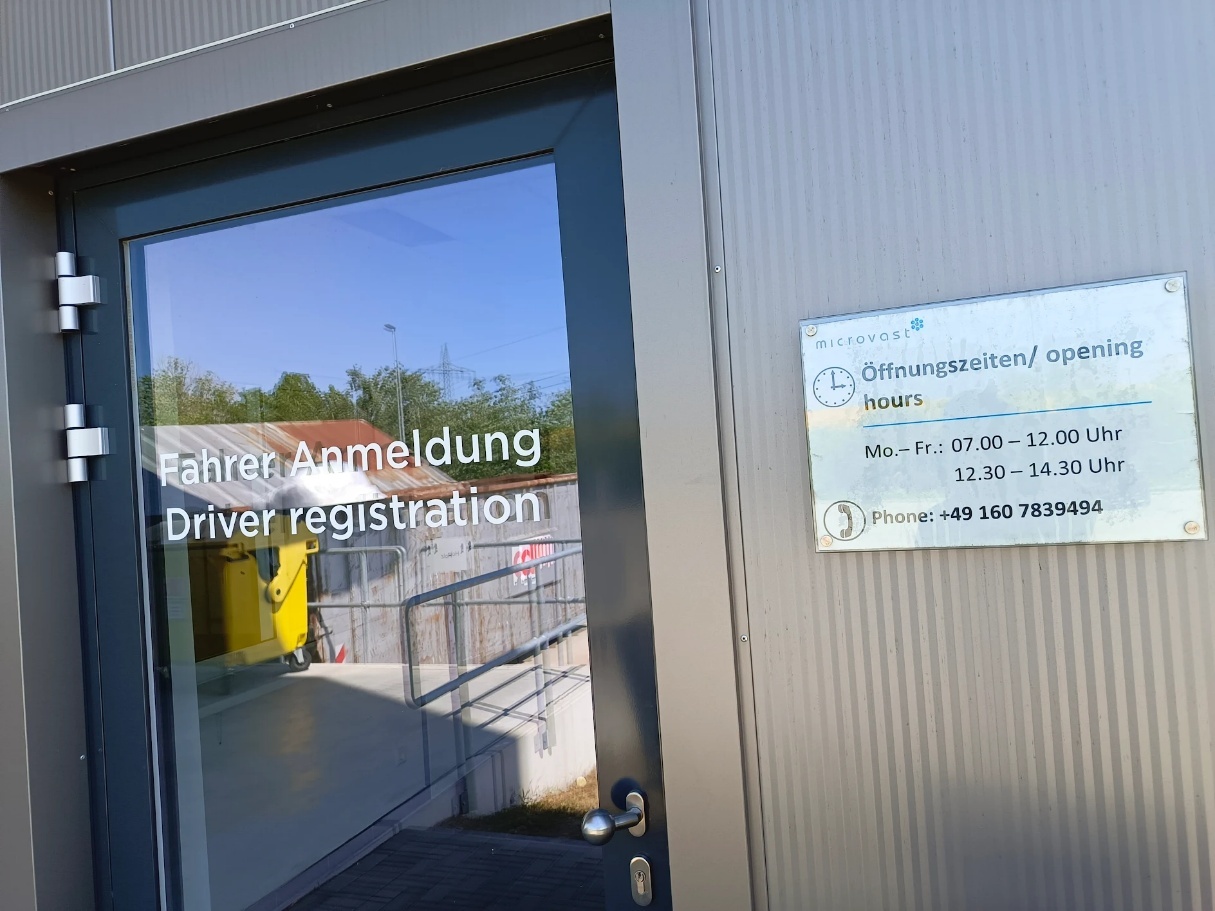
Third-party picture showing the opening hours for truck drivers (from Google Maps Reviews).
We question how the European facility can support the reported business activity when only about 10% of the claimed staff are working and there is minimal evidence of shipments moving in or out.
In 2021, we visited the facility, months after construction was completed and the first production line was reportedly launched. We observed extremely poor insulation, which raises doubts about whether batteries are even being produced, as proper temperature control is essential during the production phase. Additionally, we noted a complete lack of basic security measures. We witnessed gates and barriers left open and unattended, and saw no sign of any security presence.
The most important finding was an interview conducted with one of the facility’s employees, who was responsible for the reception and service area. When asked about the state of operations, the employee said they were not producing anything yet, and did not have business cards or a working landline. None of this was indicative of a manufacturing plant in operation for several months, as management had claimed.
In Spring 2022, one year after we first spoke with the employee, we followed up with them. They told us that the facility still wasn’t producing properly. When asked when production would be fully underway, the employee had no answer.
Over three years later, our images show production still has yet to ramp up. There is virtually no difference in activity from our 2021 images compared to recent ones. We have a complete collection of our satellite images here.
We believe that MVST’s German facility is simply not as active as portrayed, and instead serves primarily as a European facade for the company. This does not really come as a surprise, as we show later in this report, most of MVST’s supposed European customers are mostly tiny startups. (Iveco & FPT use their own packing facilities, not MVST’s)
The Chinese Facilities Are Surrounded by Lies
MVST’s current battery cell manufacturing capabilities are exclusively in China. MVST’s main Chinese subsidiary’s name is “Microvast Power Systems Co., Ltd. (“MPS”)”.
Our diligence team visited MVST’s facilities in China. We were surprised to see a very low level of activity, which surely could not match the employee count given by the company of over 2,500 employees. Our team observed some workers entering and exiting the facilities, estimating the overall count in the hundreds.
While we believe there is activity, we estimate the employee count and real activity about half of what MVST tells investors. This is further corroborated by other data points we uncovered.
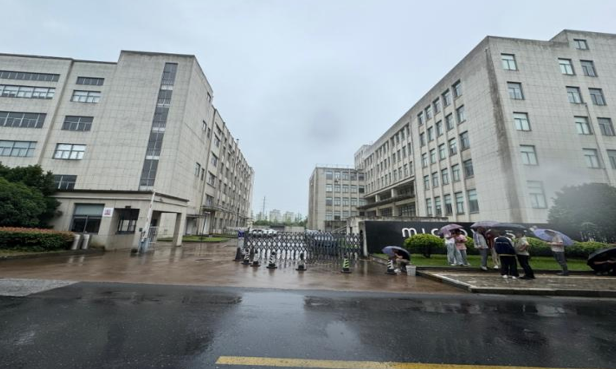
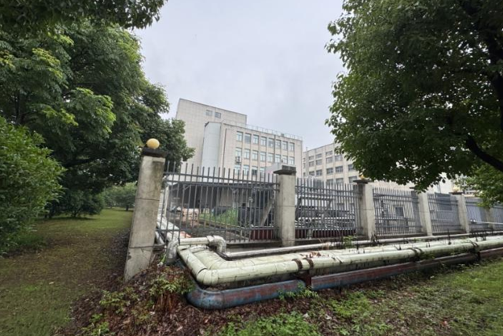
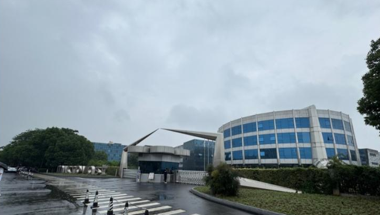
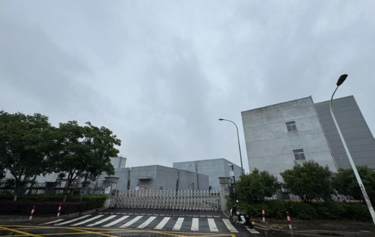
To get a more reliable idea of the real activity level of MVST’s facilities, we collected various documents from the local Chinese government. We found a document that was related to the environmental impact of MVST’s “Technical Renovation Project of Separator Production Line for Lithium Battery System with an Annual Capacity of 1.5 GWh”.
The document shows that in April 2021, when this document was drafted, MPS seemingly employed 1,800 people in the whole plant.
However, according to more recent Chinese government disclosure documents, as of the end of 2023, MPS only had a little over 1,400 employees, as shown below.
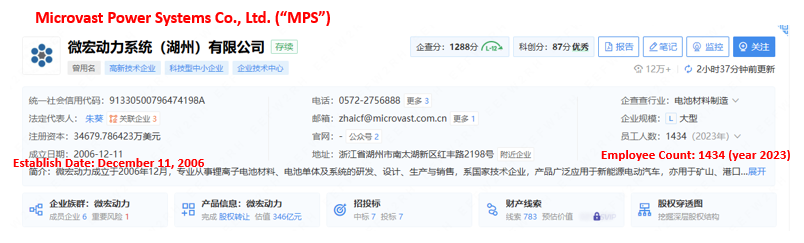
Source: Qichacha
Be reminded that this employee count decrease is over a period when MVST announced its Huzhou Phase 3.1 expansion being in full operation. This is a first red flag, the employee count had no reason to decrease this much while the factory is expanding, with more expansion underway (Phase 3.2) already announced. We tracked job advertisements for the plant and we were not able to find any indications that MVST hired more outsourced workers.
Worse yet, and likely where the entire story starts to fall apart, when responding to short-seller J Capital Research’s report in November 2023, MVST stated that they had more than 2,500 employees working in their facilities in China.
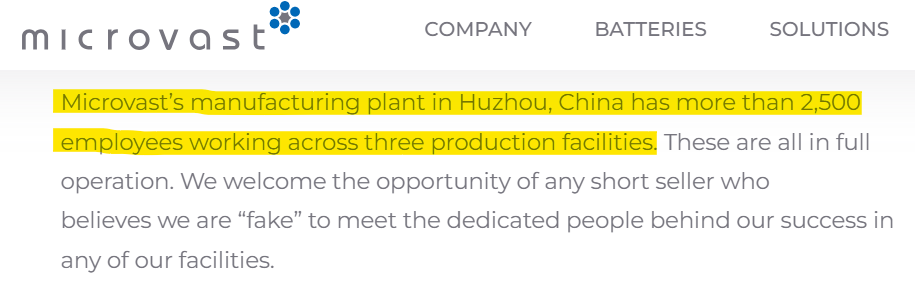
Note: Reminder that we did ask MVST for a tour of one of their facilities but did not receive an answer.
Not only does this number not make sense given our observations, but it also contradicts the company’s own disclosure. In their 2023 10-K, MVST stated that:
“As of December 31, 2023, we had 2,006 full-time employees and 955 independent contractors. “
A year later, in their 2024 10-K filing, the story changed once again:
“As of December 31, 2024, Microvast employed 1,921 full-time employees and 334 independent contractors.”
On one hand, we have local government filings that disclose MPS’ employee count being approximately 1,400; on the other hand, we have MVST announcing an employee count in China of over 2,500. But then, we see in the latest 10-K that MVST has a GLOBAL employee count of around 1,900 employees. The company seems unable to keep its own numbers consistent.
We found instances where MVST’s own disclosed employee count varied by over 25% in investor presentations that were issued mere days apart.
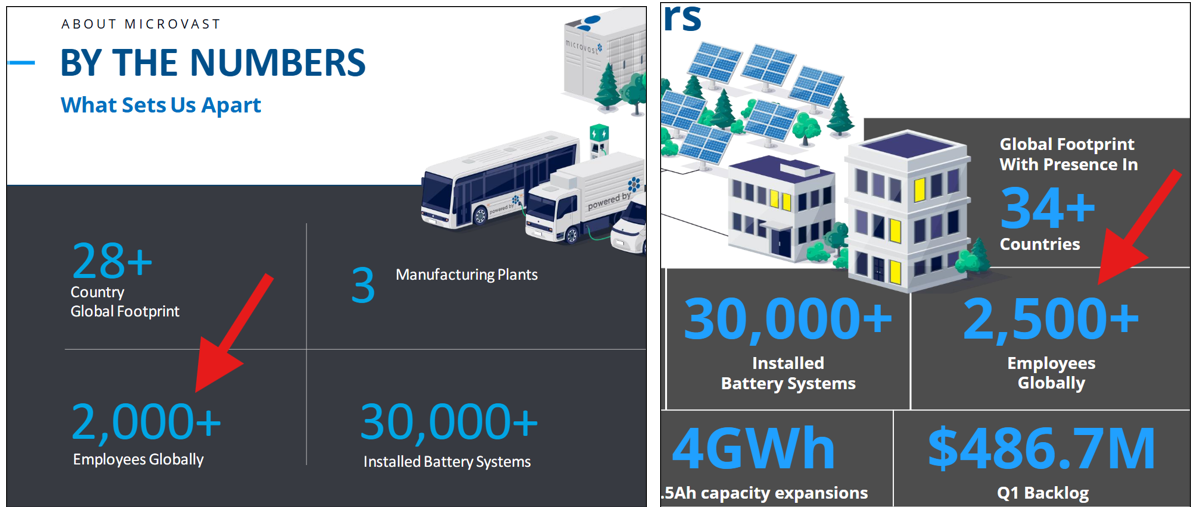
Source: MVST’s Q1 2023 (May) Investor Presentation & MVST’s May 2023 Investor Day Presentation.
We find the employee count, overall activity, and production volume that MVST presents for its China facilities highly doubtful.
Our suspicion is supported by the activity on the employee forums. The largest Chinese employee forum, Maimai, shows very few comments related to either Huzhou Hongwei New Energy Automobile Co., Ltd. or MPS. There are only 2 related posts on the platform, and the most recent post is from 2022.

Source: Maimai
We are giving an example of another company with supposedly fewer employees, yet in the same industry, to demonstrate this irregularity.
China Aviation Lithium Battery (Luoyang) Co., Ltd. (Chinese name: 中航锂电(洛阳)有限公司, “CALB (Luoyang)” thereafter) is a developer and manufacturer of lithium-ion batteries. According to Qichacha, it had 934 employees as of 2024. CALB (Luoyang) is supposed to have fewer employees than MPS.
However, when we search the Chinese name of China Aviation Lithium Battery (Luoyang) Co., Ltd. on Maimai, we find posts from its employees from 2023 and 2024, as compared to no results at all when searching MVST’s two major subsidiaries’ Chinese names on Maimai as shown above.
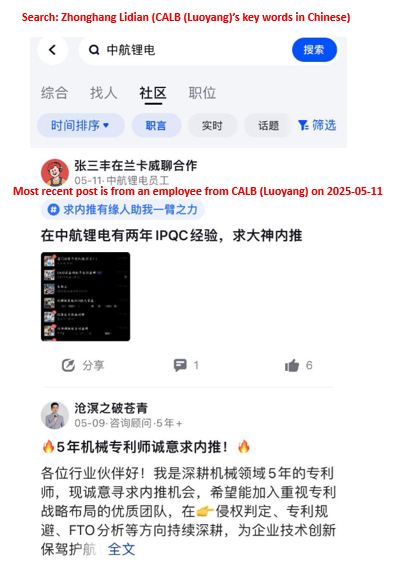
In addition, when searching the Chinese key words of China Aviation Lithium Battery (Luoyang) Co., Ltd. on Maimai, there was a post from an employee from CALB (Luoyang) as early as 05/11 this year. However, be reminded that the most recent post mentioning MPS was on 10/09/2022 when searching MPS’ Chinese key words on Maimai.
Source: Maimai
For a company that supposedly employs over two thousand employees as claimed, the fact that there are almost no posts or comments about the company on one of the biggest employee platforms does not make sense.
In April 2024, ZhongYi Testing issued an environmental projection inspection report for MVST’s “Annual 11 GWh Lithium-Ion Battery and System Project.” The report delineates three campus areas: Area 1 (new 11 GWh expansion), and Areas 2 and 3 (existing operational plants). The accompanying site maps highlight Area 1’s footprint, which spans roughly the same, or slightly larger, surface area as Areas 2 and 3 combined. A detailed layout shows Area 1 housing a new cell production facility, an additional pack facility, and other related support facilities.
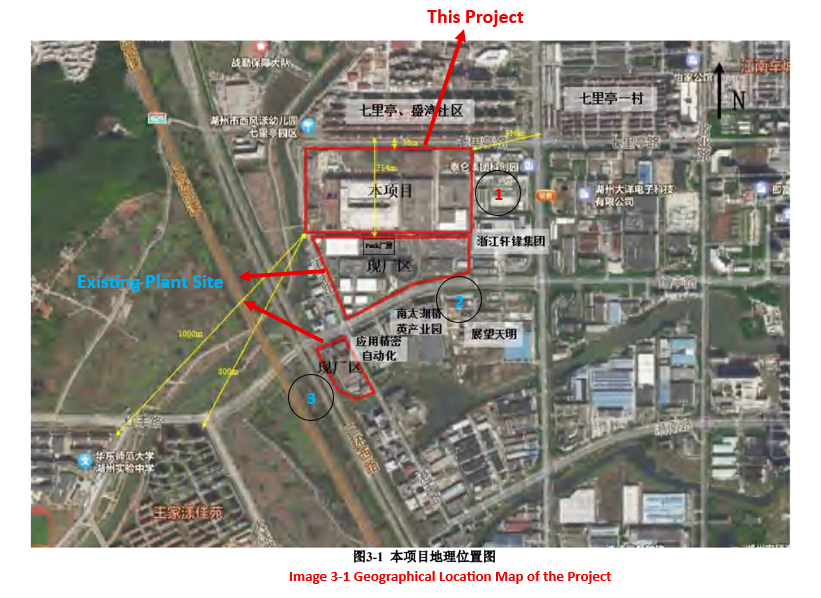
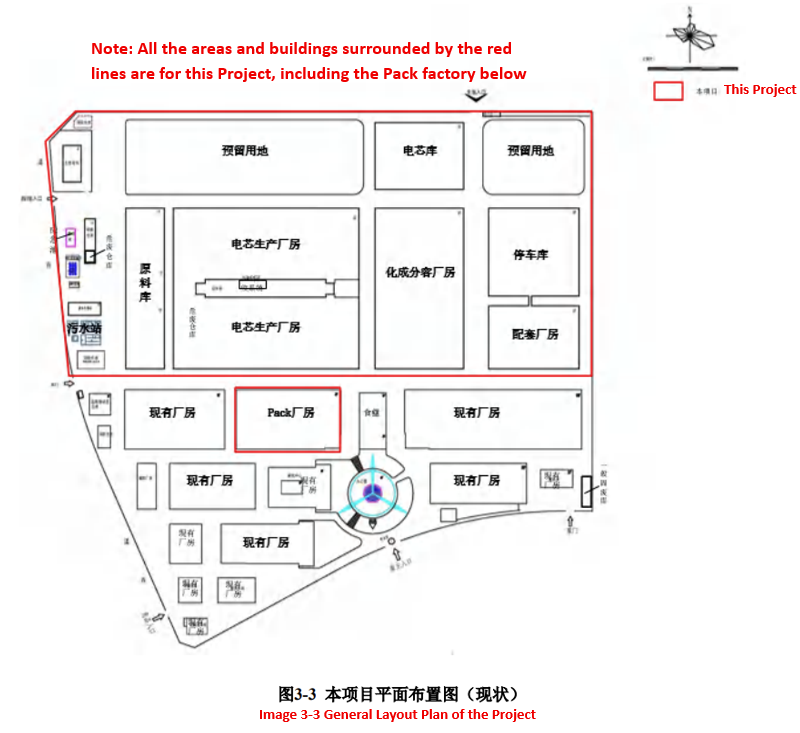
Despite the ambitious scale, the report lists just 200 employees assigned to Area 1 as shown below.
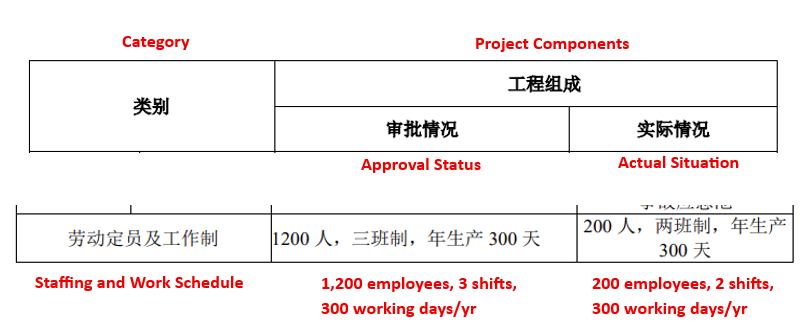
According to this third-party report, we would be left with 2,300 employees across Areas 2 and 3 if we refer to MVST’s disclosure on the Chinese facilities’ employee count. Given Area 1’s proportional size and dedicated staff count, it is implausible that the combined existing plants manage more than eleven times the workforce of the existing plants. This discrepancy strongly suggests that MVST’s published employee figures are materially inflated.
All the data we were able to find strongly suggests that MVST is fabricating a significant portion of its activities at its Chinese facilities.
American Facilities are Falling Through
Despite branding itself as an American manufacturer, MVST’s U.S. operations have repeatedly stalled due to poor cash management and a lack of funding.
In June 2023, MVST abruptly halted construction of its Kentucky separator plant, just three months after announcing it. Management blamed interest rates, yet rates were essentially unchanged from when the plan was unveiled. In reality, the project collapsed after the Department of Energy withdrew a $200 million grant over concerns about Chinese involvement, something management carefully avoided admitting.
MVST also announced a major U.S. expansion in 2021 with a cell manufacturing plant in Clarksville, Tennessee, backed by local tax incentives tied to 280 jobs. The company promoted the facility as veteran-focused and “Made in America.” But it failed to complete construction, ran out of funding despite hiring workers, and in 2024 conducted mass layoffs, without even filing a WARN notice.
Most concerning, MVST disclosed it has been unable to repatriate cash from China for over a year, capital it needs to fund critical U.S. operations. This liquidity issue directly contributed to the collapse of its Tennessee expansion. If MVST cannot access its own reported cash, we question the quality and reliability of its financials.
MVST also acquired an $11 million facility in Colorado for its ESS business, but a bit more than a year later, they sold the facility and equipment at a loss, supposedly to consolidate this business segment to Tennessee. In the end, MVST failed all of its U.S. business initiatives and lost dozens of millions of shareholder’s money in the process.
The Vast Majority of MVST’s Clients are Tiny Startups or Insignificant Economic Opportunities
MVST has been proudly touting many of its “commercial wins” over the years, with a handful of new customers every quarter, especially in Europe. We looked in-depth into these disclosed customers and uncovered that the vast majority of them did not represent any meaningful economic opportunities. It almost seems like these new customers were acquired just so that MVST could tout another “commercial win” and add names to its investor presentations and press releases. We believe most of these customers will barely ever generate more than a few hundred thousand dollars in revenue for MVST. We also find that MVST’s representations about the partnerships and clients are maliciously misleading.
Also note that for the year 2023, MVST sold its batteries to 297 customers. Logically, the ones they choose to highlight have to be the most significant and important. Given what we found, we wonder what the 95% left undisclosed look like.
Evoy
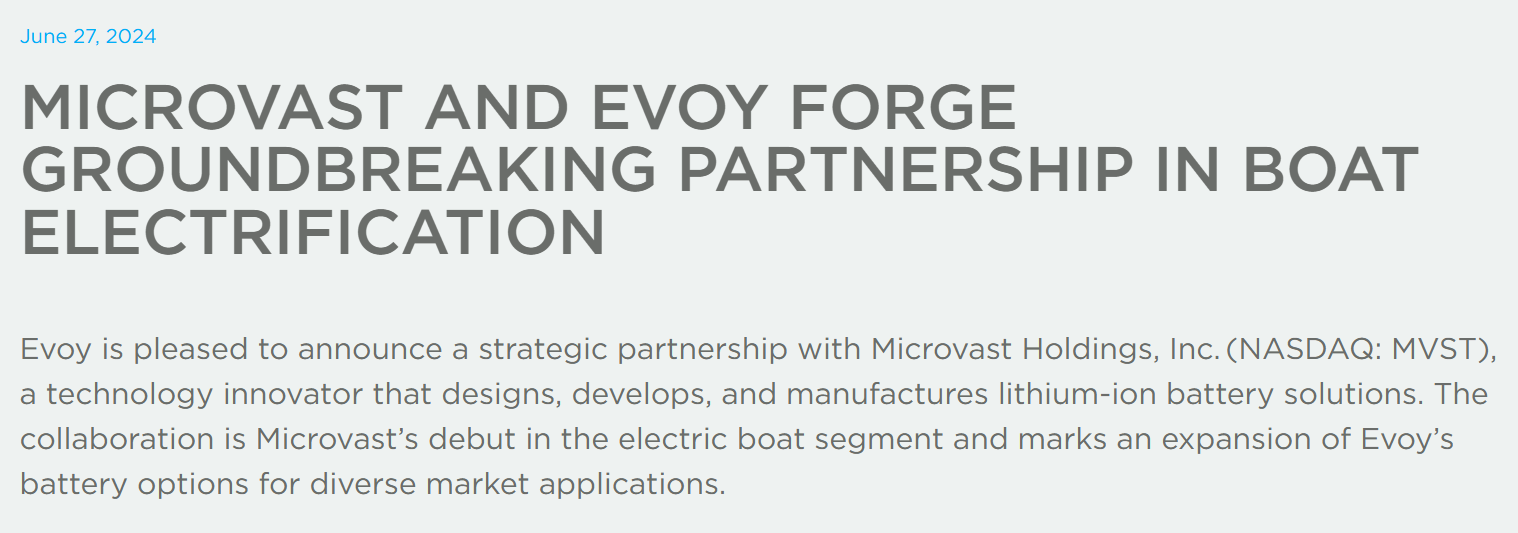
On June 27, 2024, both companies announced that MVST had “forged a groundbreaking partnership” with Evoy, an electric boat manufacturer from Norway. According to the press release, “Evoy will be integrating MVST MV-I high-power battery packs into their leisure boat product line.” Also note that MVST would not be the sole battery supplier for Evoy, as stated at the end of the press release “This partnership complements Evoy’s ongoing relationships with other key battery suppliers”. MVST also highlighted this relationship as a “strategic partnership” in their Q2 2024 Investor Presentation and in their Q4 2023 Investor Presentation as well.
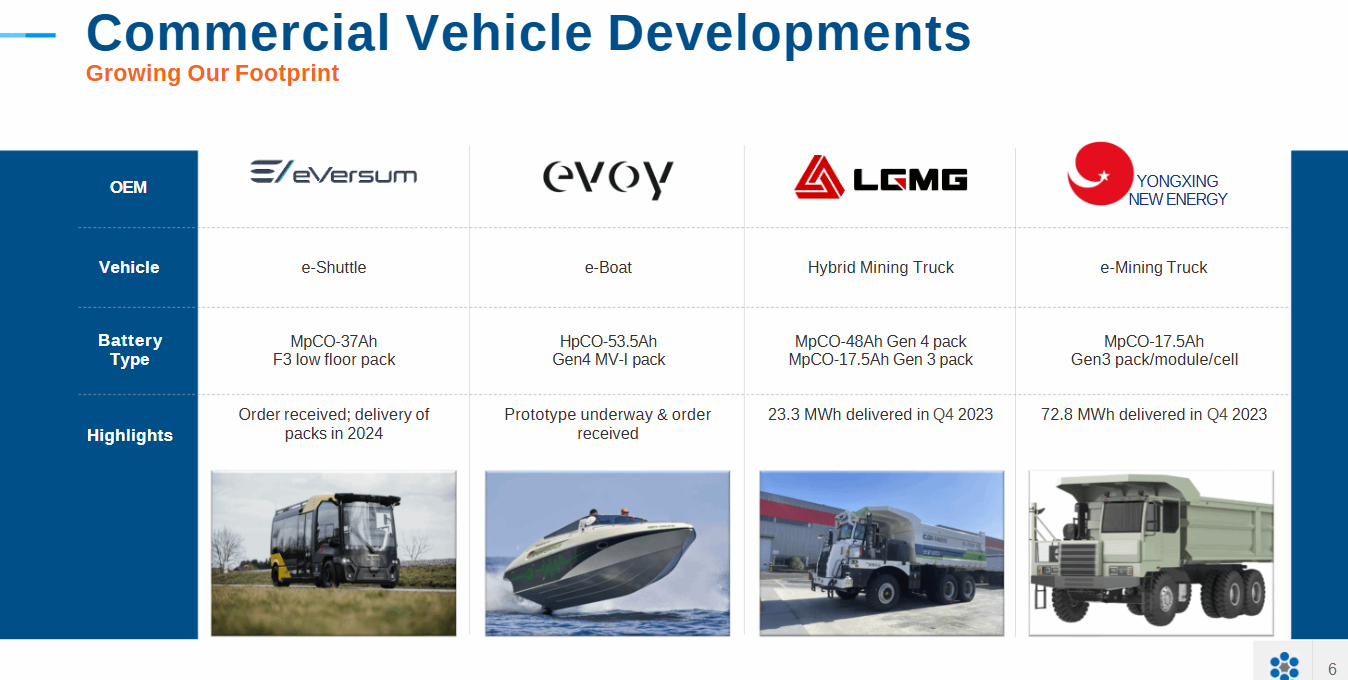
Source: Q4 2023 Investor Presentation “order received”.
We looked more in-depth and found Evoy annual accounts, which are publicly available on the official Norwegian government registers. It turns out that Evoy had only generated around €1,700,000 in 2023 and lost around €4,600,000 during that same period. To us, this does not constitute anything near a “strategic and/or groundbreaking partnership”. Investors cannot seriously hope for MVST to generate much revenue with this counterpart, especially when MVST is not the only battery supplier.
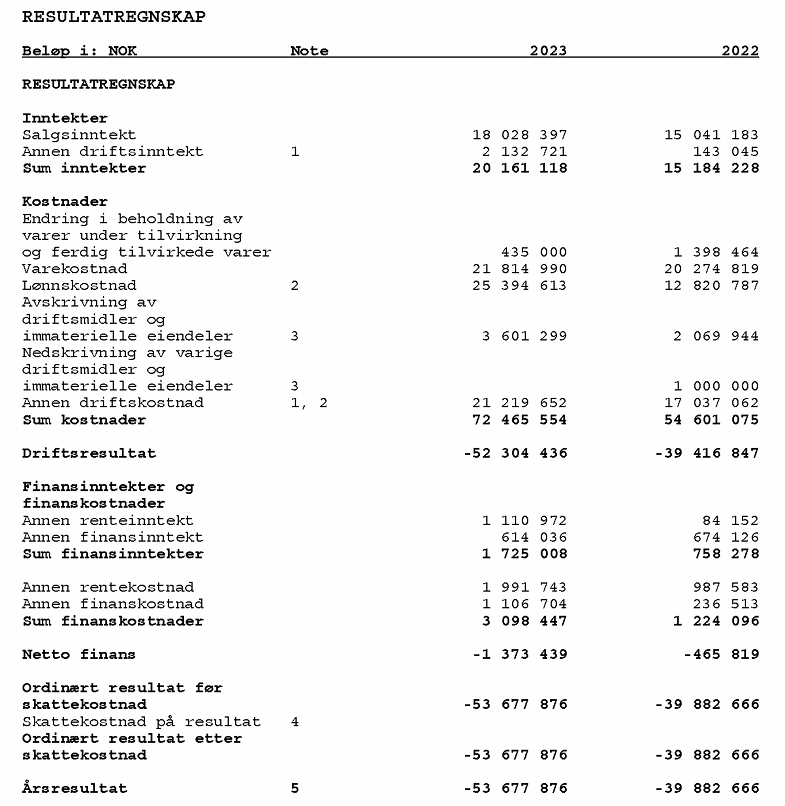
Note: “Inntekter” = revenue. 20,161,118 NOK = €1,741,586.
eVersum
MVST “celebrated four years of supplying high-performance battery systems” to eVersum in July 2024 with another delivery of battery packs during that year.
In 2021, MVST issued a press release that delighted investors: “MVST and eVersum to Jointly Drive Urban Commercial Vehicle Electrification, A potential supply of over €100 million battery systems is projected in the next 6 years.”
However, this has never materialized, and it was easily predictable. At the time, eVersum was more of a “start-up”. There were 20 total employees listed for “eVersum Mobility Solutions” on LinkedIn, only a handful of which appear to be working in the production facility in Slovenia. According to Slovenian national filings, only 4 to 9 employees total were employed at the Slovenian facility in 2021.
We also found that eVersum has historically generated ridiculously small revenues compared to the expectations they had disclosed for the partnership. Below are two graphs displaying the revenues in the years prior to the announcement.
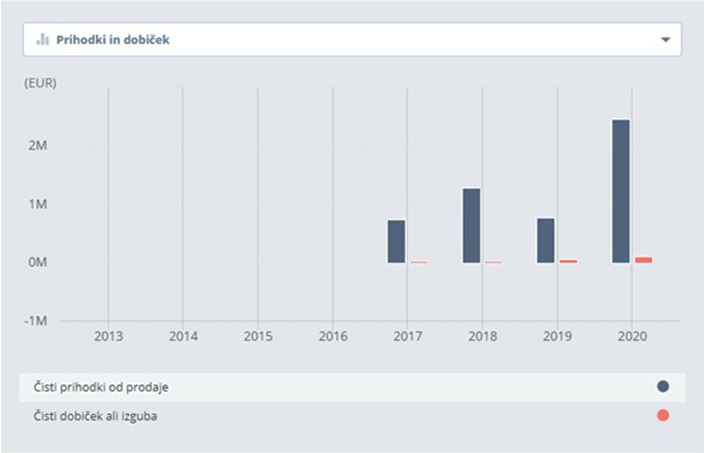
Note: “Prihodki od prodaje” = sales revenue, “Dobiček ali izguba” = profit or loss.
Source: eVersum Filings
After the partnership announcement, we visited eVersum’s only production facility at the time, which is a small warehouse located in Slovenia. It appears to be around 2,000 square meters (21,500 square foot). In addition, eVersum appeared to occupy only half of the warehouse, as well as a small tent-like storage structure across the road, situated among several other small businesses.
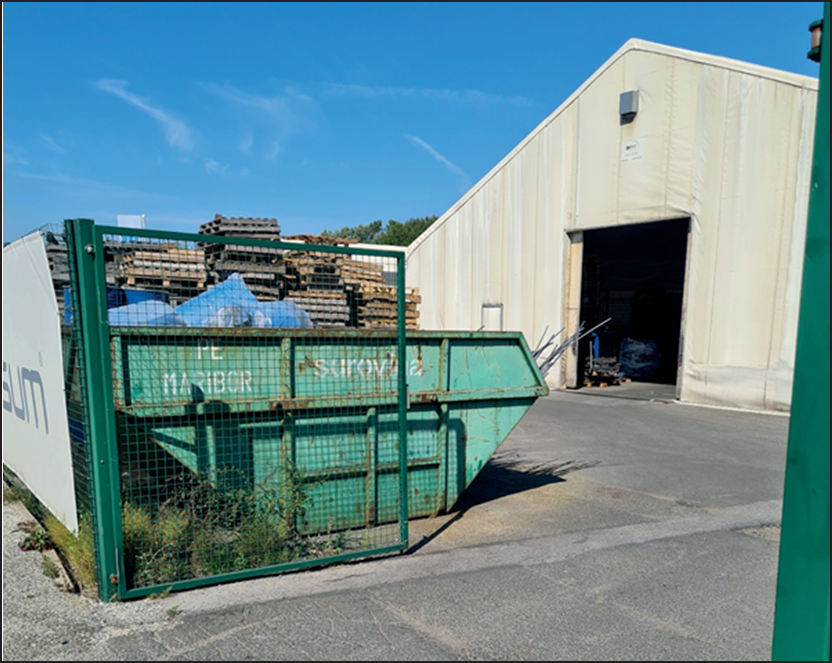
Along with its small size, the storage facility was only filled with waste materials which had nothing to do with electric vehicles. We noticed that there was close to no activity during business hours.
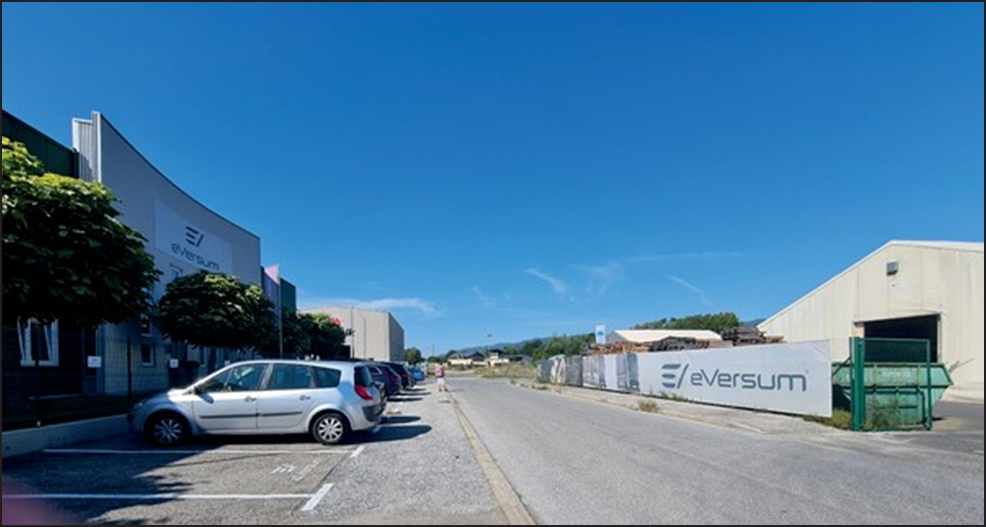
Since the initial announcement, eVersum grew moderately and currently has a production capacity of less than a 100 vehicles per year, which they expect to pass during the current year, according to an article from the Slovenia Times. The company generated a little less than €7 million in 2024, according to Dun & Bradstreet.
MVST’s projection of over €100 million by 2026 was ridiculous given the size of eVersum, even as of today.
Gaussin
Perhaps the most blatant attempt to mislead investors is without a doubt MVST’s partnership with Gaussin. The partnership was proudly announced by MVST on June 8th, 2021:
“MVST was officially announced as battery supplier of Gaussin to power its new electric and hydrogen trucks. Both companies will collaborate to develop series of new skateboard road trucks, which can be deployed for multiple purposes in the logistics and transport field.” […]
“Long-term collaboration with a volume forecast of more than 1.5 GWh in the next 5 years and up to 29 GWh until 2031” […]
“Gaussin and MVST expect to start building the first prototypes in both full electric and hydrogen version in mid-2021 to test the vehicle performance.”
This partnership is still to date one of MVST’s biggest in terms of revenue and order size in Europe.
According to the company’s filings and an interview with MVST’s CTO from Morgan Stanley’s analyst report, MVST had been monetizing its batteries at around $300/kWh in 2021. This gives us an estimate of around $450M if they supplied Gaussin with 1.5GWh of battery packs until 2026 and $8.7B until 2031 if they supplied them with the announced 29 GWh.
We believe that in reality, this partnership was made up to boost MVST’s projections. MVST used these unrealizable announcements to justify unrealistically ambitious forecasts.
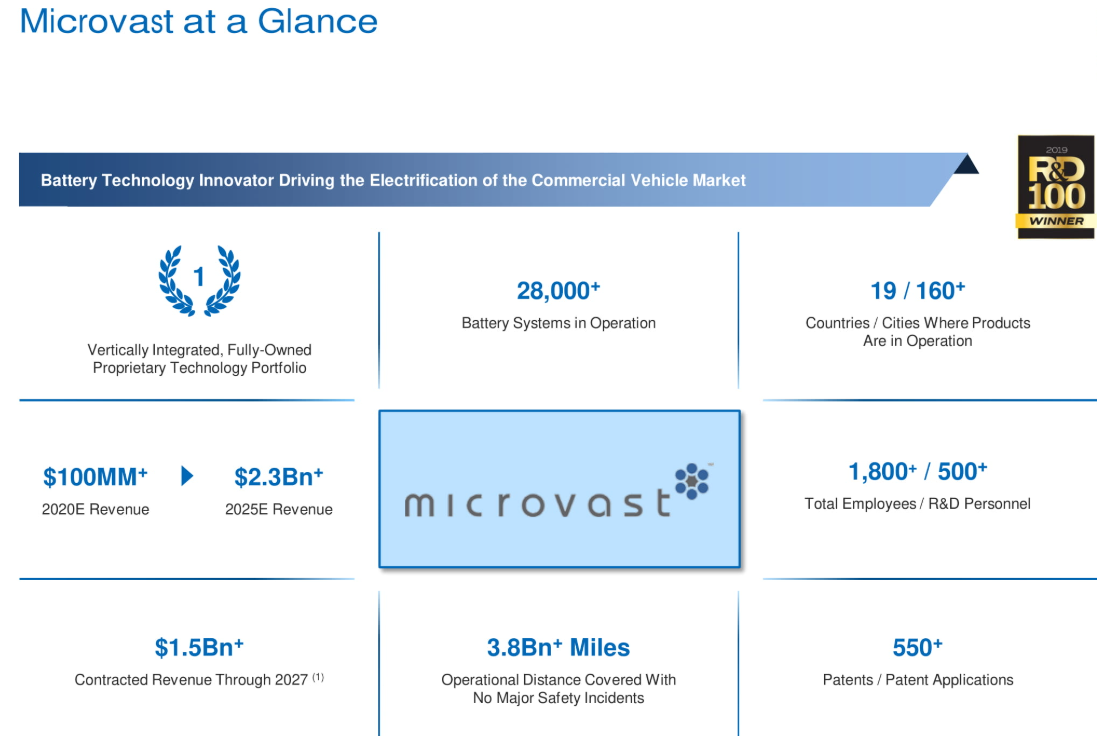
Screenshot from February 2021 Investor Presentation
Note that MVST did not give a revenue estimate in their Gaussin related press release as they did with other announcements, but instead future revenue opportunities in GWh.
In their own press release of the partnership, Gaussin did not mention any quantity or forecast, even though they are in the best position to give concrete numbers. At the time, the press release did not appear in Gaussin’s news section and in fact could not be found on their website at all.
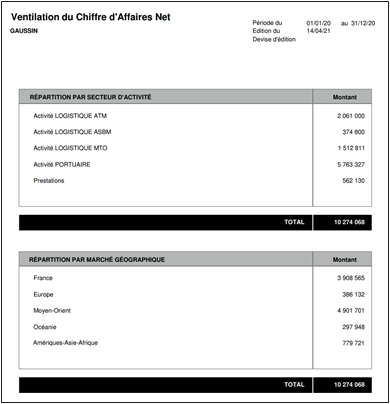
In 2020, Gaussin only generated €10,274,068 of revenue and only netted a profit of €183,730. In addition, more than half of the revenue, €5,763,327, comes from seaport/harbor activities where MVST will not be involved in any way.
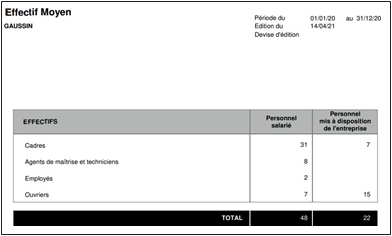
Gaussin was still relatively small, it only employed 48 employees and only operated one small factory in Héricourt, France.
What happened since? Nothing, the skateboard was never sold. Gaussin went bankrupt, and after two failed takeover attempts by other investors, a French court has ruled a compulsory liquidation of the company. Their website is not even accessible anymore.
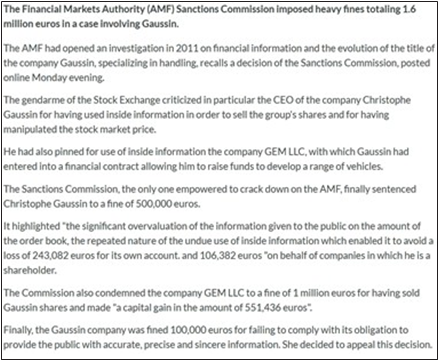
Gaussin was also fined by the Financial Markets Authority (AMF) Sanctions Commission for falsifying its books.
We believe Gaussin was willing to support MVST’s nonsensical announcement because of personal relationships through Lance Deng, who held various positions at MVST from 2011 to 2018 and later worked with Plug Power and Gaussin.
Overall, this appears to have been a wholly fabricated partnership between MVST and Gaussin, intended to inflate MVST’s projections and, by extension, its stock price.
Blackbuck EV
In their latest Investor Presentation, MVST highlighted a new “business development win” with “Blackbuck EV” for electric buses. Blackbuck EV does not appear anywhere else in MVST’s filings.
Blackbuck EV is an Indian company, not to be confused with Blackbuck, a trucking payment provider also from India. To avoid any confusion, here is the website Blackbuck EV – Electric Bus and the LinkedIn page of the real counterpart: (30) Blackbuck EV: Overview | LinkedIn.
Blackbuck EV is a tiny startup; they operate a small hangar in the middle of an industrial park in India. All of their images on the website are AI-generated. It is unclear if they have developed even one bus yet. According to Tofler, they did less than $100k in revenue in 2023.
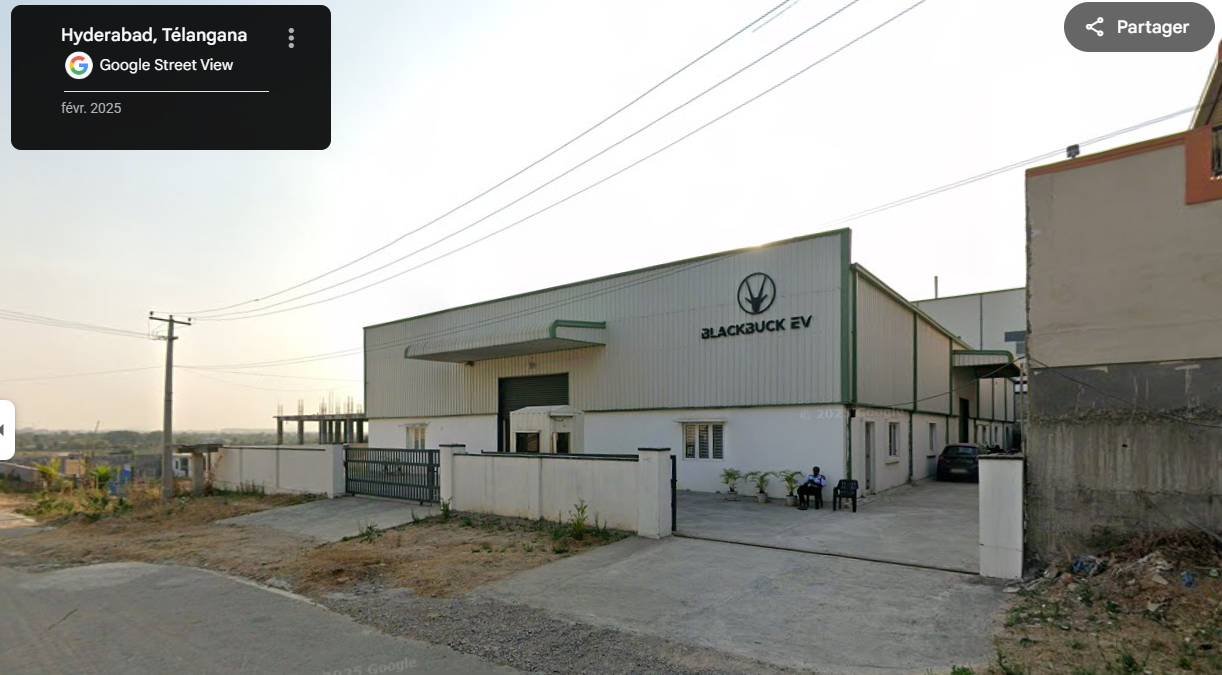
This company does not represent any substantial economic opportunity and we wonder why MVST represents it as such.
REE Automotive
REE Automotive is a publicly traded company from Israel that was highlighted by MVST as part of the “key accounts & major project developments” and who supposedly ordered batteries for 300+ of their vehicles.
However, it is unclear whether that order has been completed, as REE recently decided to pause their production plans to focus on a software-centric model due to an unfavorable and uncertain macro environment.
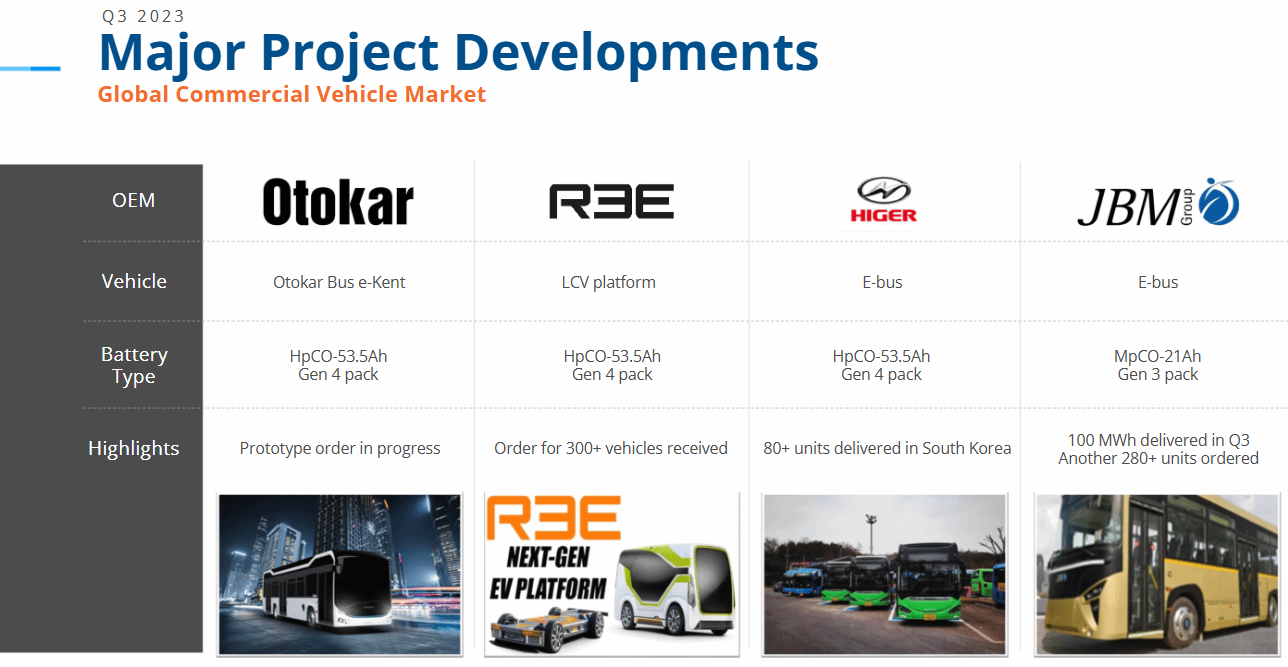
Moreover, REE’s filings do not directly mention how many batteries they bought from MVST. The statement that REE bought 300+ batteries from MVST is only found in MVST’s presentation. We are somewhat skeptical about this order because as of today, REE has only manufactured around 25 vehicles, mostly prototypes. Below is a screenshot of REE’s latest 10-K filing showing their results of operations.
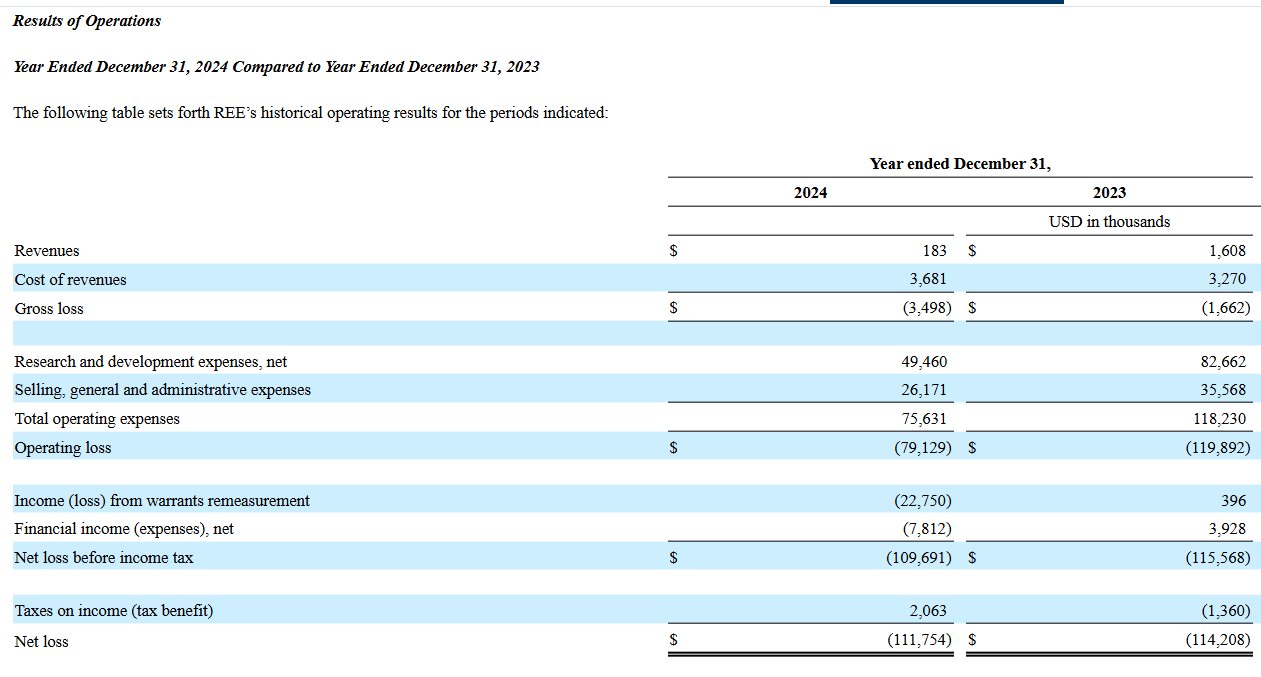
We find it highly doubtful that this order was ever fulfilled, or ever will be, and that this entity constitutes a meaningful customer.
GBV Australia
In their Q4 2024 Investor presentation, MVST also highlighted GBV as another “new business development,” stating that they would power their Australian heavy-duty truck.
When checking the product specifications document, we find that MVST is in fact powering the “hydrogen powered semi-truck” of GBV Australia.
The issue is, there is no material proof that any of these trucks have been sold to date. GBV’s Australia segment appears to be almost immaterial to their parent company, with all of their pictures being CGI. We do not believe that this client is bringing MVST any material revenue opportunity.
Otokar and Enginius
Two of the biggest counterparts announced by MVST did not actually hold any economic substance. Otokar and Enginius are leading bus and vehicle manufacturers in Turkey and Germany, respectively, each generating hundreds of millions to over a billion dollars in annual revenue. Both were highlighted as “commercial development wins” in various Investor Presentations of MVST. However, for both of them, the only orders received were “prototype” orders.
There were no follow-up orders of any kind, which suggests the batteries failed to meet expectations.
VDL
Again, VDL, one of MVST’s most credible counterparts in Europe, was highlighted in their latest Investor Presentation as they “won back” this client to power their “18m articulated e-bus.”
However, there are a few issues we observed. First, the only verifiable sale from MVST to VDL were batteries for a little more than a 100 buses in 2018. Moreover, there is no recent press release from VDL announcing the sale of the specific model that MVST is powering (18m articulated e-bus), which means that the order they received is most likely small. We estimate that the battery packs sold to them cost only a few tens of thousands of dollars each. Without a huge order of this particular model, MVST will not generated any significant revenue from this customer.
Propel
MVST has been highlighting their “deepened cooperation” with Propel, which had never been mentioned in any filings prior to this presentation. As with many other counterparts, MVST provides investors with very little details on this partnership.
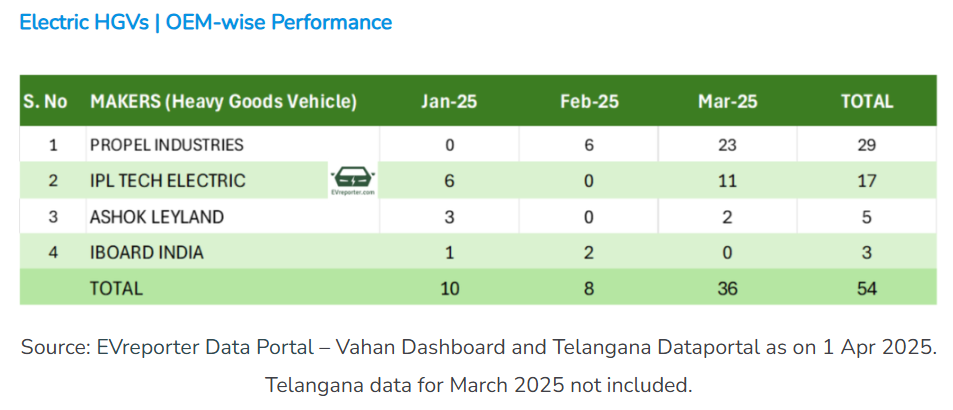
Propel is a large heavy mining machinery and vehicle manufacturer based in India. However, MVST is not their exclusive battery supplier. More importantly, Propel sells very few electric vehicles. According to an industry website that tracks EV sales in India, Propel sold only 29 EVs in Q1 2025.
MAFI Transport-Systeme GmbH & TREPEL Airport Equipment GmbH
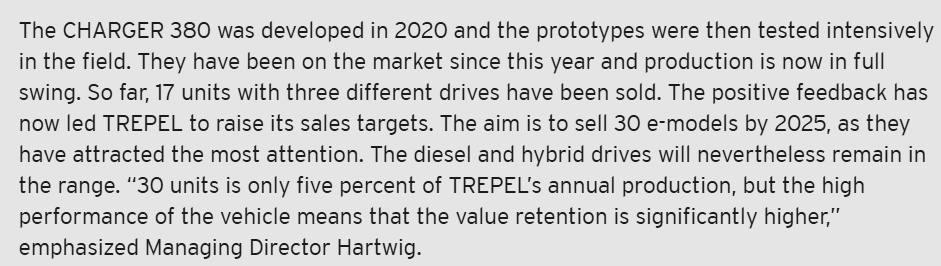
In March 2023, MVST announced that they were selected by Mafi & Trepel as their battery supplier for a couple of their vehicles: “MVST’s MV-C Gen 4 lithium-ion battery packs to power MAFI & TREPEL’s Electric Terminal Tractor and Charger 380e Tractor.”
The counterpart is not the issue, as Mafi & Trepel are both legitimate companies with high revenue and recognition. The issue here lies in the economic substance of this relationship, which we uncovered is nothing to be excited about. The main vehicles that MVST’s batteries are supposed to be powering, the Charger 380e Tractor line, saw abysmal sales with only 17 sold since 2020.
Mysteriously Vanishing Mega Clients
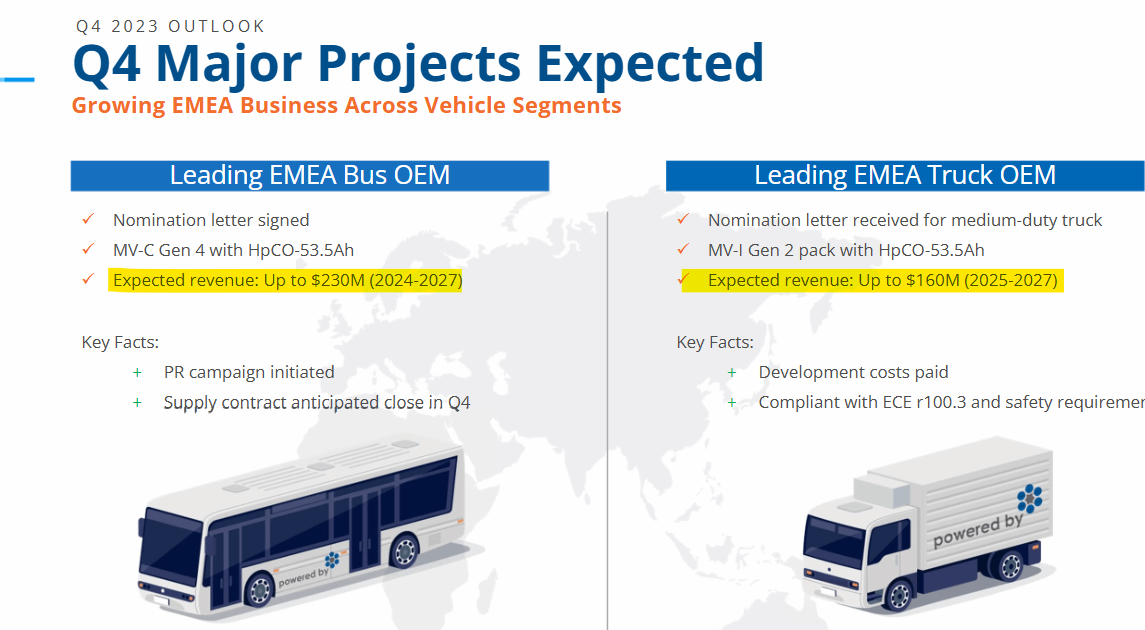
In its Investor Presentation from Q4 2023, MVST touts two projects with leading EMEA bus & truck OEMs. Together, the revenue generated from these two projects was expected to be up to $390 million, from 2024 to 2027. We wonder if these opportunities were with existing clients, something the company should have mentioned. If not, these opportunities are still nowhere to be found.
The Lack of Credible and Material New Economic Opportunities Raise Concerns About Future Growth
MVST trying to highlight new business and commercial wins is not a coincidence. To support its growth projections, MVST will need to onboard new clients and generate meaningful revenue from them. This is because its largest existing client is projecting a decline in sales for the coming year. According to MVST’s own disclosures, Iveco and its subsidiary FPT accounted for 40% of total revenue in 2024 and virtually all of the company’s revenue growth.
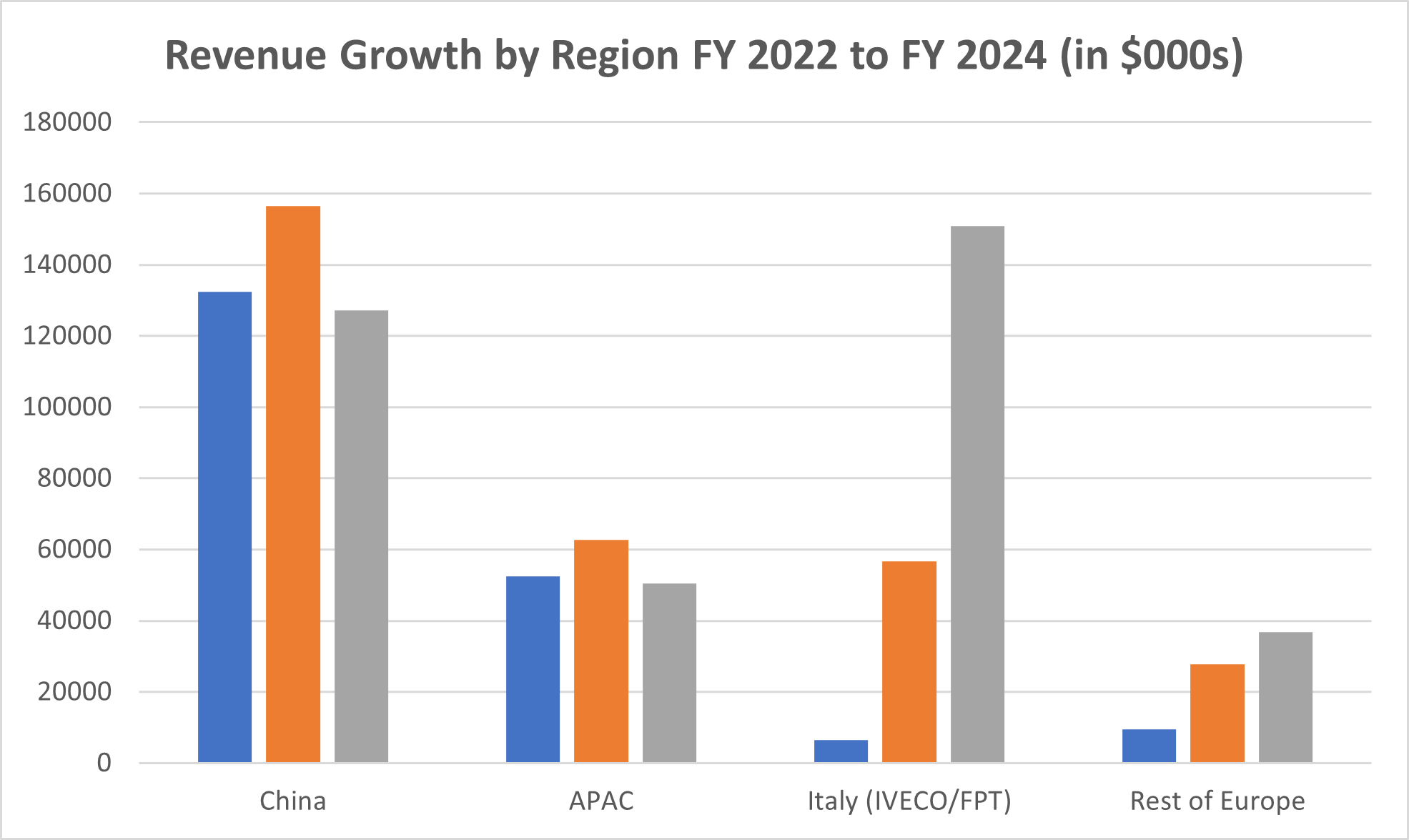
Note: Blue = FY 2022, Orange = FY 2023 & Grey = FY 2024
MVST has announced to investors that it forecasts a growth of over 20% in the EMEA (Europe, Middle East, Africa) in their latest Investor Presentation, but we believe that revenue will fall short of these expectations. While Iveco had a strong year in terms of electric vehicle sales, with a huge increase in deliveries especially in the Q4 2024, their sales numbers for Q1 2025 and their forecast for the rest of the year indicate a slowing, declining growth, which means the same for MVST’s revenue from this client.
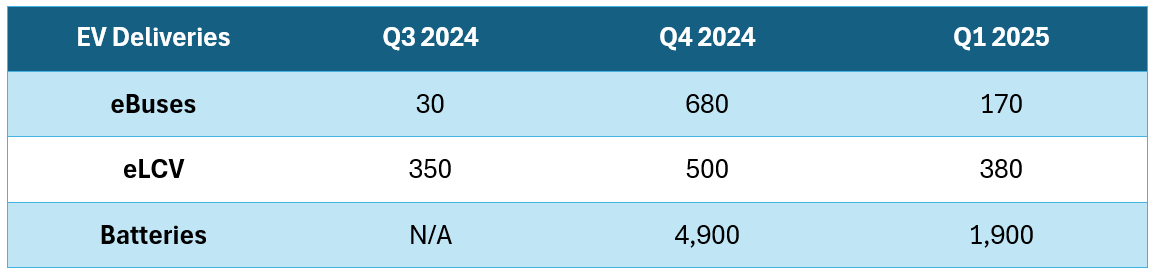
Source: Iveco Investors Presentations.
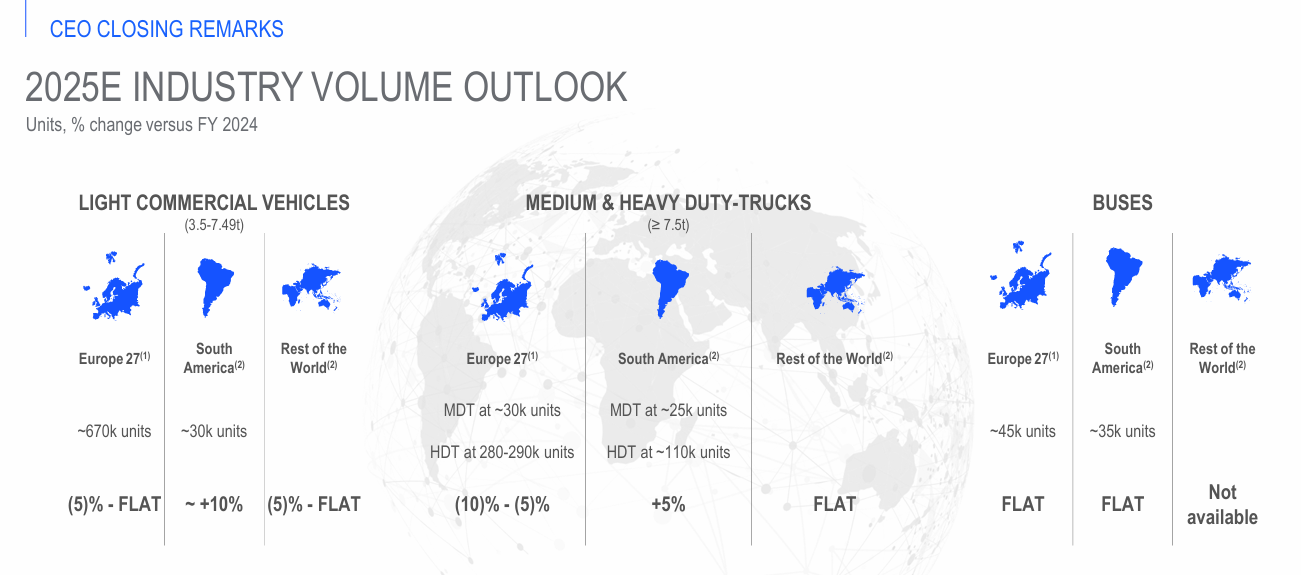
Source: Iveco Investors Presentations.
Besides the Iveco partnership, we were unable to confirm any other major partners of MVST, further hinting at an inability to recruit real sizable clients. The shrinking number of customers that Microvast is serving per year is validating our concerns.
MVST Deliberately and Vehemently Lied About its Ties to the Chinese Communist Party
In 2022, as mentioned earlier, the U.S. Department of Energy reportedly awarded $200 million to MVST for the project of “Thermally Stable Polyaramid Separator U.S. Manufacturing Plant.” However, after several months, the Department of Energy “canceled a $200 million grant awarded to Microvast after lawmakers questioned the lithium-ion battery maker’s ties to China’s government,” according to this report and other sources.
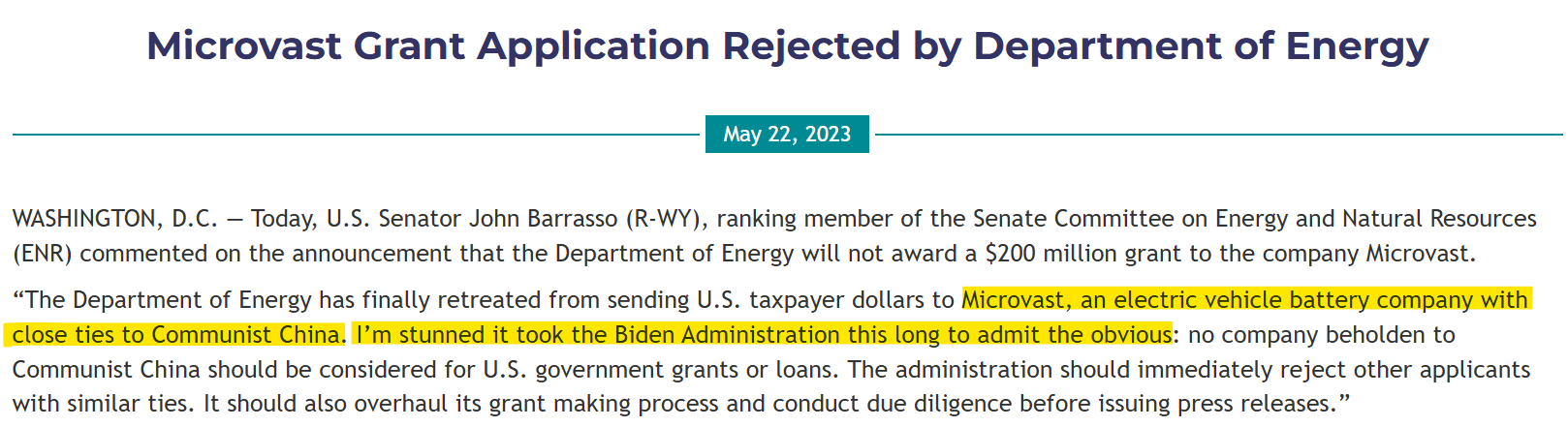
Source: Senate Committee on Energy & Natural Resources Comment.
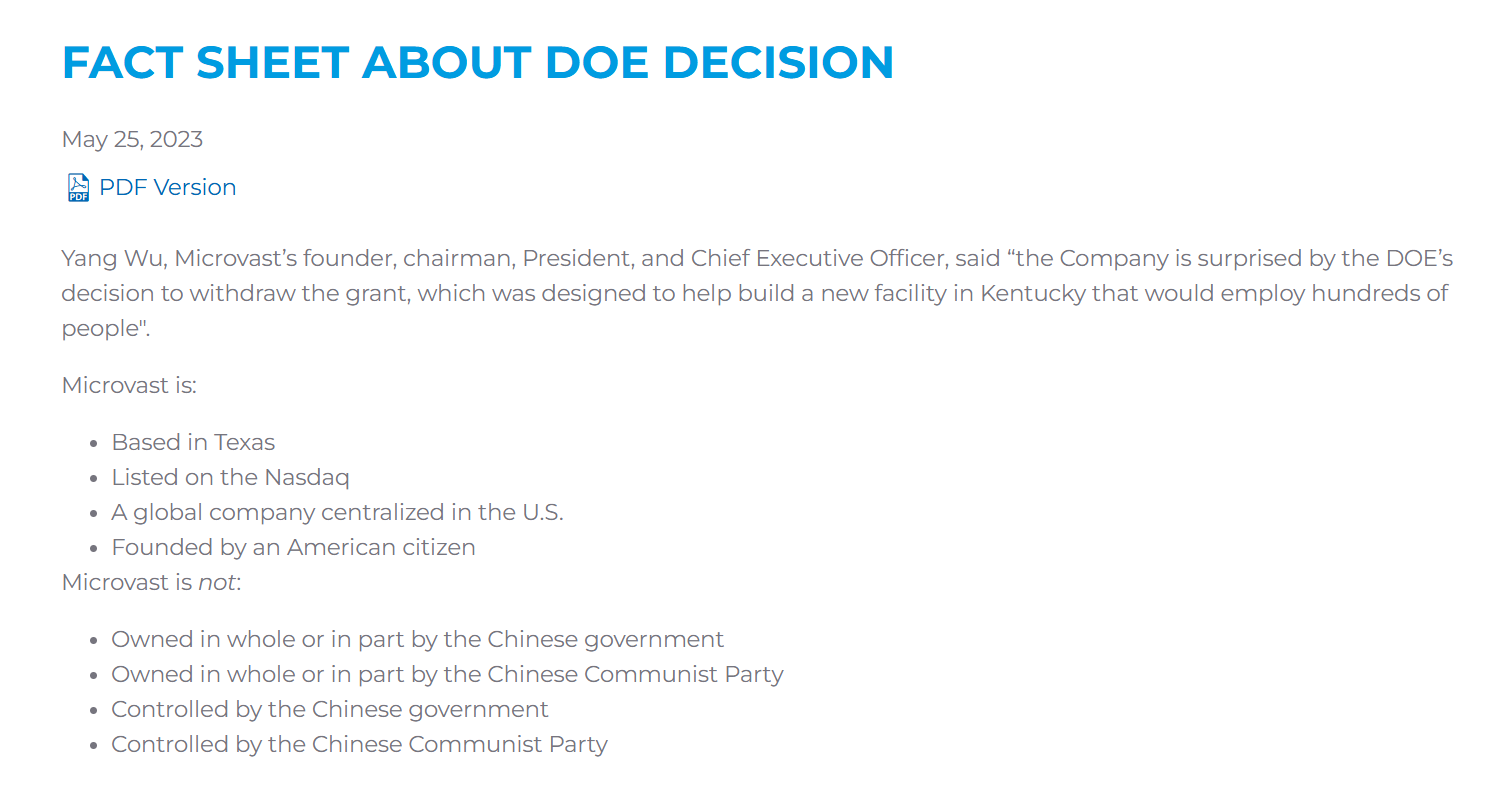
In response to alleged ties between MVST and the Chinese Communist Party, the company put out several statements categorically refuting any ties to the Chinese government. MVST stated that “it is not owned in whole or in part by the Chinese government and/or the Chinese Communist Party.”
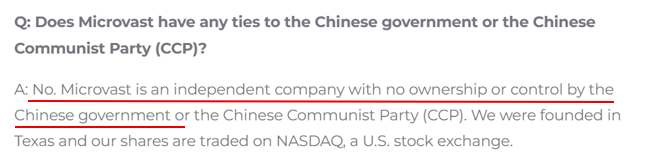
On its own website, MVST stated that the company “is an independent company with no ownership or control by the Chinese government…”
We found the irrefutable paper trail that proves that the CCP is actually a shareholder in the most important Chinese subsidiary.
According to the company’s 2024 10-K, MVST owns 100% of 6 subsidiaries as of December 31, 2024.
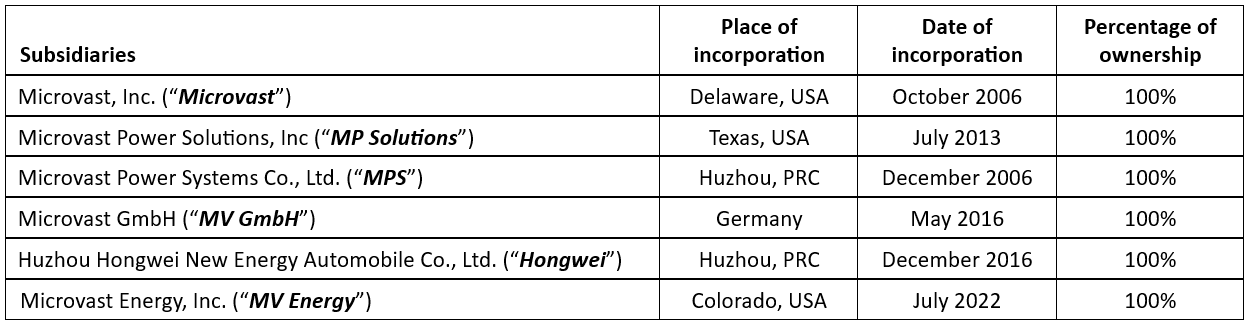
Source: MVST 2024 10-K, page F-14
Microvast Power Systems Co., Ltd. (“MPS”) is one of MVST’s earliest and biggest subsidiaries. It was established in December 2006 in the city of Huzhou, Zhejiang Province, China.
According to Qichacha, MPS’ Chinese name is 微宏动力系统(湖州)有限公司. What’s worth noting is that MPS also owns 100% of 3 out of 4 subsidiaries located in China and accounts for almost the entire employee count in China. This makes MPS the key Chinese and global subsidiary of MVST, as they also operate all the battery cell manufacturing capacity of the company.
In MVST’s annual reports, the company claims that it owns 100% of MPS. However, according to Qichacha, which sources from the local government data in China, MVST owns 99.15% of MPS, and there are 3 other entities that own an aggregate of less than 1% of MPS.
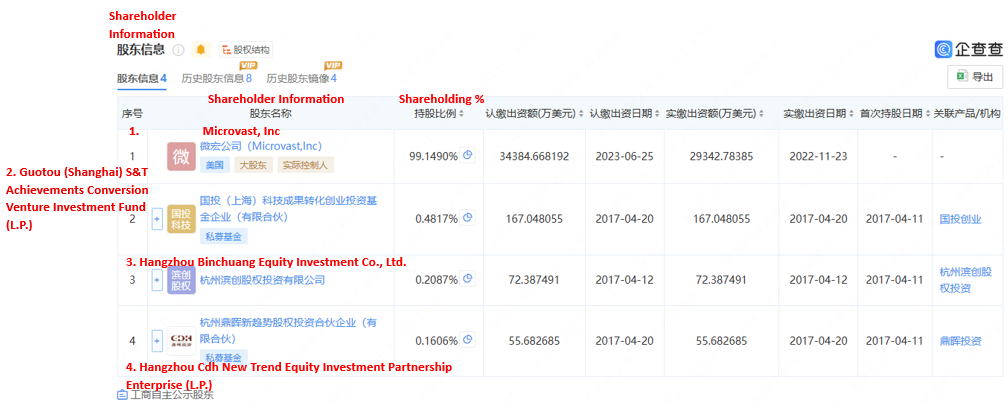
Source: Qichacha
We dug deeper into these entities and found that the second shareholder, Guotou (Shanghai) S&T Achievements Conversion Venture Investment Fund (L.P.), is directly linked and owned by the Chinese government. The diagram below shows the ownership links.
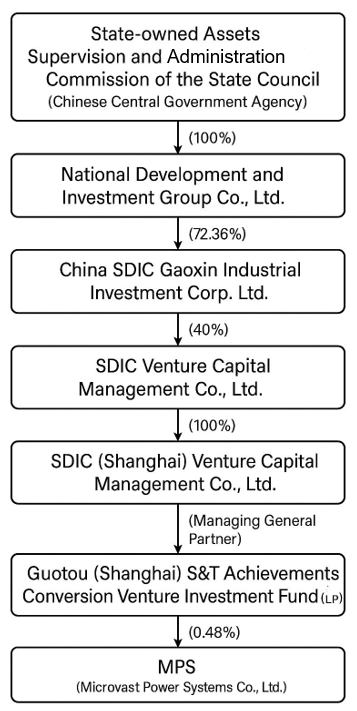
Further details in our Appendix here
This indisputably proves MVST’s ties with the Chinese government. What’s perhaps more troubling is the extent to which MVST’s management has misrepresented the facts.
If we could find it, how did the auditor miss this? Unfortunately for investors, MVST’s auditor Deloitte Touche Tohmatsu Certified Public Accountants LLP is no stranger to us, as this auditor has signed off on the financials of notable past frauds such as Gaotu Techedu Inc. (GOTU, previous ticker: GSX).
Conclusion
Our research shows numerous lies and falsehoods pushed by MVST. The German facility is barely more than a facade, while the Chinese facilities operate at only half the capacity that the company portrays. Consequentially we believe the financial statements cannot be relied upon.
The most obvious lie we expose in this report is the involvement of the CCP in MVST. A relationship that MVST management has explicitly denied. At some point we believe MVST’s auditor Deloitte Touche Tohmatsu Certified Public Accountants LLP needs to see consequences for signing off on sizable public market frauds.