
Read below or open PDF version
- Raiffeisen Bank International AG (RBI), the Vienna-listed owner of the largest Western bank still operating in Russia, has become a key channel for sanctions circumvention in Russia’s wartime economy while assuring investors, regulators and the public that it is winding down its business there.
- Our investigation uncovered $1.191 billion in Russian trade involving goods covered by EU, U.S., U.K. or Swiss import and export restrictions in force at the time. The customs records carry AO Raiffeisenbank’s /3292/ contract-registration code, linking the registered trade contracts to the bank.
- That includes $106.75 million in goods of the kinds used in Russia’s most powerful weaponry. The shipments include rifle scopes, components used in Russian battle tanks and machine tools of the kind used to build nuclear warheads and ballistic missiles.
- Our undercover investigation tested Raiffeisenbank’s response to explicit references to Russian military customers, drone fundraising and Iran. One manager agreed to the proposed Iran trade arrangement circumventing the US export controls. Several others said a fund buying drones for the war could open an account. In our view, those responses expose a gap between RBI’s public sanctions assurances and the guidance its staff gave prospective clients.
- Customs data reports more than $10 million in trade with Iran and North Korea carrying Raiffeisenbank’s bank code, suggesting that the sanctions issue goes far beyond Russia.
- A separate screen confirms $49 million in recorded trade involving at least 33 parties while sanctions were in force, with every retained record carrying Raiffeisenbank’s registration code.
- An adviser who helps Russians move money abroad told us that AO Raiffeisenbank staff coach clients how to circumvent sanctions.
- OFAC’s 2023 inquiry prompted RBI to assure investors that it maintained policies, monitoring and screening tools to comply with applicable sanctions. The subsequent customs records and our 2026 undercover approaches raise serious questions about whether its Russian business implemented those publicly promised standards.
- RBI highlights roughly €700 million in legally restricted cash, while in reality over €12 billion cash is tied up in Russia… RBI’s disclosures fail to give shareholders a clear account of how much cash is really trapped in Russia and unavailable to the wider group.
- Discounting the cash that is tied up in Russia results in RBI having a real Liquidity Coverage Ratio “LCR” of 105%, just five points above the regulatory minimum. RBI’s own published core LCR excluding Russia is 135%.
- RBI sold Belarus’s most profitable private bank at a steep discount to a buyer with no operating track record, in a deal experts and activists believe bears the hallmarks of sanctions circumvention and corruption. Priorbank went to an Abu Dhabi shell company formed in late 2022, with no website, for roughly 60% below the book value of RBI’s stake.
- It is suing Rasperia for €3.15 billion to recover, from a sanctioned oligarch’s frozen STRABAG assets, the roughly €2.4 billion already seized from its Russian subsidiary. RBI is betting its recovery on a court case in Vienna. Two threats hang over the plan. Experts and Austrian politicians say the case resembles a court-enabled asset swap, and regulators could eventually intervene. Moscow can still seize RBI’s trapped cash at any moment, as it already has with UniCredit, Deutsche Bank, Commerzbank and JPMorgan.
- Deloitte dropped Rasperia from RBI’s group key audit matters in the very year the claim turned into a cash seizure, and Russia does not appear there at all. In the parent-company audit, by contrast, Deloitte warns that RBI may not recover its investments in subsidiaries, after the Russian stake was written down by about €1.2 billion. The same auditor flags the Russia risk in one set of accounts and leaves it out of the other. In our view, this understates the risk to investors.
Content
Introduction
It is obvious to everyone now that RBI’s bet on a quick resolution to Russia’s invasion of Ukraine failed. As a result, the bank was left as one of the last and biggest Western banks in Russia, looking for a way to minimize its exit losses for a fifth year, without success. The group decided to stay until it could find a buyer for the Russian subsidiary.
The bank never completed a sale. Then came a Russian goodbye, the ritual in which guests announce their departure, share more toasts and repeatedly insist they need to leave, only to end up staying as long again as they already have. RBI has been in Russia since the 1990s and appears to have assimilated well. Since 2022, RBI has pledged to exit Russia on dozens of occasions. It has not left yet.
While RBI was telling investors it was winding down in Russia, the Russian Central Bank kept designating its subsidiary “systemically important,” a status its Russian subsidiary bragged about. When the new administration in Washington attempted a rapprochement with Moscow, Raiffeisen even halted attempts to sell its Russian unit, the Financial Times reported in 2025.
Waiting acquired a logic of its own: stay long enough to leave without a loss, or stay indefinitely. We believe that became RBI’s rationale for remaining in Russia even as the risks piled up. Investors were kept in the dark about some of the largest exposures.
At its €62.70 closing share price on 15 September 2026, RBI is valued at about 1.01 times its June 30, 2026 book value and 8.4 times forecast 2026 earnings, against peer benchmarks of about 1.7 times book and 9.5 to 11.5 times earnings, a discount that looks like a bargain only if the reported numbers hold. Investors know that RBI is still operating in Russia, but they have never been told the full extent of the risks and dependency on the Russia business.
Shareholders remain exposed even if RBI stays in Russia and faces no new sanctions. Earnings depend partly on interest rates set in Moscow, cash continues to accumulate beyond the parent’s reach, and further seizures or disappointing litigation recoveries could reduce shareholder value. The investment question is how much of RBI’s reported profit and equity can ultimately generate cash returns for shareholders outside Russia.
A comparison of 2025 operating results puts Russia’s contribution at about 39% for RBI, 24% for OTP and 6% for UniCredit. The measures and reporting boundaries differ, as set out in Table 4, but Russia accounts for a substantially larger share of RBI’s reported operating earnings.
The Russian business leaves shareholders with two connected risks: trade in goods covered by Western sanctions and export controls that benefits sanctioned Russia, Belarus, Iran and North Korea, and cash that looks available in the group accounts but cannot come home. Our analysis identifies €12.6 billion of trapped cash in a Russian business with €6.5 billion of net assets, alongside $1.191 billion of RBI-linked recorded trade carrying a relevant goods restriction at the assessed customs date.
Records carrying Raiffeisenbank’s code also cover $106.75 million in goods on the Common High Priority List “CHPL”, the items Western governments consider most critical to Russia’s war effort. The Russian government has been attempting to conceal its customs data, so we believe the true figure is higher.
In February 2025, Bloomberg reported that RBI’s Russian subsidiary had serviced a chemicals firm supplying a sanctioned defense company, earning roughly $620,000 in fees. RBI’s shares fell 9.4% in Vienna that day. Our findings cover $1.191 billion in sanctioned customs value, which is roughly 1,921 times higher.
So why has RBI stayed? In 2021, the Russian business earned nearly a third of the group’s €1.508 billion. We see two possible routes to recovering value: a buyer able to secure approval, or a political settlement that eases the restrictions. Bloomberg reports that a Russian-owned successor could lose the Western financial access that makes the business useful to Moscow, which makes Kremlin approval of a sale unlikely. Either route leaves RBI dependent on an unprecedented consensus in Vienna, Brussels, Washington and Moscow.
RBI flags €735 million of cash as legally restricted across the group, including €675 million in Russia and Ukraine combined. However, its pro-forma tables identify a much larger Russian cash line of €12.6 billion. Most of that pool corresponds to deposits at the central bank, earning interest from the Russian state. The balance grows, but Vienna cannot collect it.
RBI’s shrinking loan book leaves out a growing frozen balance. Its wind-down figures exclude “C-Accounts,” roughly €2.2 billion of payments owed to foreign investors that the bank must hold at the Russian Deposit Insurance Agency. Those balances rose from €901 million at the end of 2024 to €2.178 billion by June 2026. They are excluded from the customer-loan series in RBI’s investor presentation. Lending is shrinking, but this part of the Russian exposure is expanding.
The sale of RBI’s Belarusian business, meanwhile, carries the hallmarks of sanctions circumvention dressed up as a clean exit, according to experts, media reports, and activists.
We call on the Austrian Financial Market Authority, the European Central Bank, the European Commission and the U.S. Treasury Department’s Office of Foreign Assets Control to open formal inquiries into the compliance failures at RBI.
$1.191 Billion in Raiffeisenbank-Linked Trade Could Draw Sanctions and Export-Control Scrutiny
RBI-Linked Russian Customs Records
Our monthslong investigation draws on interviews and consultations with legal academics, a former senior U.S. Treasury intelligence officer, specialists in corporate exits from Russia and cross-border investigations, a former director of RBI’s Ukrainian subsidiary, an adviser helping Russians transfer money abroad, a source working with Austria’s diplomatic corps, an exiled Belarusian opposition leader, and a commercial customs-data provider. The former bank director and payments adviser requested anonymity. We also held undercover conversations with over a dozen Raiffeisen managers in Russia through the bank’s hotline, online chat, and a messaging service.
We examined Russian customs records covering principally 2022 to early 2025, obtained from a commercial database whose provider said authorities subsequently restricted access to the underlying data. We identified 25,085 consolidated records worth $1,749,903,328.38 carrying AO Raiffeisenbank’s registration number, 3292, in the bank-identification component of the contract reference. Confidentiality obligations prevent us from sharing the underlying customs data, but readers can replicate our analysis using commercially available customs databases.
We compared goods descriptions, commodity codes, and counterparties against EU, U.S., U.K., and Swiss sanctions and export controls in force on the recorded dates. A separate screen also included Ukrainian sanctions. We identified 19,664 records worth $1,190,769,806.98 matching goods-restriction criteria, or 68.05% of the consolidated dataset’s value. This includes $106,748,617.75 in Common High Priority List goods. Our searches were targeted, so these proportions cannot be extrapolated to RBI’s entire business. At the same time, we believe that we were only able to capture a fraction of the business.
These figures measure recorded customs value. They do not establish payments, financing, bank revenue, or sanctions violations. The bank reference alone does not prove continued servicing or payment handling, including after the data cutoff. Establishing those facts requires evidence of conduct, jurisdiction, and applicable licenses, exceptions, or transitional provisions. Our findings identify specific goods, dates, and counterparties for further scrutiny by regulators and independent investigators.
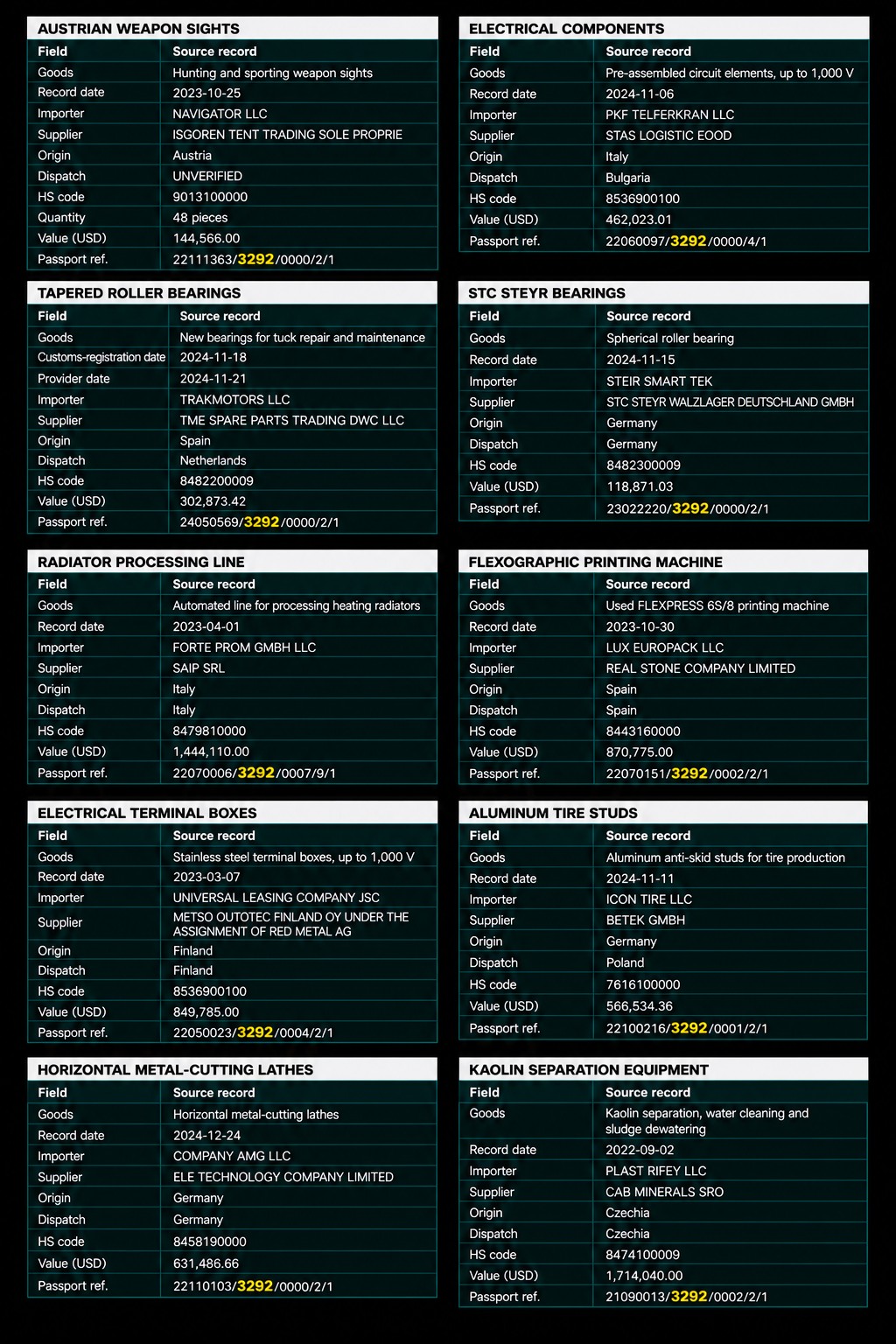
Figure 1. Selected customs records, AO Raiffeisenbank’s bank code 3292 highlighted in yellow. Source: Grizzly’s design, based on data from the commercial customs data provider.
Within days of the full-scale invasion, RBI’s bank in Russia told clients on Telegram how to transfer import and export contract registrations from other banks, which were then being cut off from Western financial services. The guidance says Raiffeisenbank reviews the contracts and any additional agreements before agreeing to service them.
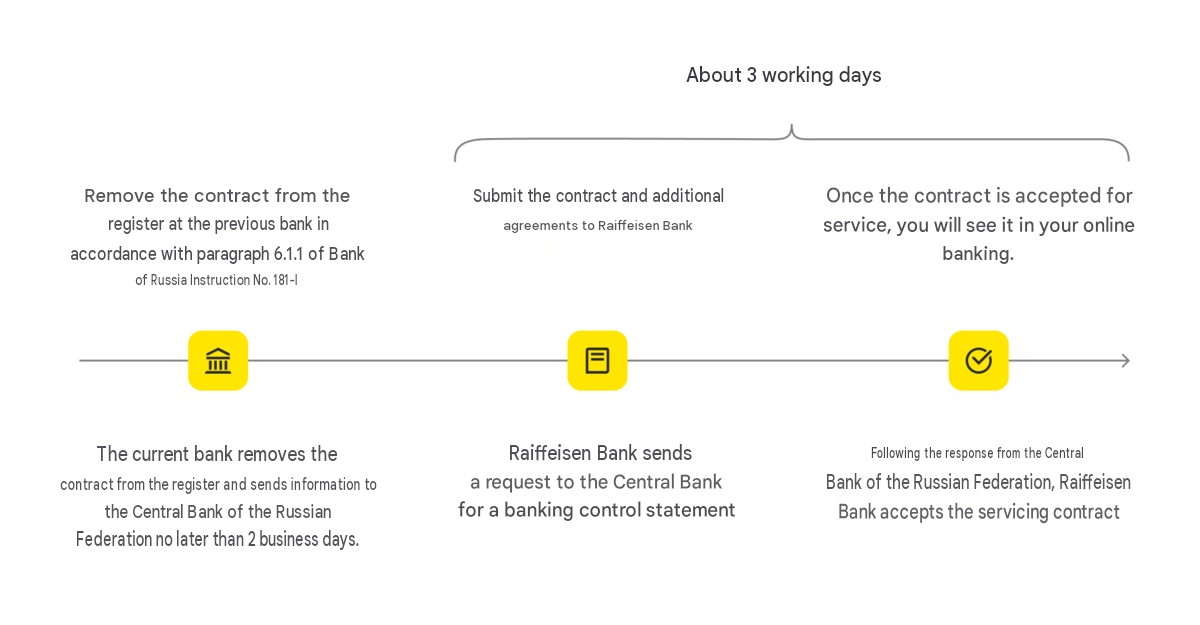
Figure 2. Raiffeisenbank’s guide to transferring contract registrations from other banks. Translated from Russian by AI. Source: Raif Corporate
The cases below trace the companies and goods behind those contracts, using customs records carrying Raiffeisenbank’s /3292/ registration code.

Figure 3. How to read a contract-registration reference: the second block, 3292, is AO Raiffeisenbank’s Bank of Russia registration number. Source: Grizzly Research
Machinery Imports by AMG and TISIAI Under Raiffeisen References
Alfa Machinery Group (AMG), a Russian supplier of metalworking equipment, continued importing machinery after Western authorities targeted it. The U.S. sanctioned AMG on November 2, 2023, for supplying equipment to Russian manufacturers.
The EU added it to Annex IV on December 17, 2024, tightening restrictions on dual-use and advanced-technology exports.
On March 24, 2025, a declaration registered $543,722 of CNC lathes supplied to AMG by Ele Technology. By then, both companies were under U.S. sanctions. The declaration’s contract-registration reference contains the 3292 code.
The record identifies $33.95 million of AMG imports matching restrictions in force on the assessed customs dates. The expanded party screen confirms $27.46 million registered after AMG’s U.S. designation.
This post-designation AMG trade includes $15.60 million in entries naming Ele Technology after its October 30, 2024 U.S. designation. We independently identified $776,241 of that amount.
The records also show $11.32 million registered on or after the EU’s December 17, 2024, action, matching the applicable EU goods restrictions. These amounts overlap within the AMG trade and cannot be added together.
The supply relationship was already public. When targeting Ele Technology, the U.S. Treasury described its business with AMG:
“PRC-based Ele Technology Co Ltd (Ele Technology) since January 2023 has sent more than 250 shipments, including machining centers for working metal and horizontal lathes, to U.S.-designated, Russia-based manufacturing company Alfa Machinery Group.”
A Russian court record confirms that the companies had a foreign-trade contract in 2022.
CNC equipment turns blocks of metal into precision parts. A machining center is a computer-guided machine accurate to hundredths of a millimeter. A lathe works on rotating parts such as shafts, cylinders, barrels and casings.
Russia’s weapons industry depends heavily on these machines.
Ukrainian researchers from the Economic Security Council of Ukraine estimate that Russia’s military-industrial complex consumes 70% to 80% of the country’s machine tools, roughly 70% of which are imported. They traced imported machining centers and lathes of the same type to factories producing Iskander, Yars and Bulava missiles.
IStories discovered that in 2023 Russia imported at least 6.4 billion rubles’ worth of CNC machines and components.
In August 2026, Austria’s domestic intelligence service took down a Vienna-registered company buying EU-made CNC machinery and shipping it to Russia’s defense sector in breach of EU sanctions.
TISIAI appears in a separate machinery trade worth $3,509,422. Declarations registered on December 16 and 23, 2024, list CNC metalworking centers under CHPL code 845710 and share a transaction-passport reference containing 3292.
German Supplier STC Steyr in the Bearing Records
STC Steyr Wälzlager Deutschland GmbH, a German bearing supplier, is named in declarations for $224,317 of bearings sent to a Russian importer recorded as Steir Smart Tek.
Registered on November 15, 2024, and January 5, 2025, the entries cover ball, spherical roller and cylindrical roller bearings under CHPL codes. They share reference 23022220/3292/0000/2/1.
The November 15 entry, reproduced in Figure 1, covers $118,871.03 of spherical roller bearings, included in that total.
The paperwork lists Germany as both origin and departure country, and Turkey as the trading country. It does not establish the full physical route.
Bearings have civilian and military uses. The U.S. Treasury has described them as integral to Russian military hardware, including main battle tanks.
Russia cannot produce enough bearings to sustain steady output of new military vehicles, according to the Center for Strategic and International Studies in Washington. That makes imports important to military production.
A separate customs record registered on November 18, 2024, names TME Spare Parts Trading DWC LLC as the supplier of $302,873.42 in Spanish-origin tapered roller bearings to Trakmotors LLC. The Netherlands is listed as the dispatch country. The description specifies new bearings for truck repair and maintenance, rather than industrial assembly. Their six-digit code, 848220, is on the CHPL.
Communications Equipment and Chips for Polytkem and Itelma
Other records carrying Raiffeisenbank’s registration code concern electronics of the kinds used in modern weapons. Between October 31, 2024, and February 10, 2025, Polytkem imported $773,121 of switches and routers from Celja Group under /3292/ references. The customs code, 851762, sits in Tier 2 of the Common High Priority List, the tier for components that Western governments say show up most often in Russian weapons. Itelma went a step further down the chain. In December 2023, its entries listed $117,535 of NXP integrated circuits from Yapeng International Trade, again under CHPL codes and /3292/ references. Investigators have found NXP components inside Russian weapons used in suspected war crimes in Ukraine.
The trail also runs through the EU. On November 6, 2024, PKF Telferkran took delivery of $462,023 of Italian-made circuit assemblies rated up to 1,000 volts, shipped from Bulgaria by Stas Logistic EOOD and declared under CHPL code 853690. Italian goods, a Bulgarian shipper, a Russian buyer and an Austrian-owned bank’s registration code, all on one customs entry.
Austrian and Chinese Weapon Sights for Navigator and Art Elv
A thousand thermal sights for hunters or for the Russian occupation army? On November 7 and December 11, 2023, Art Elv declared two shipments of 500 SAIM SCP19W thermal sights each from InfiRay Technologies, a Chinese maker of infrared optics, worth $493,059 in total. A few weeks earlier, on October 25, Navigator LLC had cleared 48 Austrian-made optical sights worth $144,566. All three declarations carry /3292/ in the transaction-passport field, and all three describe the goods as sights for hunting and sporting weapons.
Thermal sights see body heat in the dark, which is why they are among the most requested items on the front line. Their tariff line, HS 901310, is on the Common High Priority List, and the customs descriptions say “weapon sights” in so many words.
Raiffeisen Worked With the Main Player of the Russian Oil Smuggling Ring
Coral Energy was, for a time, the most important oil trader most people had never heard of. It used to handle as much as 80% of Rosneft’s exports at its peak and was at the center of the $90 billion Russian smuggling ring, according to a Financial Times investigation. When the U.K. finally sanctioned the smuggling group, by then renamed 2Rivers, it called it “one of the largest shadow fleet operators globally and a major trader of Russian crude oil.”
Raiffeisen’s links to Coral Energy, the oil trader later renamed 2Rivers, appear in Russian customs records from 2022 and lending documents from 2024, before the U.K. sanctioned the trading group. The customs records identify the Austrian banking group’s Russian subsidiary, while Le Monde reported lending by Raiffeisen to Coral’s traders in May 2024.
Customs entries dated December 20, 2022, record a combined declared value of $31.48 million for technical kerosene sold by Slavyansk ECO to Coral Energy DMCC. They name Georgia as floating storage and share the contract reference 22080039/3292/0007/1/1.
Ukraine’s Defense Intelligence agency alleges that Georgia is part of the Russian shadow fleet transporting oil in violation of Western sanctions.
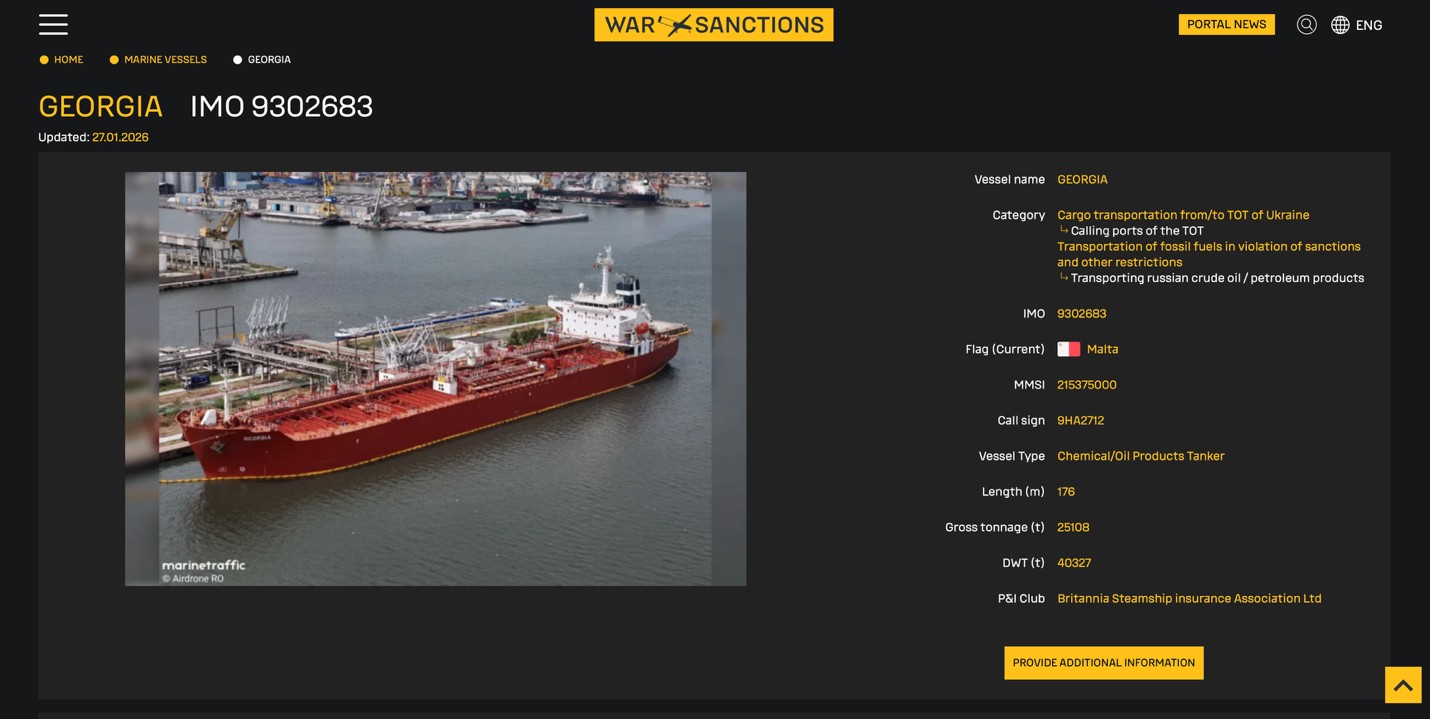
Figure 4. GEORGIA’s profile on the War & Sanctions portal of Ukraine’s Defense Intelligence (HUR). Source: War-Sanctions
The relationship did not end with the customs code. By the end of May 2024, Raiffeisen had €2.2 million in loans outstanding to Coral’s traders, alongside other European banks, Le Monde reported from internal documents. The banks would not confirm customer identities and said they applied sanctions rigorously. By then, the Wall Street Journal had reported that people working for Coral also handled trades for a network of companies moving Russian oil, Rosneft’s included. That summer, three executives bought out the founder and the company became 2Rivers.
The U.K. designated the Dubai and Singapore businesses on December 17, 2024. 2Rivers said it had left Russian trading, blamed former employees in Moscow for still using Coral’s name and promised to challenge the sanctions. In July 2025, the National Crime Agency placed 2Rivers inside a network running more than 100 shadow-fleet tankers, in which Western-facing companies tap trade finance and insurance while funds and oil pass to the firms trading Russian crude directly.
“We have only one limitation regarding Iran: we don’t send them euros”
The customs records show trade under contracts carrying Raiffeisenbank’s code. Our undercover approaches tested what staff would say when a prospective client disclosed military customers and onward exports to Iran. One RBI manager agreed to the proposed arrangement, with a restriction on euros. In a separate approach, several managers said a fund buying drones for the Russian war could open an account. One manager agreed to this after confirming it with her supervisor. These responses raise questions about how RBI’s public compliance commitments translate into practice.
In the Iran approach, we described a deal to a manager at RBI’s Russian unit. It was built to set off every export-control and sanctions alarm the bank has, or rather should have had.
The goods’ HS codes were on the Common High Priority List. Their use by the Russian army is the subject of an August 2026 complaint brought by shelling victims against the American company Ubiquiti.
We said we wanted to import the goods into Russia, sell some locally to Russian military customers and ship the rest to Iran. We also said money could not go directly from the United States to Iran, so we wanted Raiffeisenbank in Russia to act as the intermediary.
Shockingly, the Raiffeisenbank manager agreed, with one condition: “We have only one limitation regarding Iran: we don’t send them euros.” Read the chat below.
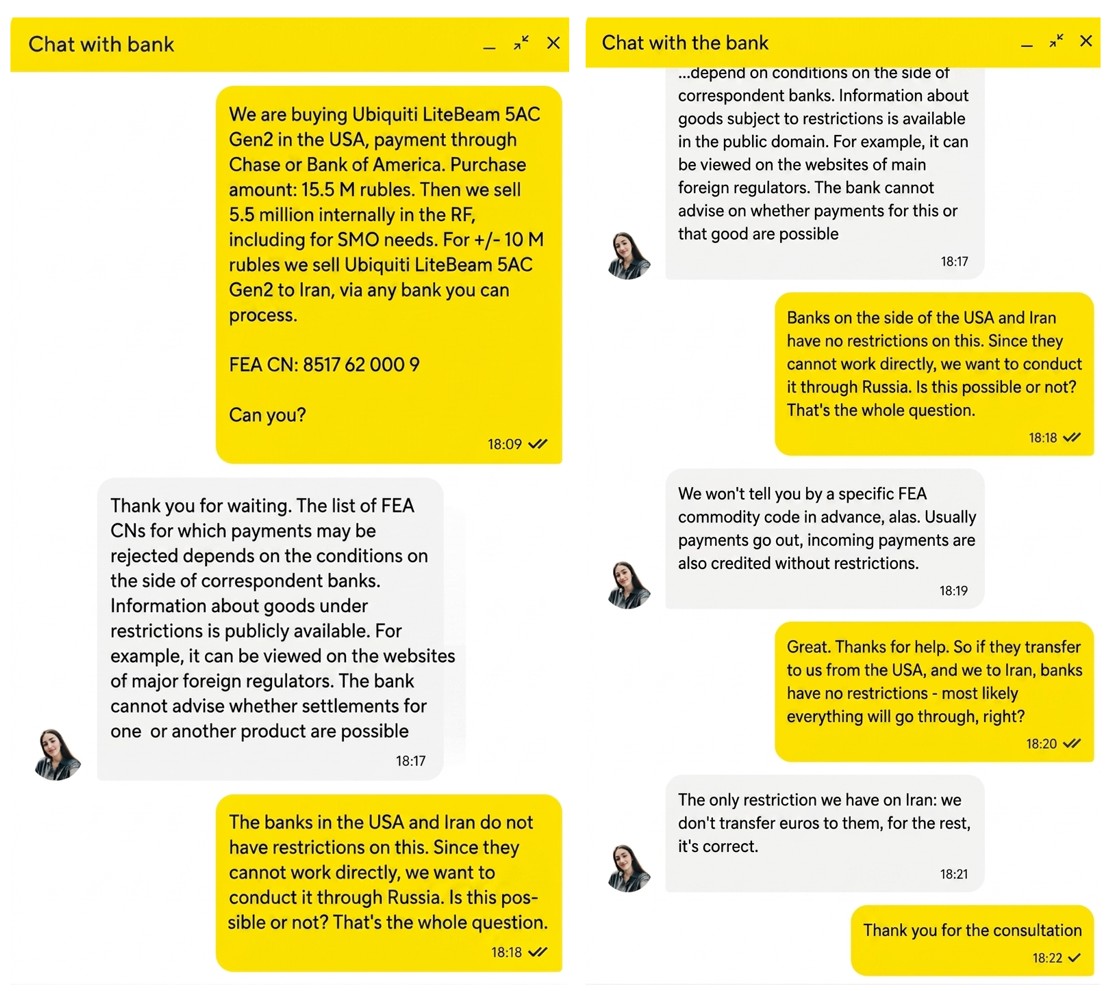
Figure 5. Grizzly’s chat with a manager at RBI’s Russian subsidiary, September 2026. Translated from Russian by AI.
Between April 13 and 23, 2023, customs entries carrying Raiffeisenbank’s code recorded $1.72 million of trade with Iran, $1.52 million of it Russian imports. Most of it was polystyrene. The Kirishi branch of Penoplex SPB, a Russian insulation maker, brought in $969,945 of Iranian-origin goods, with Yo Ldosh Zuxro Ko Xinur LLC and Temir Onlayn LLC named as the foreign parties on $617,584 and $352,361 of the entries. The manager’s response concerned a trading route that also appears in the earlier customs records carrying the bank’s registration code.
North Korea is on the same records. Fifteen detailed entries, worth $20,543, declared North Korean origin and cleared between April 20 and July 18, 2023. The aggregate customs data adds 232 export lines worth $8.74 million, spread across five 3292 passport groups from November 1, 2022, to January 17, 2025. In total, $8.76 million of trade with the most sanctioned country on earth passed through contracts registered at a bank supervised from Vienna. We believe we have only captured a fraction of the actual activity.
RBI in Russia Systematically Failed to Apply Its Stated Sanctions Controls Despite Publicly Claiming Robust Compliance
“Our Raiffeisen Austrian bosses always vigorously controlled our operations,” a former director of RBI’s Ukrainian subsidiary, who requested anonymity, told Grizzly.
“RBI adheres to all applicable sanctions regimes and goes beyond them in many respects in its compliance rules,” spokesperson Christof Danz told reporters from OCCRP, Der Standard and Paper Trail Media for an investigation that documented RBI sending roughly $10 billion in physical cash to Russia just weeks before the full-scale invasion of Ukraine.
Since March 2022, RBI has publicly bound itself and its subsidiaries to sanctions compliance.
Those commitments provided the benchmark for our calls to bank staff, account-opening approach and interviews with people familiar with the Russian business.
We began by asking Raiffeisenbank’s Russian hotline whether the bank was leaving Russia. The operator assured us it was staying.
We altered the voice of our undercover reporter.
Here is our exchange from late August 2026:
- Grizzly Reporter: Quick question: you aren’t planning on leaving Russia right now, are you? Raiffeisen is staying? Can I count on long-term planning, if anything?
- AO Raiffeisenbank manager: No, we are continuing to operate. Of course.
- Grizzly Reporter: Because I hear all these statements, and it worries me right away. First question: can I make long-term plans or not?
- AO Raiffeisenbank manager: The media writes a lot of things. I understand what you’re talking about, of course, certainly. But it’s best to look at reliable sources, the [Russian] Central Bank’s website, for instance. Because, well, the media is always writing something, that’s their job.
- Grizzly Reporter: Because I read that your new Austrian CEO also says that we are leaving again. Is this “we’re leaving like we always have,” or “we’re leaving in a new way”?
- AO Raiffeisenbank manager: [Laughing]…
- Grizzly Reporter: So, that’s it. We’re staying, right?
- AO Raiffeisenbank manager: We are staying, yes. The bank is operating. Absolutely, yes, there are certain nuances, of course, like not being able to purchase securities from a brokerage account for now. But overall, the bank is operating and isn’t going anywhere.
- Grizzly Reporter: Incredible.
We then asked the bank’s currency-control specialist who checked the commodity codes. She said currency control did not perform that check and suggested that another department might handle it.
“Currency control [department] does not check HS / commodity codes (TN VED). This may be handled by an adjacent department, for example, the financial sanctions group, international compliance, and so forth,” a manager at RBI’s Russian subsidiary told our reporter.
Another manager from the currency-control department pointed us to Raiffeisen’s own page on currency control in Russia. Its video guide shows fields for the Russian commodity code and counterparty name. The interface shows that the bank’s registration process collects information relevant to sanctions screening. The data we collected should have been readily available to RBI, which suggests a willful blindness to certain sanction issues.
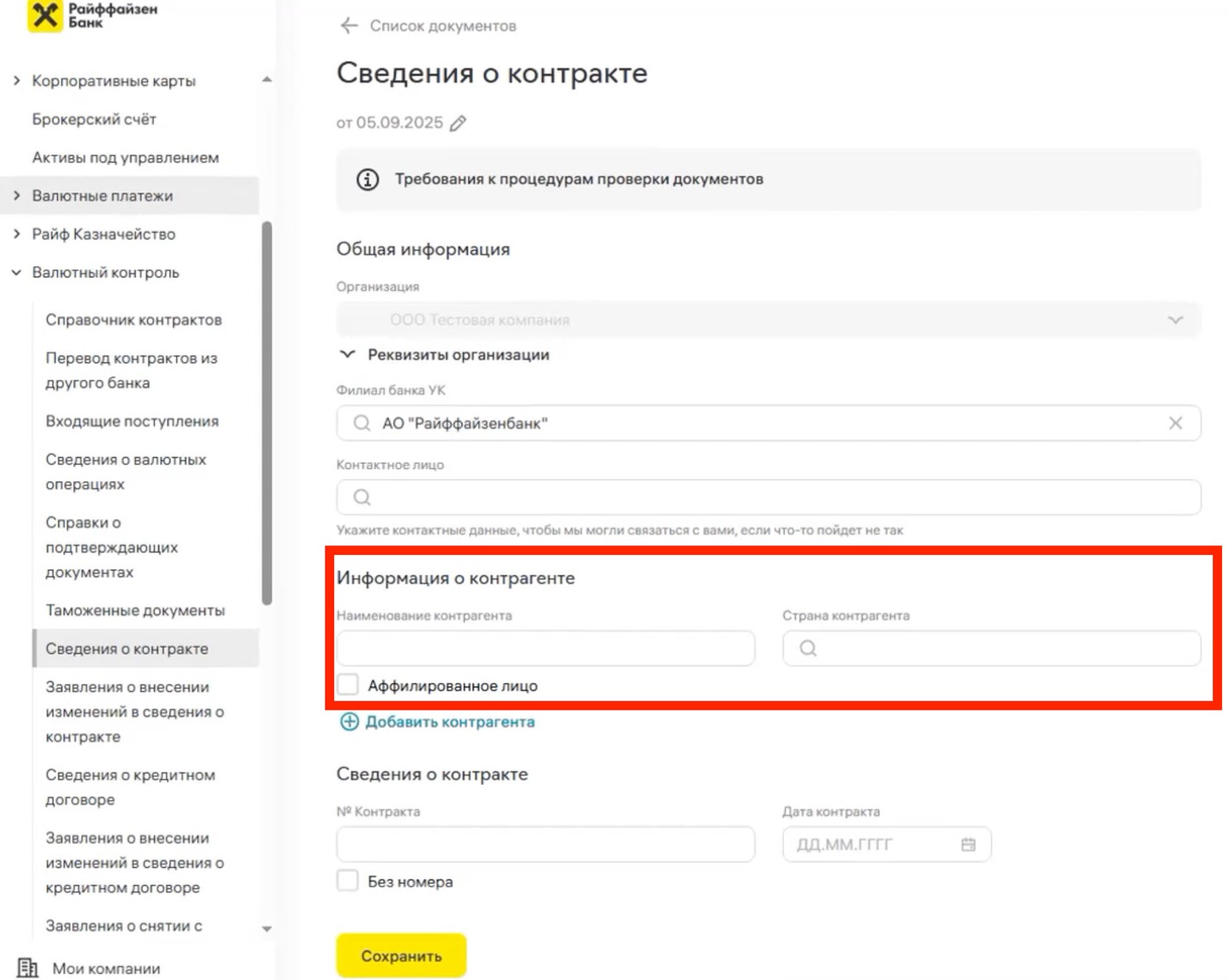
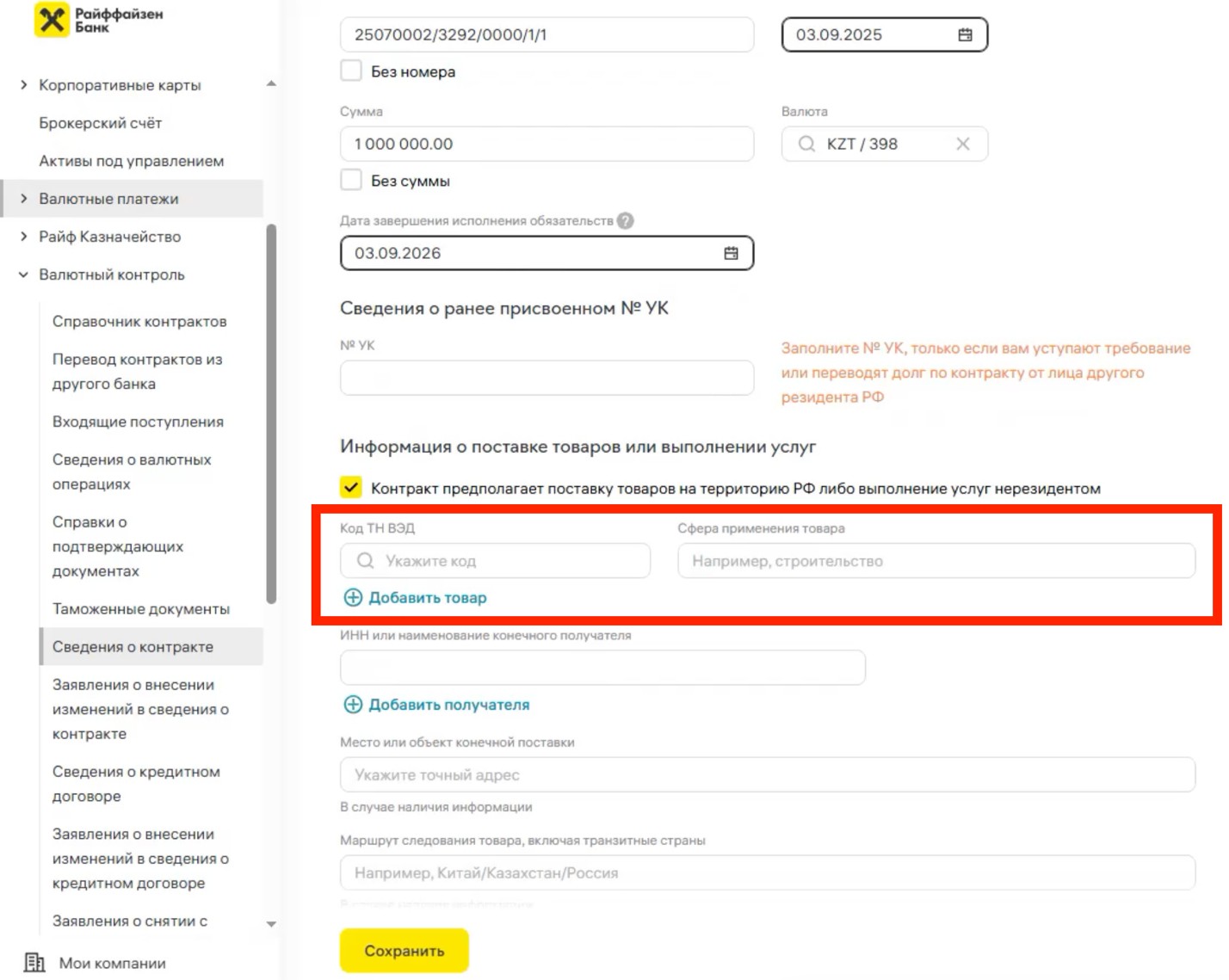
Figure 6. Screengrabs from a video guide by RBI’s Russian subsidiary on registering a contract at Raiffeisenbank, showing the bank system’s interface. Outlined in red: the fields for the counterparty’s name and country, and the fields for the Russian commodity code, where the first six digits are an HS code and the remaining four are a local classification.
Then, posing as representatives of a charitable fund, we contacted RBI about opening an account. We said the fund’s purpose was to buy drones for the war. In Kherson, Russian drone operators hunt civilians in attacks described as a “human safari.” Human Rights Watch says the pattern appears intended to spread terror among the civilian population. On the battlefield, drones were responsible for about 70% of Russian and Ukrainian casualties, according to an estimate by Ukrainian lawmaker Roman Kostenko reported by The New York Times in March 2025.
Several Raiffeisen managers did not balk and said that nothing stopped us from opening an account, even with this military fundraising goal in mind.
Raiffeisenbank even reserved bank account details for us for 14 days, pending the formal opening of an account for our charitable fund, which was raising money for Russian drones.
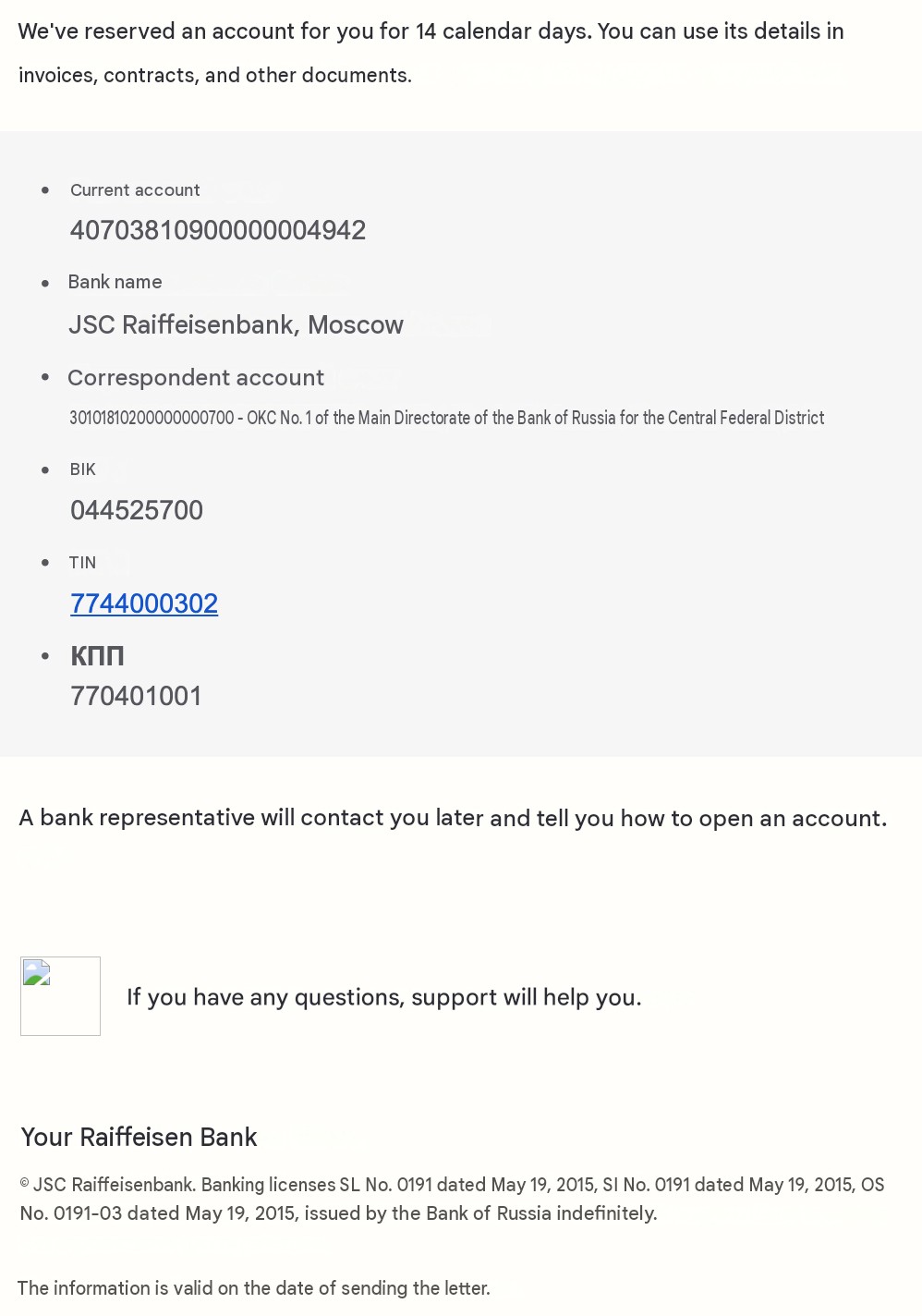
Figure 7. Raiffeisenbank’s email about reserving a bank account for a charitable fund that seeks to purchase drones. Translated from Russian by Google Translate. Source: Grizzly Research
We also interviewed an adviser who helps Russians move money abroad. He requested anonymity for fear of reprisals from the Russian regime.
The adviser argued that Raiffeisen’s Russian business had become too big for its controls. Below a million dollars, he said, the volume made meaningful transaction screening impractical.
In one case, the adviser said, a Raiffeisen manager in Russia told his client to swap the sanctioned HS code on a transaction document for an unrestricted one.
“Raiffeisenbank managers turn a blind eye,” he said.
Their bonuses, he added, depend heavily on bringing in clients, which he said pushes employees into fraud. A former senior expert consultant at RBI in Russia said the same thing in January 2026, writing on an employee review platform that the bank’s bonus program pushes bank staff to commit fraud.
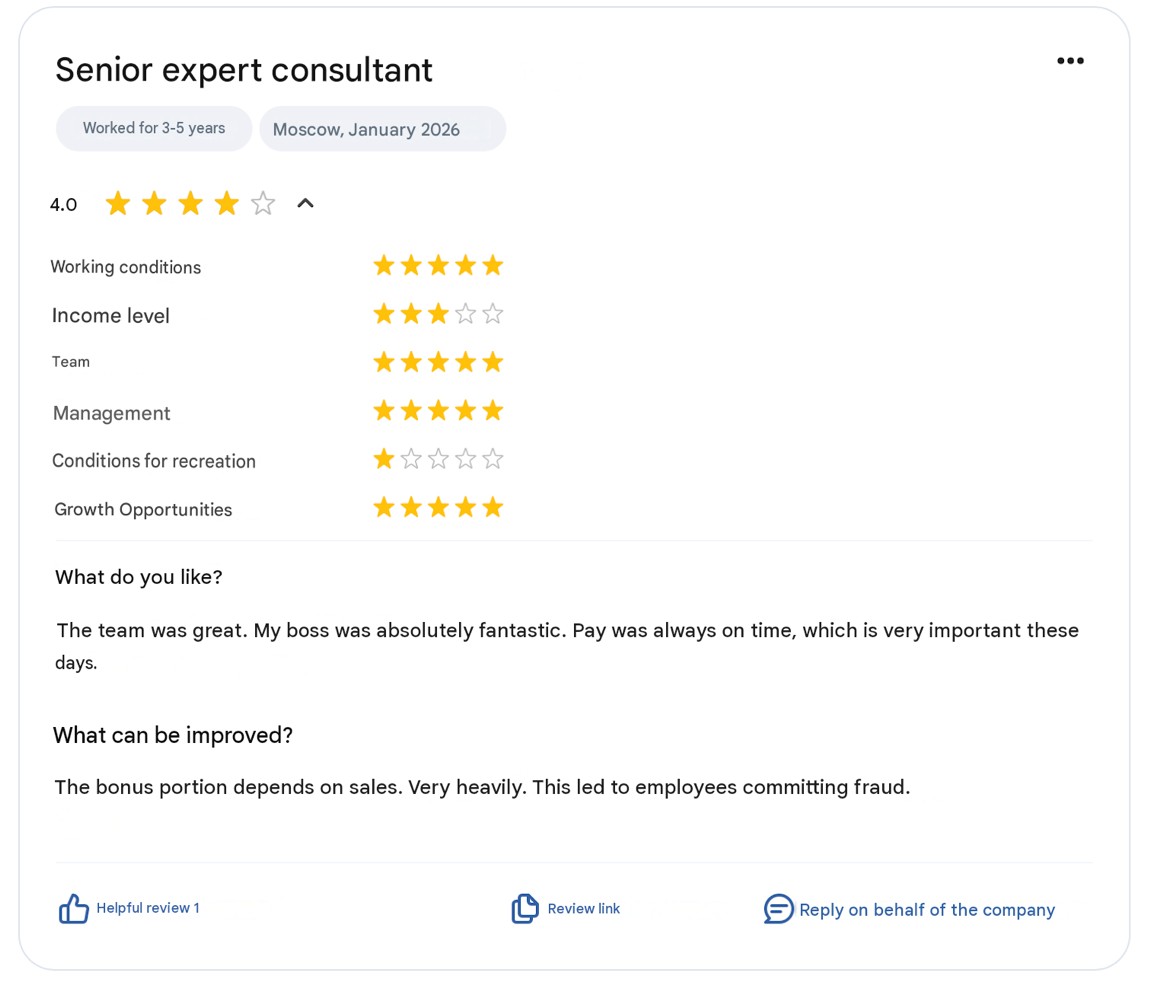
Figure 8. Review by a former senior expert consultant at RBI in Russia. Translated from Russian by Google Translate. Source: Dream Job
RBI managers could have declined to help in the undercover approaches. The group has the resources to enforce its stated sanctions and export controls.
Less than a month after the full-scale invasion of Ukraine started, RBI stated: “RBI and its subsidiary banks continue to operate in compliance with local and international sanction laws…”
Once OFAC looked into RBI in 2023 because of its business in Russia, the bank stated: “RBI maintains policies and procedures that ensure compliance with all applicable embargoes and financial sanctions” and “RBI has implemented monitoring and screening tools to comply with these policies including all applicable sanctions.”
Those assurances sit alongside RBI-linked records worth $1.191 billion matching Western goods-control schedules in force at the time, including CHPL records worth $106.75 million. Since 2022, RBI has also made over 30 public assurances that it would leave Russia.
For years, Raiffeisen has straddled the line between what sanctions permit and what they forbid, said Nicki Kenyon, a former senior intelligence officer at the Treasury Department. Crossing it, she said, would not take much.
Screening trade counterparties against U.S. and EU sanctions lists is basic compliance for a bank headquartered in the EU. It is automated, inexpensive and performed daily by Western banks.
RBI-Linked Records Show $49.00 Million in Trade With at Least 33 Parties Already Under Sanctions
Customs entries continued to carry Raiffeisenbank’s code for contracts involving companies the West had already blacklisted. At least 33 parties under U.S., EU, U.K. or Ukrainian sanctions appear in customs records carrying RBI’s /3292/ code after their designation dates, with $49.00 million of trade between May 2022 and March 2025. Among them: the company that builds Putin’s limousine, a supplier of machine tools to Russia’s defense plants, and a Dubai trader that was back at Russian customs three days after OFAC listed it.
This is a confirmed minimum, requiring corroboration of party identity on each retained record. The count includes Ukrainian and sectoral sanctions and does not mean every party was subject to a full asset freeze. The party-based screen does not require the goods themselves to be restricted: $44.23 million overlaps the $1.191 billion goods total and is already included in it.
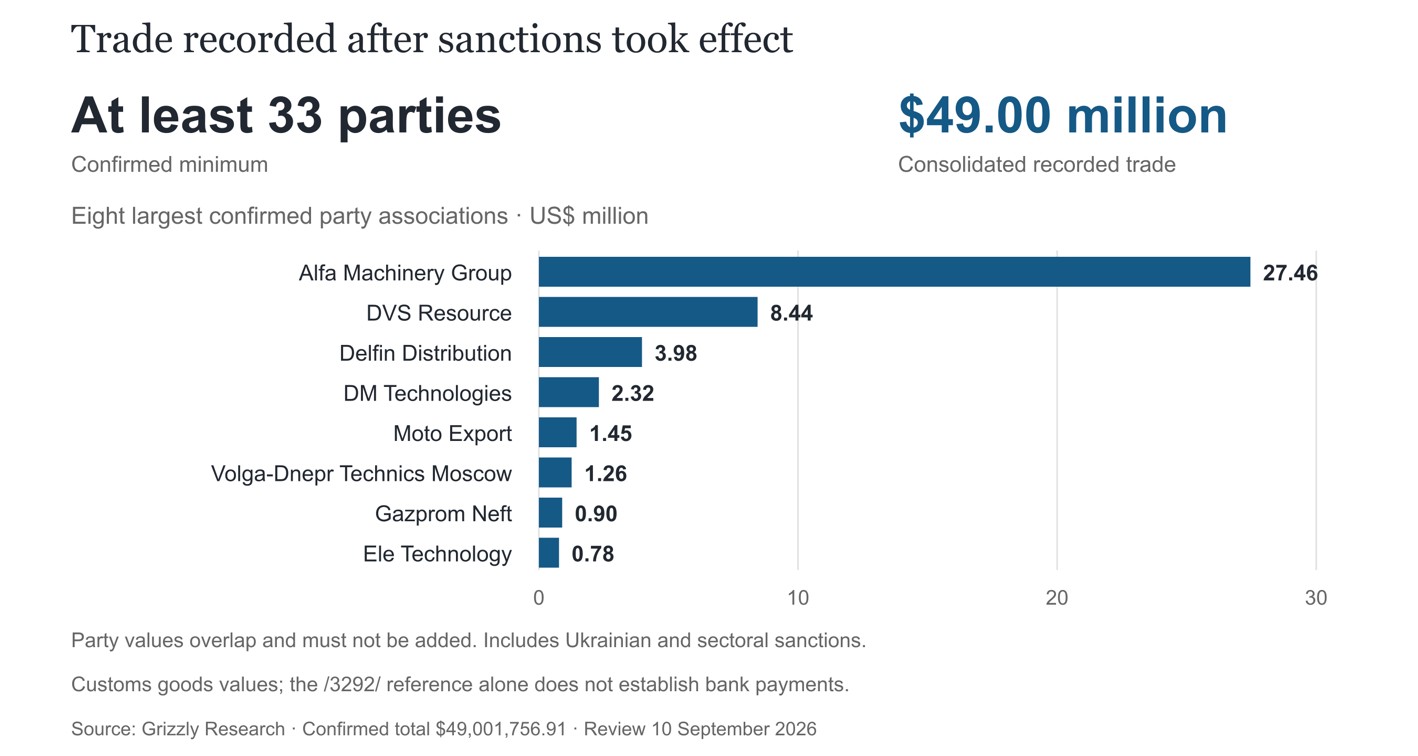
Figure 9. At least 33 parties and $49.00 million in consolidated RBI-linked recorded trade while sanctions were in force. Eight largest party associations shown. Values overlap and must not be added. Source: Grizzly Research, expanded customs and sanctions screening.
Selected Cases of Trade After Designation
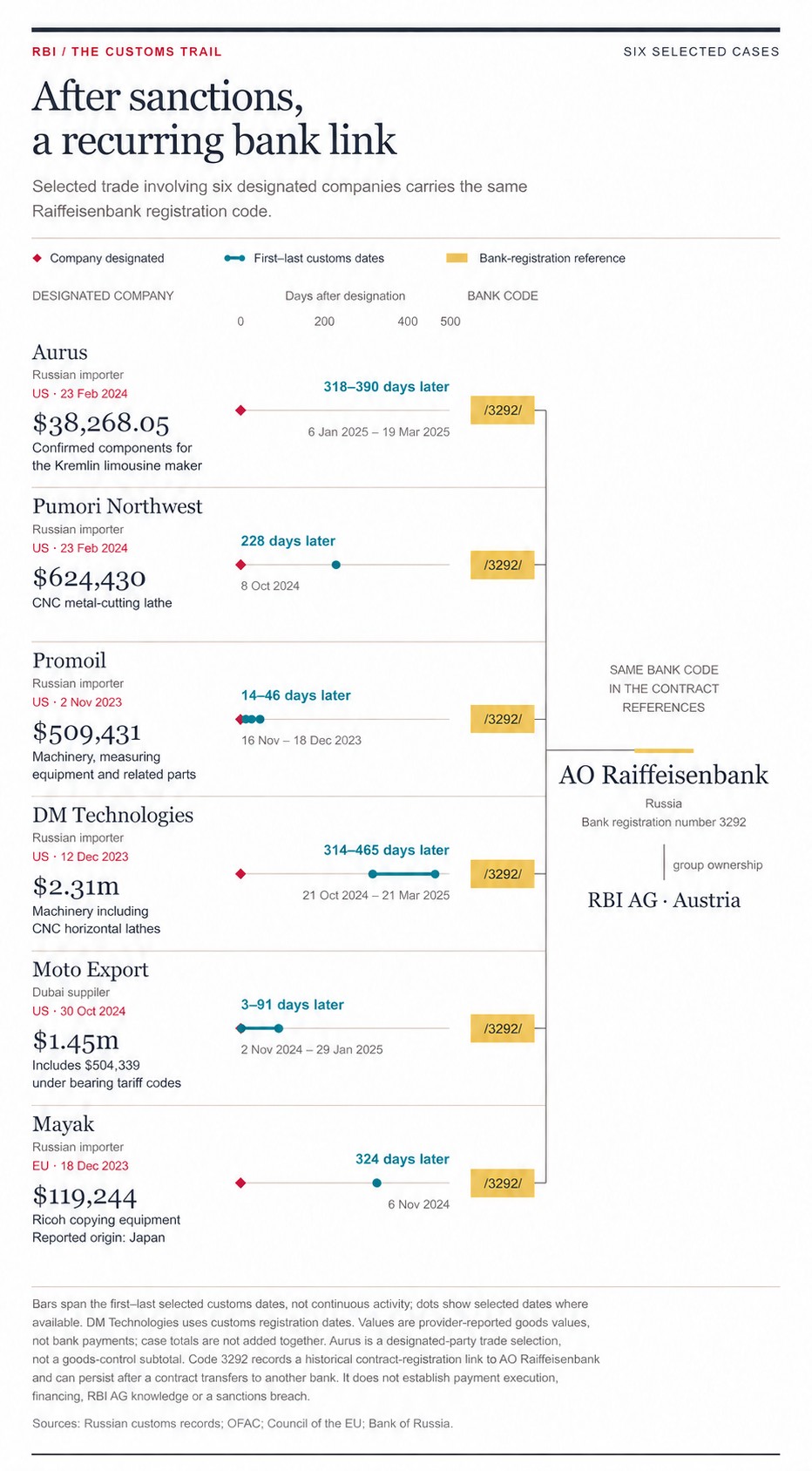
Figure 10. Selected imports after U.S. and EU designations.
Aurus Imports for the Kremlin Limousine Maker
Aurus builds Vladimir Putin’s armored limousine, the car he rides in and hands to allied leaders as a gift. OFAC designated Limited Liability Company Aurus on February 23, 2024. Tax ID 7743237789 and registration number 5177746340998 tie the listing to the AURUS LLC in the customs data. On January 6 and March 19, 2025, roughly a year after designation, AURUS LLC imported $38,268.05 of stamped metal parts for assembling its vehicles under /3292/ transaction-passport references.
Machine Tools for Pumori Northwest and Promoil After Designation
The U.S. Treasury designated Pumori Northwest on February 23, 2024, as a major supplier of metalworking equipment and machine tools to Russia’s defense industry. On October 8, more than seven months later, Pumori imported a $624,430 CNC metal-cutting lathe from Guangzhou WQS International Trading Company Limited. The declaration carries /3292/ in its contract-registration reference, and the importer’s tax number matches the sanctioned company.
Promoil, a company OFAC listed on November 2, 2023, was back at customs within a month. On November 28, it imported a $462,173 turning-and-milling center from Suzhou Always Machinery Company Limited, a machine whose rotary milling spindle and two lathe chucks let it cut complex parts in one setup. It is part of $509,431 of machinery, measuring equipment and parts recorded for Promoil between November 16 and December 18, 2023, all under 3292 references, all matching OFAC’s tax number for the company.
Machinery Imports by DM Technologies From a Shanghai Supplier
OFAC designated DM Technologies on December 12, 2023. From October 21, 2024, through March 21, 2025, it imported $2.31 million of goods matching dated control categories, including computer-controlled horizontal lathes, from Sieglo Shanghai Precision Machinery Company Limited under /3292/ references. The total counts only entries with verified dates and goods-control matches and leaves out anything uncertain or possibly overlapping.
Moto Export Trade Recorded Days After U.S. Sanctions
The U.S. designated Moto Export, a Dubai supplier, on October 30, 2024. Three days later, on November 2, it appeared in customs entries carrying Raiffeisenbank’s code. Entries through January 29, 2025, totaled $1.45 million in goods, including $504,339 under bearing HS codes. Every entry matched a goods-control schedule in force on its customs date.
Copying Equipment for Mayak After an EU Asset Freeze
The EU listed Mayak, a Russian wholesaler, in December 2023. Japan followed with its own sanctions in June 2024. On November 6, 2024, Mayak imported $119,244 of Ricoh digital copying equipment, with Japan recorded as the country of origin under RBI’s transaction code.
Sanctioned Holdings, Still on the Books in August 2026
This section examines the investment products RBI offers to clients in Russia. “Key Income” is the sort of product every retail bank on earth sells: a conservative profile, an expected return of about 13.9% a year, quoted with the confidence of a house that measures its optimism to two decimal places, as achievable “with a probability of 64.89%.”
The risk factors listed for the client are market, liquidity, credit, legal, operational, systemic and infrastructure risk. The word sanctions appears nowhere in the four-page document of the fully consolidated Russian subsidiary of RBI.
The model portfolio consists of three floating-rate bonds issued by the Russian Ministry of Finance, each accounting for one third. The manager describes itself as “a subsidiary structure of AO Raiffeisenbank.” The document is dated August 25, 2026, deep into the fifth year of Raiffeisen Bank International’s publicly promised exit from Russia. As Vienna negotiates its departure, its Moscow asset manager is signing people up.
In March 2025, BankTrack and B4Ukraine found Raiffeisen Capital’s funds holding Sberbank and Gazprom shares and RUB 16.6 billion of Russian sovereign bonds: RUB 31.7 billion of sanctioned exposure in a RUB 70.9 billion book. The manager’s own client documents of August 6 and 25, 2026, show that exposure to sanctioned issuers persisted seventeen months later. The book itself grew to roughly RUB 92.5 billion.
The funds’ securities belong to Russian retail investors. RBI owns the management business through its subsidiary chain: ООО «УК Райффайзен» (OOO UK Raiffeisen, “Raiffeisen Asset Management Company LLC”), AO Raiffeisenbank in Moscow and RBI in Vienna.
The management business earns fees while the clients hold the securities. Published tariffs range from 1.7% to 5.1% a year all-in, including management fees of 1.0% to 3.9%. Across the RUB 92.5 billion book, the management fee alone comes to about RUB 1.9 billion, some $20 million a year, flowing into RBI’s consolidated accounts. Modest at group level, it is still an income stream from managing Russian sovereign debt and securities of sanctioned companies.
Across the ten funds, blocked issuers account for 14.2% to 37.3% of each of the four equity funds, and Russian sovereign securities for 99.1% of the Bonds fund, 88.1% of the Savings fund, 54.1% of Multicurrency Bonds, 48.0% of Corporate Bonds and 13.0% of Income-Payout Bonds. The gold fund holds 99.7% in gold.
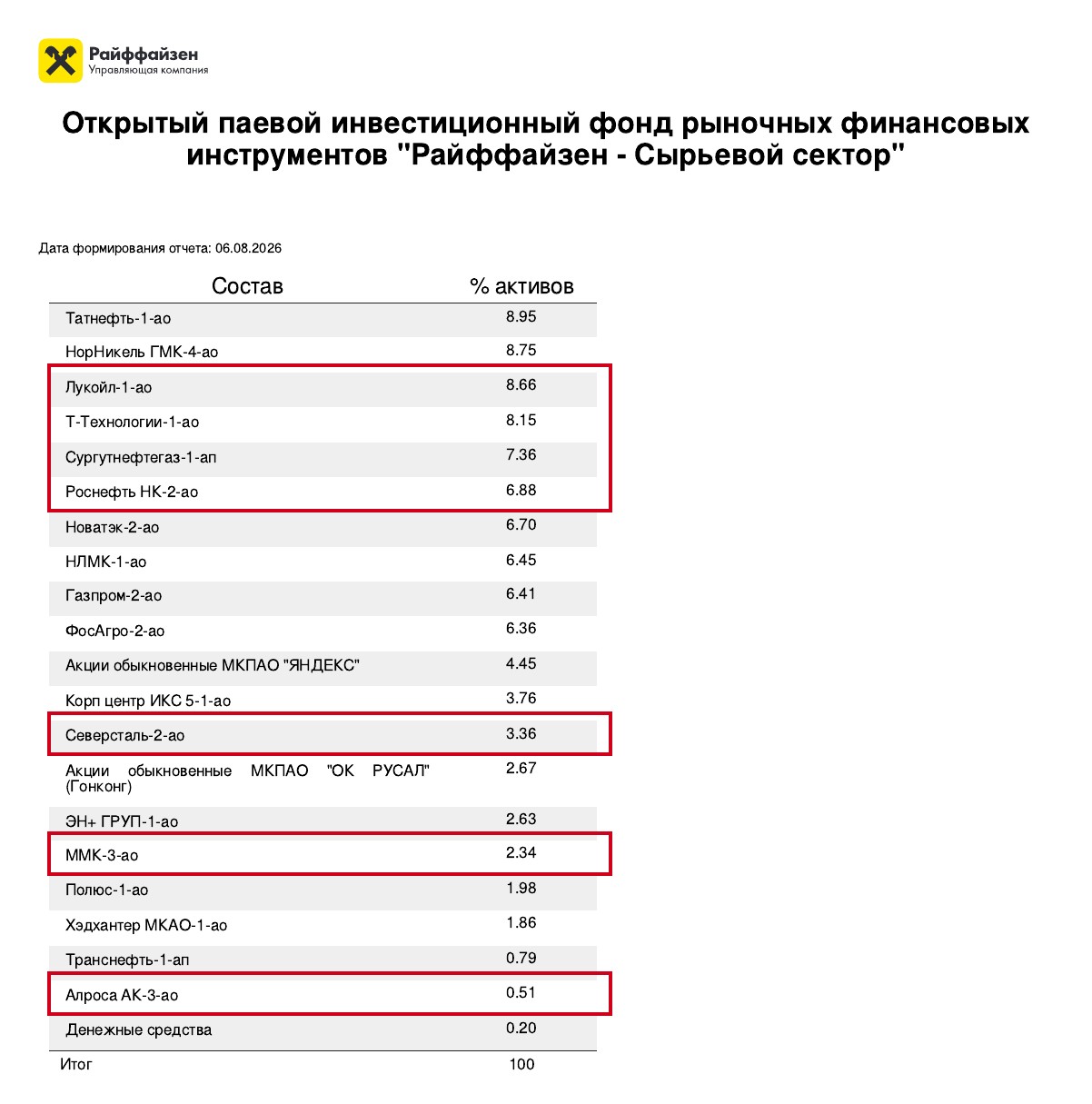
Figure 11. “Raiffeisen Commodity Sector” composition report, August 6, 2026, red highlights added: rows 3 to 6, LUKOIL, T-Technologies, Surgutneftegas and Rosneft, are all blocked issuers. Severstal, MMK and Alrosa follow. Seven designated names, 37.3% of the fund. Source: OOO UK Raiffeisen fund composition disclosure. Highlighting by Grizzly Research.
Table 1. Blocked issuers in Raiffeisen Capital funds: each authority’s designation date against the holding date. The day count runs from the earliest blocking designation. Each sanction entry links to the issuer’s record on opensanctions.org.
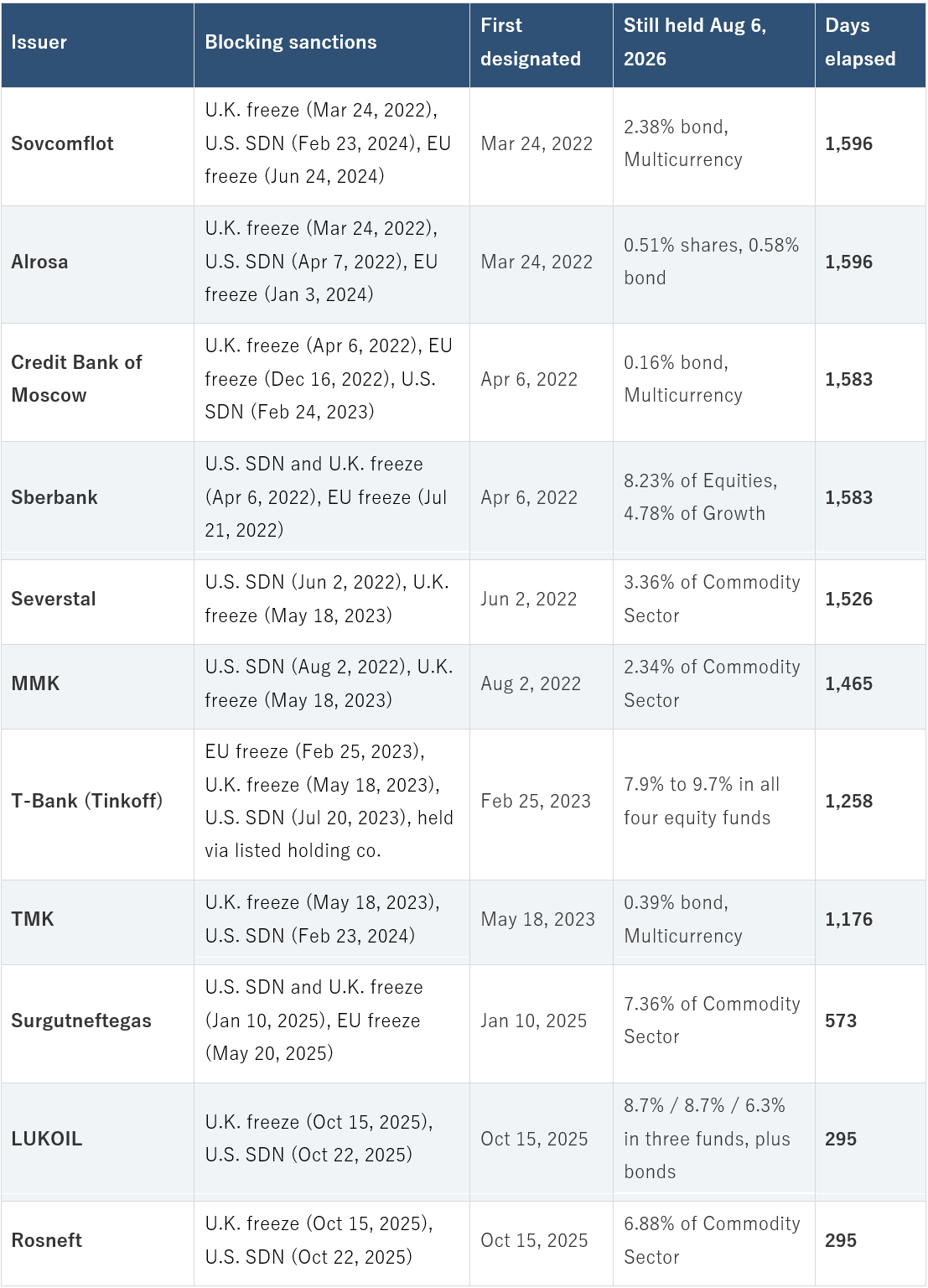
Source: Raiffeisen Capital fund composition reports, August 6, 2026, OFAC, EU and U.K. designation records via OpenSanctions.
The October 2025 action against LUKOIL and Rosneft was the first major Russia escalation of the second Trump administration, aimed at the country’s two largest oil producers. Some 288 days after the U.S. action, LUKOIL still accounted for 8.7%, 8.7% and 6.3% of three Raiffeisen funds.
Cash accounts for only 0.03% to 0.30% of assets. The same sanctioned names recur at similar weights across the equity funds.
Multicurrency Bonds has the sharpest legal exposure. Five lines, about 39.8% of the fund, are Russian sovereign “substitution” bonds issued in December 2024 to replace frozen eurobonds. These are new state securities issued thirty-three months after the EU’s March 9, 2022, cutoff. BankTrack previously found RUB 2.7 billion of post-cutoff paper across the whole book. Most ruble OFZ series elsewhere predate March 2022.
RBI’s Lack of Scrutiny Made It a Channel for Sketchy Crypto Transactions
Raiffeisen’s position in Russia was built on a single asset: it was the large retail bank that never got sanctioned. That status made it the default counterparty for anyone who needed to move money out of Russia, and RBI did not treat it as a reason to look harder at who was using it.
By early 2023, two measures showed the scale. A senior RBI executive told the Financial Times in February 2023 that the bank handled 40% to 50% of money flows between Russia and the rest of the world. A month later, published analysis of SWIFT traffic put it behind 83% of successful outbound transactions. The first measures value moving in both directions. The second measures outbound message volume. A year into the full-scale invasion, Raiffeisen was the main channel between Russia and the Western financial system. Within a year, Russia’s Prosecutor General’s Office had ordered the deletion of all data documenting those transfers.
The same status opened a second channel that attracted far less attention.
Russia’s Deputy Finance Minister Ivan Chebeskov said in February 2026 that crypto turnover in Russia runs at roughly RUB 50 billion a day, and that it occurs “outside the regulated zone.” Person-to-person crypto payments are banned domestically, and no licensed domestic exchange operates, so a significant part of the turnover likely has to enter and leave through the Russian banking system.
Those flows need a bank that Western platforms will still accept. Binance, Bybit and OKX removed Russian banks under Western sanctions from their payment lists. Each removal pushed the surviving demand onto the short list of large, non-sanctioned retail banks that remained, such as RBI.
A bank supervised from Vienna is now advertised as a payment option on a sanctioned platform. The internationally sanctioned exchange Bitpapa runs dedicated Raiffeisen market pages for ruble trades: buy USDT, sell USDT and buy bitcoin, each advertising cash-out onto Raiffeisen cards.
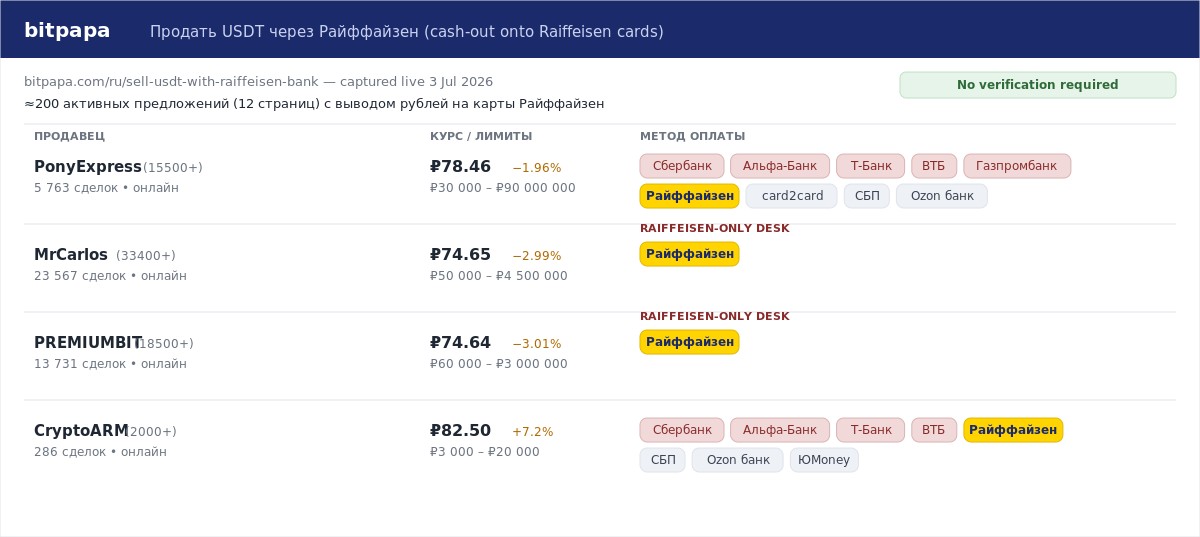
Figure 12. Screengrab of Bitpapa’s page for “cash-out onto Raiffeisen cards.” The displayed percentage comparisons use an unspecified benchmark. Source: Bitpapa
RBI narrowed the channel without closing it. Following the European Central Bank’s instruction, RBI halted outgoing cross-border FX transfers for individuals from September 2024. Ruble transfers, the payment method advertised on those market pages, remained available.
Those rails reach the war. For example, a Telegram post shows an RBI card being used to fund electronic-warfare equipment for the Russian 71st Guards Division. Russian outlet Verstka estimated in 2025 that Telegram fundraising channels had collected at least $580 million through personal bank and crypto accounts to supply Russian forces in Ukraine.
Legal Exposure Will Primarily Hit Vienna, Not the Russian Subsidiary
In 2025, the Investor Alliance for Human Rights hosted a webinar, “Sanctioning Russia’s War: The Case of Raiffeisen Bank International.” The panel argued that the “best efforts” obligation under Article 8a of EU Regulation 833/2014 materially expands the legal exposure and compliance burden of EU parent banks that operate Russian subsidiaries.
Article 8a requires EU operators to take proactive steps to ensure that non-EU entities they own or control do not engage in conduct that undermines EU sanctions. Because Russia is treated as a high-risk jurisdiction, regulators expect continuous, substantive due diligence rather than a passive box-ticking exercise.
Where a parent bank exercises effective control over a Russian subsidiary and either knows or would have discovered through adequate due diligence that the subsidiary is undermining EU sanctions, and fails to intervene, the parent itself can be held liable for the breach. In practice, the evidentiary burden shifts to the bank, which must show it has taken all reasonable steps to prevent the conduct.
“The legal risks for the parent of a global banking group have been clear for years: permitting subsidiaries to evade U.S. or EU sanctions will come back to haunt headquarters. Those risks have been confirmed in the past year by the civil judgment in New York against BNP Paribas for financing genocide in Sudan and the criminal conviction of Lafarge and senior executives for terrorism financing in France,” a Georgetown Law professor told Grizzly.
In the BNP Paribas case, three Sudanese refugees won $20.75 million from the French bank in October 2025, after a Manhattan jury found it had helped finance the atrocities of Omar al-Bashir’s government by moving billions of dollars for it in violation of American sanctions. The three were test plaintiffs for a certified class of more than 23,000 refugees and asylees who lived in Sudan or South Sudan between 1997 and 2011, a group whose lawyers say it could eventually recover far more. The bank is appealing.
No Ukrainian claimant has yet sued RBI. We expect that to change. Such a claim could rest on the theory behind the BNP Paribas verdict: that a bank kept moving money for a sanctioned regime while its compliance function looked the other way, and that civilians were harmed as a result.
“One of the most significant yet underappreciated aspects of the war in Ukraine is the role of private companies. Too often, the focus is on states, while corporations that continue enabling Russia’s war effort, even in the face of sanctions and other legal obligations, escape meaningful scrutiny. There is an urgent need to bring these activities into the public eye and to ensure that companies are held accountable through the legal mechanisms available,” Martin Flaherty, a law professor at Princeton, Columbia and Fordham, told us.
Washington has already looked once. In 2023, OFAC launched an inquiry into RBI’s Russia-related business. Our findings give it fresh grounds to examine the bank’s controls.
Washington widened the net in June 2024, saying that every person blocked under Executive Order 14024 would be treated as part of Russia’s military-industrial base. From then on, a foreign bank handling significant business for any such entity risked exposure to the U.S. secondary-sanctions regime.
If OFAC imposed sanctions, it could restrict or prohibit U.S. correspondent or payable-through accounts, potentially limiting dollar-clearing access, or impose blocking sanctions that freeze property within U.S. jurisdiction and generally prohibit dealings by U.S. persons. The consequences would depend on the entity targeted, the measure imposed and applicable licenses. In our assessment, action against the Austrian parent could disrupt payments, funding and customer relationships across its international business, extending the impact beyond Russian earnings. Action confined to a subsidiary would have a different reach, while counterparties could reduce exposure beyond the transactions legally prohibited.
The financial stakes for Vienna are substantial. RBI’s audited 2024 results reported consolidated profit of €1,157 million, compared with €975 million excluding Russia and Belarus.
The revenue is earned in Moscow, but the liability is held in Vienna.
RBI Ignored Repeated Warnings About Russian Sanctions Risks While Profiting
Since 2022, RBI has repeatedly been warned that its Russian operations benefit the Kremlin and may breach sanctions.
The European Central Bank warned RBI and other Western lenders still operating in Russia that the exposure carried heightened reputational risk. In 2023, the U.S. sanctions authority launched an inquiry into RBI’s Russian business. Civil society groups and academics also challenged the bank, citing its continued presence as material and diplomatic support for Russia’s wartime economy and its war against Ukraine.
Yale’s list of companies leaving Russia, maintained by Jeffrey Sonnenfeld and Steven Tian, still grades RBI “F,” its lowest grade, reserved for companies digging in. In July 2026, Sonnenfeld and others again singled out Raiffeisen in TIME for its continued presence in Russia.
The warnings did not change the bank’s course.
The market reacted when RBI did not. Four episodes of reporting or official scrutiny of the bank’s Russian dealings were followed by sharp share-price declines:
- In 2019, RBI was caught at the center of the Troika Laundromat, a sprawling scheme for laundering Russian money. The shares fell more than 12%.
- In 2023, the stock dropped 7.9% when RBI confirmed an OFAC request for information about its Russian operations.
- In March 2024, the stock plunged as much as 12% after reports that a senior U.S. Treasury official had traveled to Vienna to discuss the Russian subsidiary, reviving fears that RBI could be cut off from the U.S. financial system.
- In 2025, the shares slid 9.4% after the Bloomberg report that the Russian subsidiary had serviced suppliers to Putin’s military.
Each of these developments placed RBI on public notice: its Russian operations were riddled with compliance failures, and its own investors were sounding the alarm. RBI kept the business running anyway, while its central-bank balances and trapped equity continued to grow.
The bank and its regulators now have named counterparties, shipment dates and goods descriptions tied to Raiffeisenbank’s contract-registration code. The scale and persistence of that trade demand an explanation.
Bill Browder, a co-founder of Hermitage Capital Management, formerly the largest foreign portfolio investor in Russia, accused Raiffeisen in 2019 of handling more than $600 million in dirty Russian money.
“Raiffeisen looks like waiting for the war to end so as not to lose the Russian market,” a person who works with Austria’s diplomatic corps told Grizzly.
Raiffeisen in Austria retained full practical control over its Russian subsidiary. “We can still appoint management and give instructions to the Russians but we cannot sell the bank,” RBI’s spokesperson told Reuters in September 2024. That authority makes the instructions Vienna gave or failed to deliver to its Russian subsidiary a central question for any future investigation.
“They [RBI] say that they’re looking at a serious, careful exit from Russia, and then what happens in the time since? They’ve doubled their net interest income from Russia, they’ve paid hundreds of millions of dollars in taxes to the Kremlin… The preponderance of evidence seems to suggest that Raiffeisen was never really committed to leaving Russia, and obviously they’ve profited handsomely from remaining,” Steven Tian, Research Director at the Yale Chief Executive Leadership Institute, told Grizzly.
€12.6 Billion Held Hostage in Russia
The Cash RBI Cannot Bring Home
The Russian exposure also reaches the balance sheet. RBI reports €735 million of legally restricted cash, including €675 million in Russia and Ukraine. Separately, its pro-forma tables identify €12.6 billion of cash, central-bank balances and other demand deposits in Russia. The Russian subsidiary’s Form 101 filing puts RUB 999.855 billion in account 319 at the Bank of Russia. At RBI’s June 30 exchange rate of RUB 88.805 per euro, that is €11.259 billion, or roughly €11.3 billion. It makes up most of the Russian cash pool and is about 17 times the restricted amount disclosed for Russia and Ukraine combined. (RBI H1 2026, pp.30 and 32) (Bank of Russia Form 101)
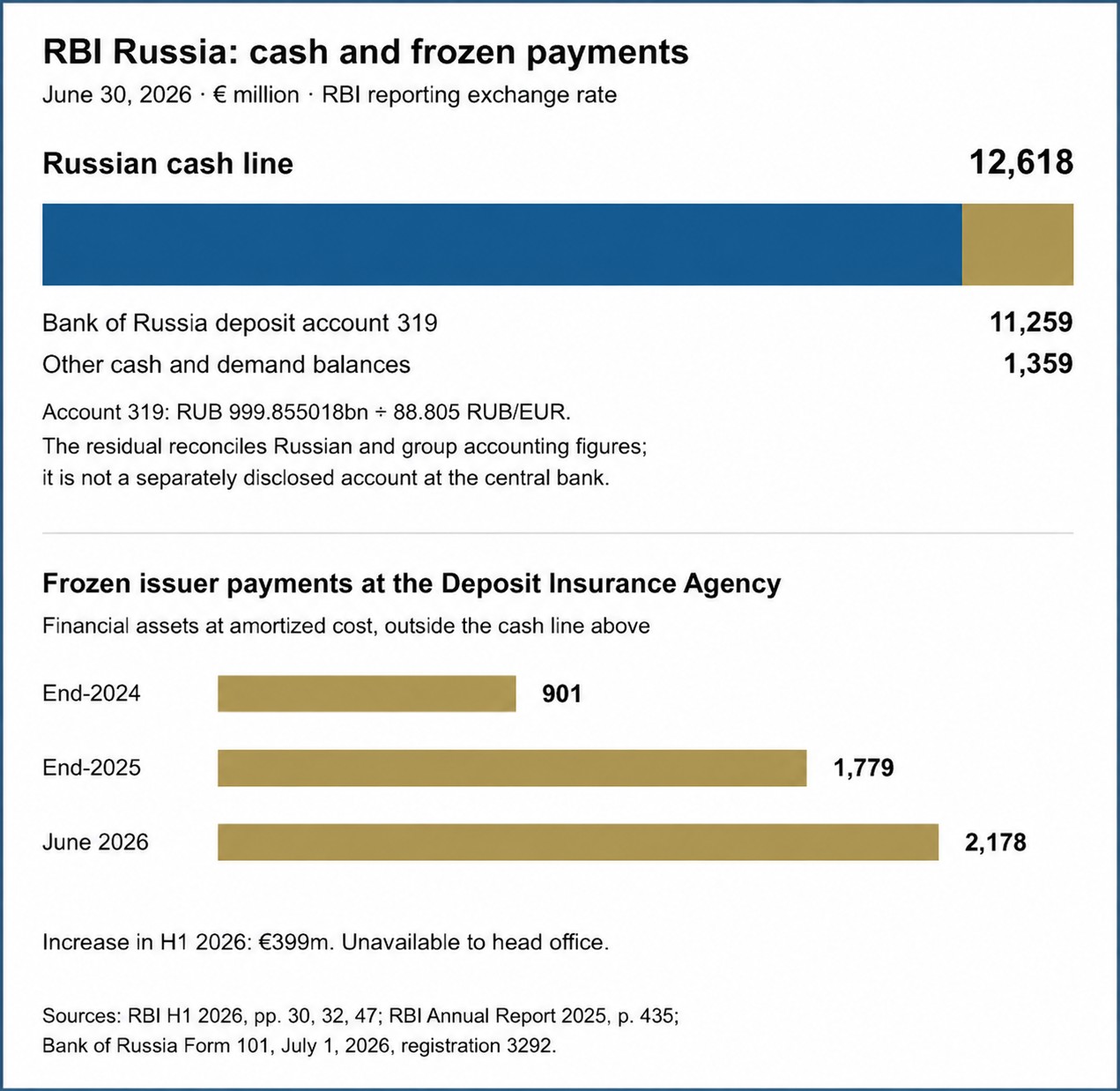
Figure 13. The Russian cash line and a separate pool of frozen issuer payments. Account 319 is converted at RBI’s June 30, 2026 exchange rate; the remaining cash balance is a reconciliation residual. Sources: RBI H1 2026, pp.30, 32 and 47; RBI Annual Report 2025, p.435; Bank of Russia Form 101.
Shareholders face two different problems here. One is the loss RBI could take on leaving Russia: an estimated €6.2 billion on €6.5 billion of Russian net assets in our discounted-sale scenario. The other is access to cash. Russia accounts for €12.6 billion of the group’s €30.5 billion cash line. RBI publishes capital and liquidity ratios excluding Russia. Our separate 105% stress case tests the effect of deducting the full Russian cash balance from the group liquidity buffer, subject to the assumptions set out below.
The €11.3 billion earns interest at the Russian key rate. But Vienna cannot retrieve or redistribute it. Interest keeps accumulating in a place the parent cannot reach.

Figure 14. Screengrab from RBI Interim Report H1 2026, p.46: Restricted cash EUR 735m (of which EUR 675m Russia+Ukraine), IAS 7.48. Source: rbinternational.com
As Steven Tian explains, Raiffeisenbank cut Russian lending far faster than customers withdrew their deposits — and the surplus appears to have been parked at the central bank. Raiffeisenbank’s own Form 101 filing, published by the central bank, puts that balance at roughly one trillion rubles, or about €11 billion at the exchange rate on the filing date of July 1, 2026. Russian rates reached as high as 21% over the past two years, making that surplus a substantial source of interest income.
RBI paid shareholders €525 million for FY2025 using a capital measure excluding Russia. Its published core LCR was 135% in Q2 2026. Investors should also consider our 105% stress case, which applies a full Russian-cash deduction under explicit assumptions rather than reproducing RBI’s regulatory calculation.
Table 2. Key figures, restricted cash (H1 2026, June 30, 2026, € million unless noted)
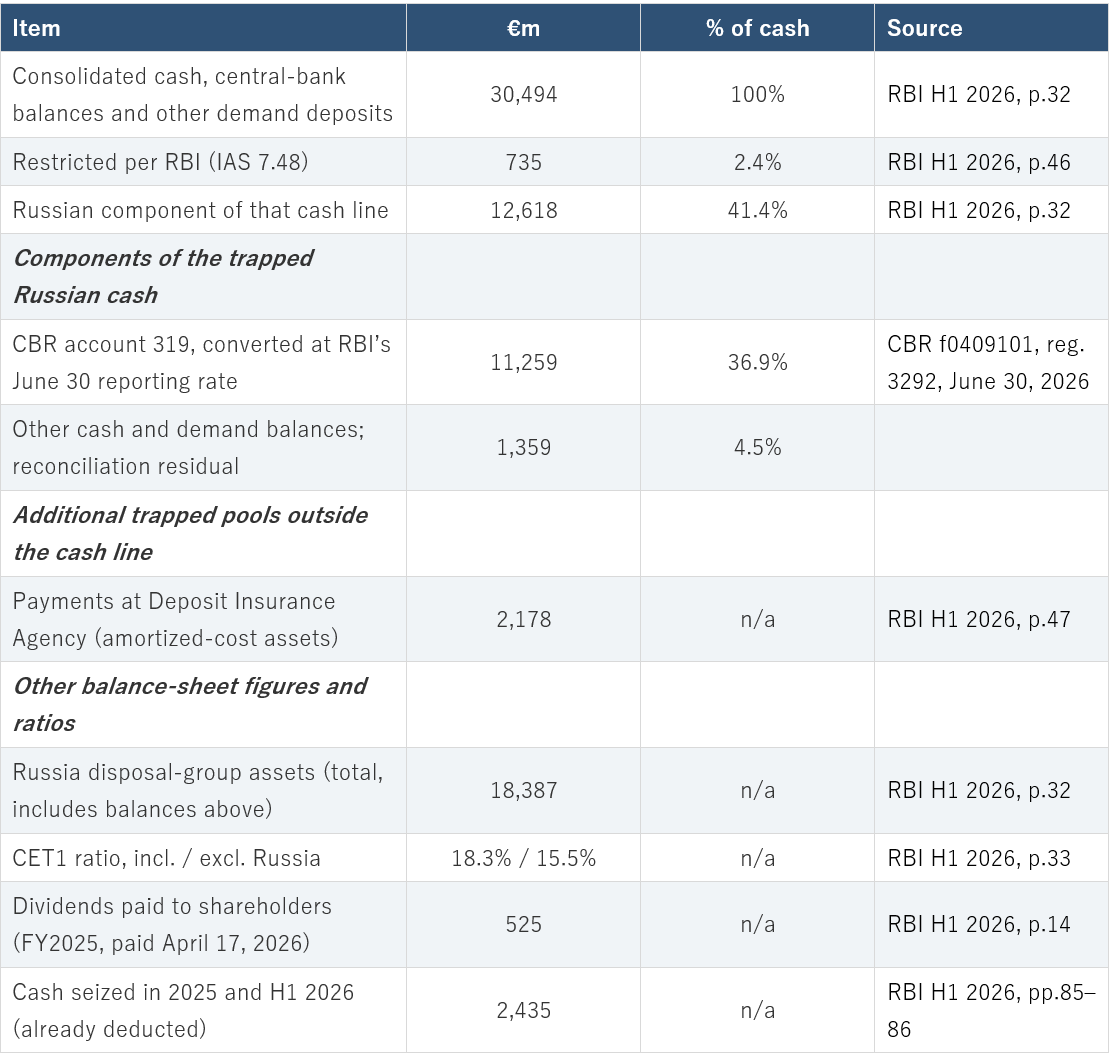
Account 319 is RUB 999.855018 billion, converted here at RBI’s June 30, 2026 rate of RUB 88.805 per euro. The resulting €11.259 billion and the €1.359 billion residual reconcile to the €12.618 billion Russian cash line; the residual also captures differences between Russian and group accounting. The CBR’s July 1 official rate instead gives €11.200 billion and is not used in this table. The €2.109 billion seized in 2025 and €326 million seized in March 2026 are already deducted from these balances. Total Russian assets include these balances and are not an additional pool. (RBI H1 2026, p.30)
The accounting rule addresses precisely this kind of problem. IAS 7.48 requires companies to identify and explain cash that the group cannot use. IAS 7.49 gives the example of a subsidiary whose cash is unavailable to the parent because of exchange controls. In our view, that description fits RBI’s Russian position. (IAS 7.48-49)
RBI’s reporting says: “At the reporting date, cash and cash equivalents amounting to € 735 million (previous year: € 770 million) were reported, which are subject to legal restrictions according to IAS 7.48, meaning that RBI cannot access these funds. Of this amount, € 675 million was attributed to Russia and Ukraine.” (RBI H1 2026, p.46)
Elsewhere in the same notes, RBI describes much larger Russian balances that are unavailable to the parent. They do not appear in that restricted-cash figure.
A further €2,178 million sits with the Russian Deposit Insurance Agency. These are payments by issuers of local debt instruments that cannot currently be passed to foreign investors because of sanctions. RBI says they are unavailable to head office and classifies them as financial assets at amortized cost. This frozen pool is separate from the €12.6 billion Russian cash line. (RBI H1 2026, p.47)
Some cash in Russia does useful day-to-day work, paying the subsidiary’s bills and meeting minimum reserve requirements. The concern is the surplus left over. It keeps building because the bank cannot move it out of the country.
The Russian accounts locate most of that surplus in account 319 at the central bank: €11.3 billion that funds no lending and is unavailable outside Russia. RBI says the cash “could not be converted at the official exchange rate” and that the subsidiary is “obliged to invest liquidity with the Russian central bank.” These balances may support the Russian subsidiary, but the parent cannot use them elsewhere. (RBI AR 2025, p.51 and p.412)
The announced wind-down has coincided with a sharp rise in account 319. It held RUB 92 billion at the end of 2023, RUB 707.539 billion a year later and RUB 878.794 billion at the end of 2025. By June 30, 2026, it had reached RUB 999.855 billion. The loan book was shrinking while deposits at the central bank were growing. (Bank of Russia Form 101)
Deutsche Bank shows investors a more explicit Russian-cash disclosure. Its FY2025 cash-flow note identifies €545 million of time and demand deposits at the Russian central bank as subject to foreign-exchange restrictions. Of those deposits, €13 million qualifies as cash and cash equivalents. Its accounting policy also distinguishes interest-earning time deposits. The disclosure makes the amount and its treatment visible, although differences between the banks’ instruments matter. (Deutsche Bank Annual Report 2025, p.430)
The chart below shows the rise in account 319, using the Bank of Russia’s Form 101 filings.
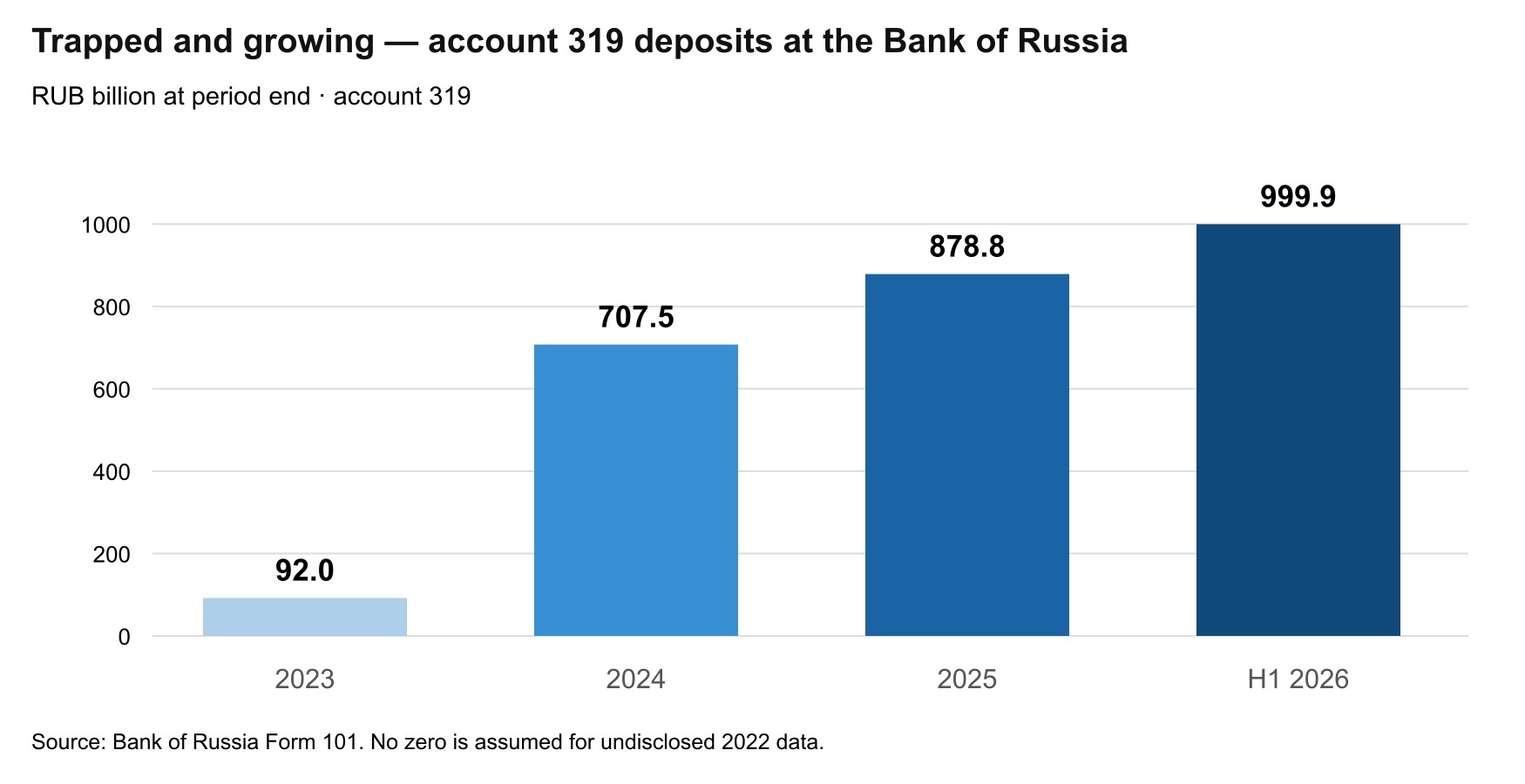
Figure 15. Account 319 at the Bank of Russia, in RUB billion. The balance rose by RUB 121.1 billion in H1 2026, from RUB 878.8 billion to RUB 999.9 billion. No zero is assumed for undisclosed 2022 data. Source: Bank of Russia Form 101, registration 3292.
The same exposure appears under different accounting labels. At the end of 2025, account 319 held RUB 878.794 billion, equivalent to €9.395 billion at RBI’s year-end exchange rate of RUB 93.540 per euro. Comparing Russian accounts with the group cash line requires consistent exchange rates and classification. It does not establish that the entire balance qualifies as liquidity available elsewhere in the group. The 2022 account 319 balance was not separately disclosed. (RBI Annual Report 2025)
The Wind-Down Chart Leaves Out a Growing Frozen Balance
RBI’s investor presentation makes the Russian retreat look straightforward: loans are down. The money accumulating elsewhere deserves equal attention.
Slide 5 of the H1 2026 presentation, titled “Russia De-Risking,” leads with customer loans falling from €13.7 billion to €2.5 billion since 2022. It also points to more equity than loans, a 23% loan/deposit ratio and a 471% liquidity coverage ratio as of July 24, 2026. Each looks reassuring until one asks where the money can go.
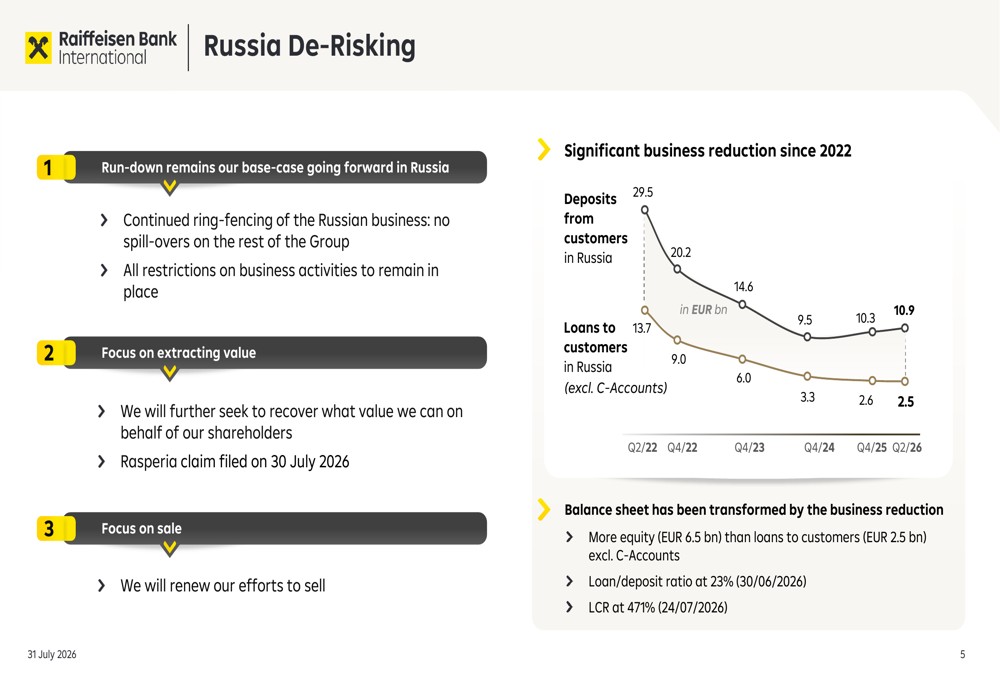
Figure 16. Screengrab from RBI H1 2026 investor presentation, slide 5, “Russia De-Risking.” Source: RBI
The slide excludes C-Accounts from its customer-loan series. RBI’s interim accounts separately report €2,178 million of issuer payments held at the Russian Deposit Insurance Agency and unavailable to head office. They are frozen assets, but they are not customer loans. (RBI H1 2026, p.47)
Those payments rose by €399 million during the first half of 2026, from €1.779 billion to €2.178 billion. Over the same period, the slide’s customer-loan figure fell from €2.6 billion to €2.5 billion. Together, loans and frozen issuer payments rose from roughly €4.4 billion to €4.7 billion. The combined figure illustrates the changing asset mix; it is not a measure of new lending. (RBI Q2 2026 presentation, slide 5)
The other measures on the slide tell the same story of money accumulating inside Russia.
“More equity than loans” refers to €6.5 billion of Russian net assets against €2.5 billion of customer loans. An exit could consume most of that equity, as Figure 19 shows. The Russian subsidiary’s LCR was 471% on July 24, compared with 139% for RBI’s core group excluding Russia on the same date. The 23% loan/deposit ratio means that for every €100 of customer deposits, just €23 was lent out. The surplus helps explain the central-bank placements.
Even the falling deposit line has reversed. Deposits rose from €9.5 billion to €10.9 billion as the ruble recovered. (RBI H1 2026 presentation, slide 5)
The slide promises “no spill-overs on the rest of the Group,” and later lists the Rasperia claim. RBI nevertheless expects up to €150 million of Rasperia legal costs outside Russia in 2026. The case has already cost its Russian subsidiary €2.435 billion in cash seizures and produced €2.448 billion of group charges in 2024 and 2025. The cash and accounting figures overlap. (RBI H1 2026, pp.85–86)
The bank’s claim of “significant business reduction” rests on falling loans. Alongside them, the excluded frozen balances are rising. The loan chart does not show the €12.6 billion Russian cash pool. The slide separately discloses €6.5 billion of equity.
Using RBI’s own figures, the reconstruction below shows the exposures growing during the wind-down.
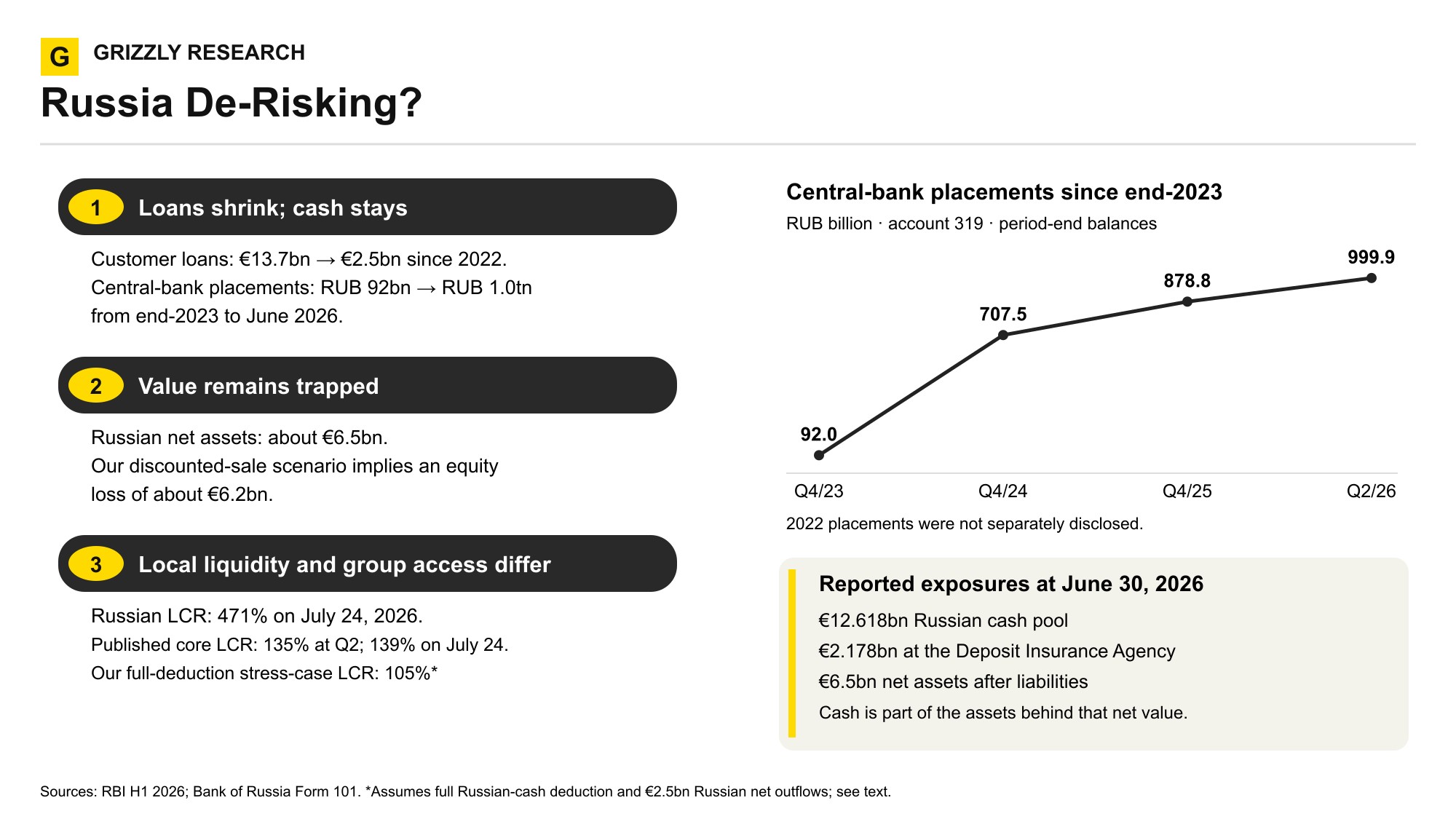
Figure 17. Russian loans, central-bank placements and frozen issuer payments, with published liquidity ratios and the report’s separate 105% stress case. Cash and net assets are not additive exposures. Sources: RBI H1 2026 report and investor presentation; Bank of Russia Form 101. Stress-case assumptions and calculation appear below.
A 105% Stress Case Tests the Cost of Inaccessible Russian Cash
Investors should test RBI’s liquidity at roughly 105%, leaving only €1.05 of modeled liquid assets for every €1 of stressed net outflows. This is our proposed stress-case LCR. It tests the consequence of deducting the full Russian cash balance from group liquid assets, because cash that cannot reach Vienna cannot meet cash needs there. It does not establish that RBI’s reported buffer includes that entire balance.
RBI reports a core LCR excluding Russia of 135% for Q2 2026 and 139% on July 24, against a regulatory minimum of 100%. Those are the bank’s published regulatory measures. Our 105% sensitivity asks how much headroom remains under a full Russian-cash deduction; it is not a replacement regulatory calculation. (RBI Q2 2026 presentation, slide 17)
The model starts with the interim report’s €43.690 billion of average liquid assets and €32.086 billion of net outflows, which produce the reported group LCR of 136%. We deduct the €12.618 billion Russian accounting cash balance from assets and an assumed €2.5 billion of Russian stressed net outflows from the denominator: (€43.690bn − €12.618bn) ÷ (€32.086bn − €2.5bn) = 105.0%. The resulting modeled cushion is €1.486 billion. (RBI H1 2026, pp.13 and 83)
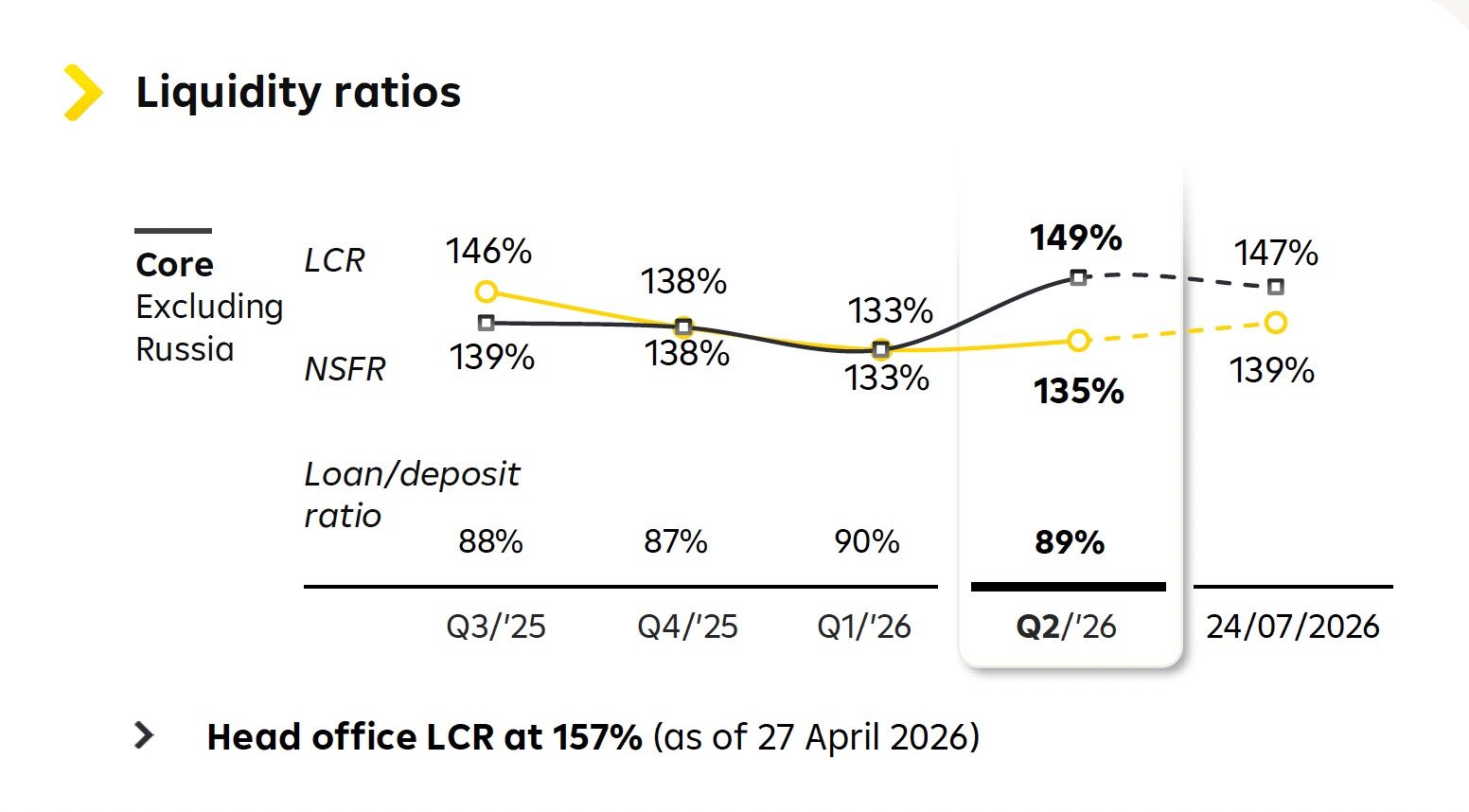
Figure 18. RBI’s published core liquidity coverage ratio excluding Russia. These figures are distinct from the report’s 105% stress case. Source: RBI Q2 2026 investor presentation, slide 17.
Table 3. RBI’s published LCRs and our separate stress case
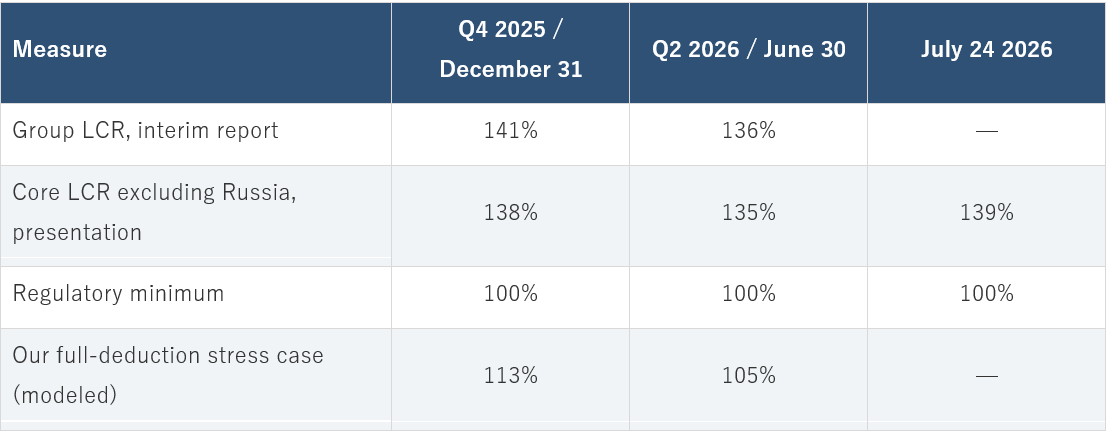
Published ratios retain their source periods and perimeters. The stress-case row applies a full Russian-cash deduction and assumes €2.5 billion of Russian stressed net outflows in each period; it does not reproduce the published core LCR. Source: RBI H1 2026, pp.13 and 83; RBI Q2 2026 investor presentation, slide 17. Russian cash balances: RBI H1 2026, p.32. Stress-case calculations: this report.
The full deduction is deliberately demanding. It uses Russia’s €12.618 billion closing accounting cash balance as a proxy for liquidity removed from the group. Public disclosures do not establish how much of that balance is included in regulatory liquid assets after transferability and consolidation adjustments. The model also combines a closing cash balance with average liquid assets. If RBI already excludes part of the Russian balance, deducting it again overstates the reduction. These assumptions explain why 105% must be read as a stress case, not a finding that the published 135% is wrong.
The result is sensitive to Russian outflows. Assuming €2 billion to €3 billion produces a modeled LCR of 103% to 107%; €2.5 billion is the midpoint of that assumed range, not a disclosed Russian contribution. Applying the same method to the end-2025 figures gives roughly 113%. Neither comparison demonstrates an actual regulatory deterioration outside Russia, because the Russian regulatory components and measurement periods have not been reconciled.
The 105% case deserves attention because it shows how a full Russian-cash deduction could leave little modeled headroom above 100%. RBI can resolve the gap with its published core ratio by disclosing Russia’s contribution to group qualifying liquid assets and stressed net outflows on a consistent basis, together with the transferability and consolidation adjustments. Until that reconciliation is available, investors should assess both the published 135% and the explicitly assumed 105% stress case.
Russian Interest Payments Support Earnings That Cannot Come Home
RBI earns money simply by leaving cash where it cannot retrieve it. In 2025, the Russian operations accounted for €1.617 billion of the group’s €5.874 billion in net interest income, which is the interest a bank earns after funding costs. RBI says placements with the Russian central bank produced more than 70% of Russian net interest income, putting their contribution at roughly a fifth of the group total. (RBI Annual Report 2025, pp.51 and 414)
The mechanism is simple. RBI says that the Raiffeisenbank in Russia pays no interest on customer deposits to discourage inflows, while it must place liquidity at the Russian central bank’s key rate, which averaged 19% in 2025. (RBI Annual Report 2025, p.51)
The Russian state sets the rate on that income, and Vienna cannot retrieve the cash earning it. The Russian segment’s net interest income fell 13% in H1 2026, to €780 million from €898 million a year earlier, primarily because lower key rates reduced income from central-bank deposits. (RBI Interim Report H1 2026, p.19)
Further rate cuts would reduce the earnings support. The central bank’s July 24, 2026 forecast put the annual-average key rate at 10.5% to 12.5% in 2027. RBI has more money earning interest than before: the balance rose from RUB 708 billion at the end of 2024 to about RUB 1.0 trillion by mid-2026. The larger balance partly offsets the effect of lower rates. (CBR July 24, 2026 forecast)
This matters when deciding whether RBI’s shares are cheap. Consensus forecasts roughly €7.44 of earnings per share for 2026, but only about €5.27 comes from outside Russia. Nearly a third of those forecast earnings therefore depends on Russian profit. Asked about upstreaming dividends on the H1 2026 call, CEO Michael Höllerer said there were “no plans in this direction so far I can comment on.” (H1 2026 earnings call)
The latest quarter also benefited from releases of money previously set aside for losses. Credit costs, the charge for expected loan losses, were just 4 basis points, or 0.04%, against full-year guidance of up to 35 basis points, or 0.35%, excluding potential overlay releases. RBI released a €43 million provision overlay, an extra reserve against losses, and €24 million of Stage 3 provisions for its legacy Polish Swiss-franc mortgages following an accounting-policy change. Releasing those reserves helps reported profit.
Meanwhile, RBI lowered its return forecast for the business outside Russia, even as it raised its net interest income outlook. RBI cut its forecast core return on equity, a measure of profit earned on shareholders’ capital, from 10.5% to around 9.5%. It raised expected general administrative expenses from €3.6 billion to €3.8 billion, including up to €150 million of Rasperia-related legal costs and expenses. Its projected cost/income ratio rose from 52.5% to 55%. That means €55 of costs for every €100 of income, leaving less for shareholders. (RBI Q2/H1 2026 earnings call and results, July 31, 2026)
Presenting Russia as Held for Sale Does Not Pay for an Exit
RBI gives investors an alternative set of figures that separates Russia as though it qualified as a business held for sale. This voluntary presentation is called “pro-forma IFRS 5.” It changes where Russia appears in the accounts, without recording the cost of actually leaving.
IFRS 5 is the accounting standard for assets “held for sale.” It moves the business’s assets into a separate balance-sheet line and its profit into “profit from discontinued operations.” RBI voluntarily uses that format for Russia even though the formal conditions, including a committed plan to sell, are not met. No disposal loss is recorded simply by presenting the figures this way. (IFRS 5.6-8)
So the totals stay the same. Group equity is still €23,586 million and H1 2026 consolidated profit is still €1,256 million. In that presentation, Russia’s €18.4 billion of assets remain on the balance sheet, labeled “held for sale,” and its earnings remain in group profit. The separate presentation helps readers locate Russia. It does not show what shareholders would lose on departure.
Russia’s earnings have been consumed by legal costs and tax. Group consolidated profit fell from €3.627 billion in 2022 to €1.371 billion in 2025. Profit after tax from continuing operations excluding Russia was €1.743 billion in 2025. Russia earned €2.058 billion after tax in 2022; RBI’s 2025 pro forma reconciliation shows a €122 million after-tax loss, despite €371 million of pretax profit and a €1.949 billion operating result. And the cash remains trapped. (RBI Annual Report 2022, pp.3 and 81; RBI Annual Report 2025, pp.3 and 414)
In our confiscation scenario, losing the Russian subsidiary without compensation would reduce group equity by roughly €6.5 billion, to €17.1 billion. RBI would also lose the subsidiary’s roughly €11.3 billion at the Bank of Russia: cash it cannot currently repatriate, but still holds through the Russian bank. That cash forms part of the assets behind the €6.5 billion net-asset value, so it is not a separate equity loss. The CET1 ratio, which compares core capital with risk-weighted assets, would fall from 18.3% to about 15.5%.
A sale under Russia’s mandated terms would recover little more. The minimum 60% discount leaves 40% of appraised value. The 35% exit levy is charged on the original appraised value, rather than the discounted sale price, leaving only about 5%. Using €6.5 billion of net assets as the appraised value in this scenario, that means roughly €0.3 billion recovered and a loss of about €6.2 billion. Group equity would be near €17.4 billion and CET1 around 16%.
The alternative presentation does not model either loss. Its 18.3% headline CET1 ratio still counts Russian capital. RBI’s own ratio excluding Russia is 15.5%, which shows how much the headline depends on capital the group cannot bring home. (RBI H1 2026, p.33)
There is another support beneath RBI’s capital ratio: synthetic risk transfer, or SRT. The bank pays investors to take part of the risk that borrowers default. That reduces the capital RBI must hold against the affected loans and improves its reported capital ratio. The protection comes with a recurring cost.
These transactions contribute roughly 110 basis points, or 1.1 percentage points, to RBI’s group ratio, compared with an average European benefit of about 30 basis points, or 0.3 percentage points. About 8% of RBI’s exposure at default, the amount at risk if borrowers fail to pay, is placed with SRT investors. Investors reading the 15.5% ratio excluding Russia should also consider this reliance on purchased credit protection.
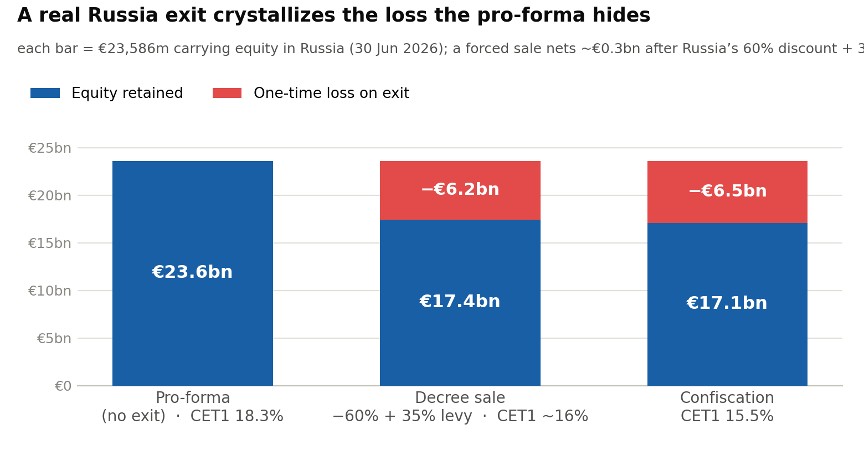
Figure 19. What an actual exit would cost, against the pro forma that costs nothing. Source: Grizzly analysis of RBI H1 2026 disclosures.
The Audit Spotlight Moved Away as Rasperia Became a Cash Loss
In 2024, the auditor identified the Rasperia litigation as a Key Audit Matter, one of the issues judged most significant in the audit. RBI then held an €840 million net provision for the case. In 2025, Rasperia produced a €1,608 million charge, including the €339 million provision for the second case, while €2,109 million was seized in cash. That was the year it disappeared from the list. (RBI Annual Report 2025, p.430)
RBI publishes two sets of accounts. The parent company’s accounts show its stakes in subsidiaries as investments. The consolidated accounts combine the assets and liabilities of those subsidiaries with the rest of the group. Deloitte audits both, and Peter Bitzyk signed both FY2025 reports. (RBI Consolidated FS 2025, p.187)
Each audit report identifies its “Key Audit Matters.” The definition under ISA 701 is “those matters that, in the auditor’s professional judgment, were of most significance in the audit.” They identify the matters the auditor judged most significant in conducting the audit.
In the parent accounts, Deloitte highlights whether RBI can recover the value of roughly €9.2 billion invested in subsidiaries. Those investments undergo ongoing review for impairment, an accounting reduction when an asset is worth less than its recorded value. The wholly owned Russian bank is by far the largest stake. RBI had written it down by about €1.2 billion by the end of 2024, mostly after a Russian court ruled that the subsidiary’s assets could be seized over Rasperia.
The group audit highlights different issues: expected loan losses and a €1,956 million provision for Polish foreign-currency mortgages. Russia is absent from the Key Audit Matters.
Part of the difference follows from how the accounts work. In the parent accounts, the Russian bank is one investment whose recoverability must be assessed. In the group accounts, that investment line is removed and replaced by the Russian bank’s underlying assets and liabilities. The single line disappears, but the Russian exposure remains.
That explains the difference between the two sets of accounts. It leaves open why Russia merits no separate audit spotlight at group level. Under ISA 701, issues are selected for their significance. RBI’s group accounts still require judgments about recovering Russian central-bank balances, the Rasperia provision, expected Russian loan losses and presenting an unsold business under IFRS 5. The Polish mortgage provision that Deloitte did highlight is also a single line in the accounts.
The group accounts carry Russia’s net assets at full value: about €5.6 billion at the end of 2025, rising to €6.5 billion by June 30, 2026. Retained Russian profits add to that value, even though they remain trapped. Releasing earlier loan-loss reserves also helps reported profit: €51 million was released in 2025, after €162 million in 2024.
Intesa Sanpaolo offers a comparison. By December 31, 2024, it had built an allowance for risks and charges “aimed at fully writing down the equity value of Banca Intesa Russia.” The allowance stood at €438 million at the end of 2025. The largest part of the allowance, €263 million booked in 2024, was intended “to write off the equity contribution of the Russian investee to the consolidated financial statements.”
Intesa softened its approach in 2025 by keeping the unit’s €139 million profit in group results. The allowance remained substantially unchanged. It had recognized a cost against the Russian equity in its consolidated accounts. (Intesa Sanpaolo AR 2025, p.39)
RBI has not made an equivalent provision, despite a Russian exposure many times larger and the €2.435 billion already taken from its account. (RBI H1 2026, pp.85–86)
RBI is not alone in this audit treatment. The reports reviewed for UniCredit (KPMG), Intesa (EY), OTP (EY), Deutsche Bank (EY), Commerzbank (KPMG), ING (KPMG) and Citigroup (KPMG) also omit Russia from their Key Audit Matters. None of those audit reports flags a going-concern issue, a concern about the bank’s ability to continue operating. (UniCredit AR 2025, p.725) (Intesa AR 2025, p.799) (Deutsche Bank AR 2025, p.634) (Commerzbank AR 2025, p.423) (ING AR 2025, p.334) (Citigroup 10-K 2025, p.130)
What differs is the scale of RBI’s dependence. In its 2025 pro forma reconciliation, Russia accounts for €1.949 billion, or about 39%, of the group’s €4.963 billion operating result. Rasperia charges and tax left the Russian business with a €122 million after-tax loss. On the operating-profit basis set out in Table 4, Russia contributed about 24% to OTP’s group result and 6% to UniCredit’s. (RBI Annual Report 2025, p.414)
Table 4. Russian share of group operating profit, 2025
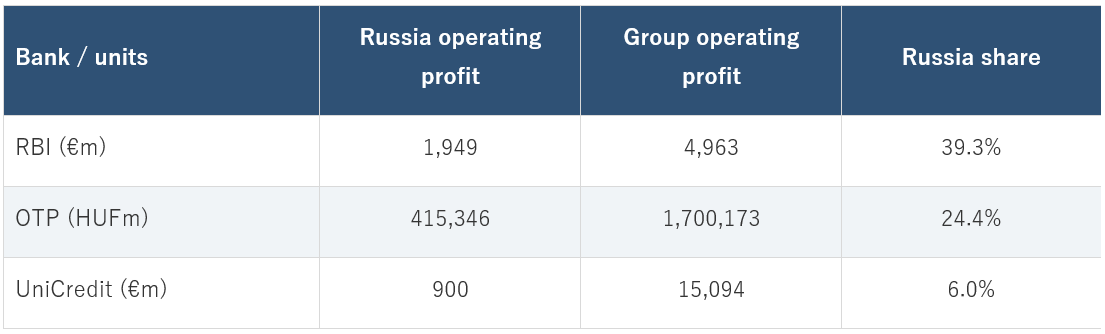
Shares are calculated before loan-loss provisions and tax, using RBI’s operating result, OTP’s adjusted operating profit and UniCredit’s gross operating profit. Reporting definitions differ; UniCredit’s Russia segment also includes cross-border exposures booked in Italy. Amounts remain in each bank’s reporting currency; the percentages compare earnings dependence, not absolute business size or compliance. Sources: RBI Annual Report 2025, p.414; OTP Integrated Annual Report 2025, pp.34 and 71; UniCredit Annual Report 2025, pp.106 and 711.
For RBI shareholders, the absence of a separate Russia Key Audit Matter therefore deserves closer examination. Other banks use similar disclosures, but none in this comparison relies on Russian operating profit to the same degree.
Raiffeisen’s Belarus Exit Could Draw Sanctions Scrutiny
In Belarus, RBI has already sold its ownership stake. The price, buyer and continuing relationships with Raiffeisen raise a separate set of questions.
In November 2024, RBI closed the sale of its 87.74% stake in Priorbank, Belarus’s most profitable private bank, classified by the National Bank of Belarus as systemically important at the time of the sale. The price was €215 million. The buyer was Soven 1 Holding Limited, an Abu Dhabi company formed in late 2022 with no website, no operating record, and a single named individual behind it.
Belarus is heavily sanctioned by the West for political repression and for supporting Russia’s war against Ukraine. A sale in that environment demanded maximum scrutiny of the buyer. The evidence below indicates the opposite happened: the discount benefited the Belarusian state and undisclosed insiders, and the red flags were visible to RBI throughout.
Priorbank trades publicly on the Belarusian stock exchange. RBI sold its stake at roughly 60% below book value. Belarusian auditors called the discount “extreme.” In an October 2024 analysis, Nasha Niva cited roughly €520 million of net assets at the end of 2023 and a return on equity near 30%. It put fair value near €1 billion and noted that comparable deals were struck at premiums to book value. Priorbank’s share price has since risen 145%, to BYN 12.96 as of July 17, 2026.
RBI had real reasons to sell. It could not repatriate dividends after 2022. Owning a bank under a pro-war dictatorship carried reputational costs. None of that explains what follows: the buyer’s identity and the economics after closing.
Everyone Won Except RBI’s Shareholders
Within 19 months of closing, Priorbank declared two dividends worth roughly €149 million on Soven 1’s 87.74% stake, equivalent to about 70% of the purchase price. The declared amount exceeded every dividend Priorbank paid from 2010 to 2024. The dividends came from retained earnings accumulated under Raiffeisen. Priorbank also earned about €140 million in 2025. The buyer had paid less than two years’ profit for the bank.
Table 5. The buyer’s payback (as of July 2026)
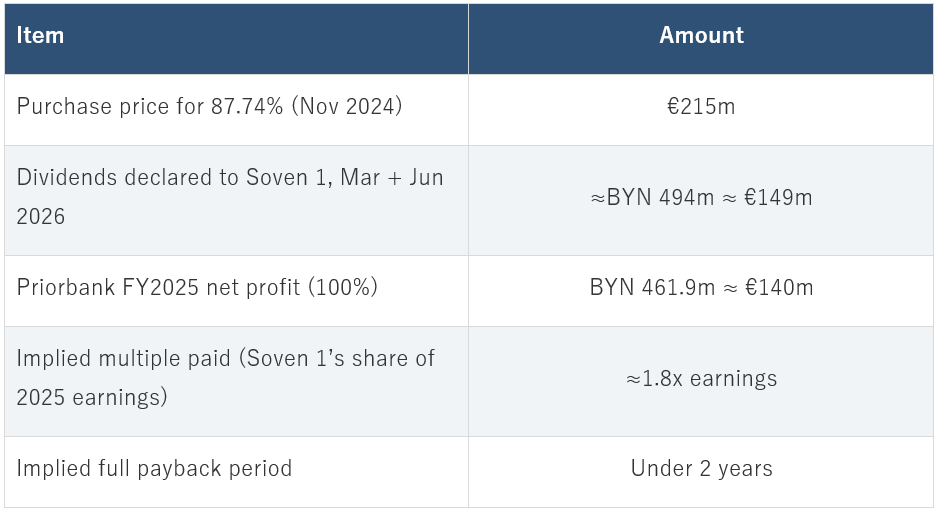
The Belarusian state received a better price. Six months after RBI sold, Priorbank bought out the state’s remaining 6.31% stake for about €48 million, or 3.1 times RBI’s per-share exit price. An independent appraisal valued the bank at about €760 million.
Table 6. What Priorbank was worth, on five different bases
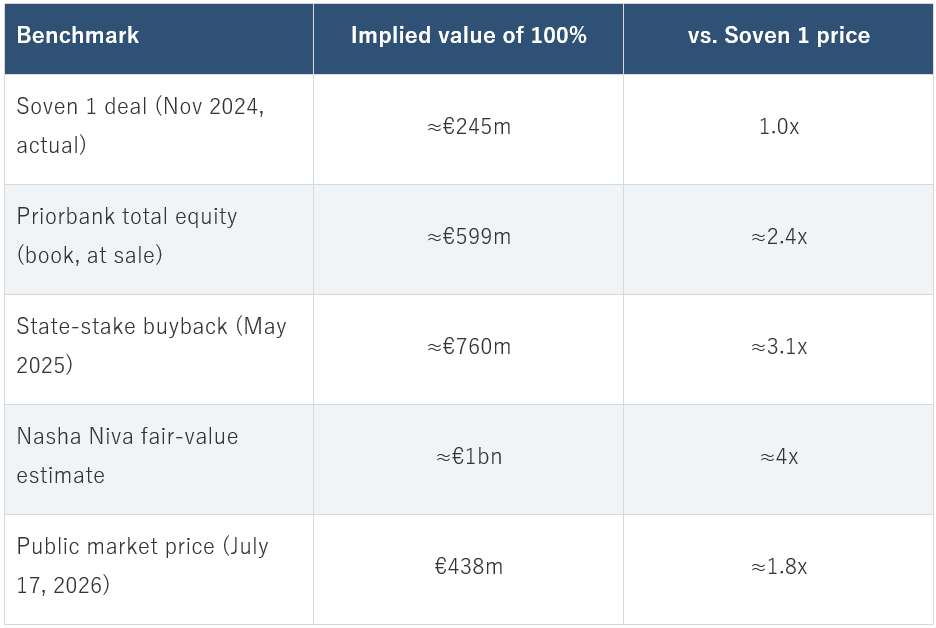
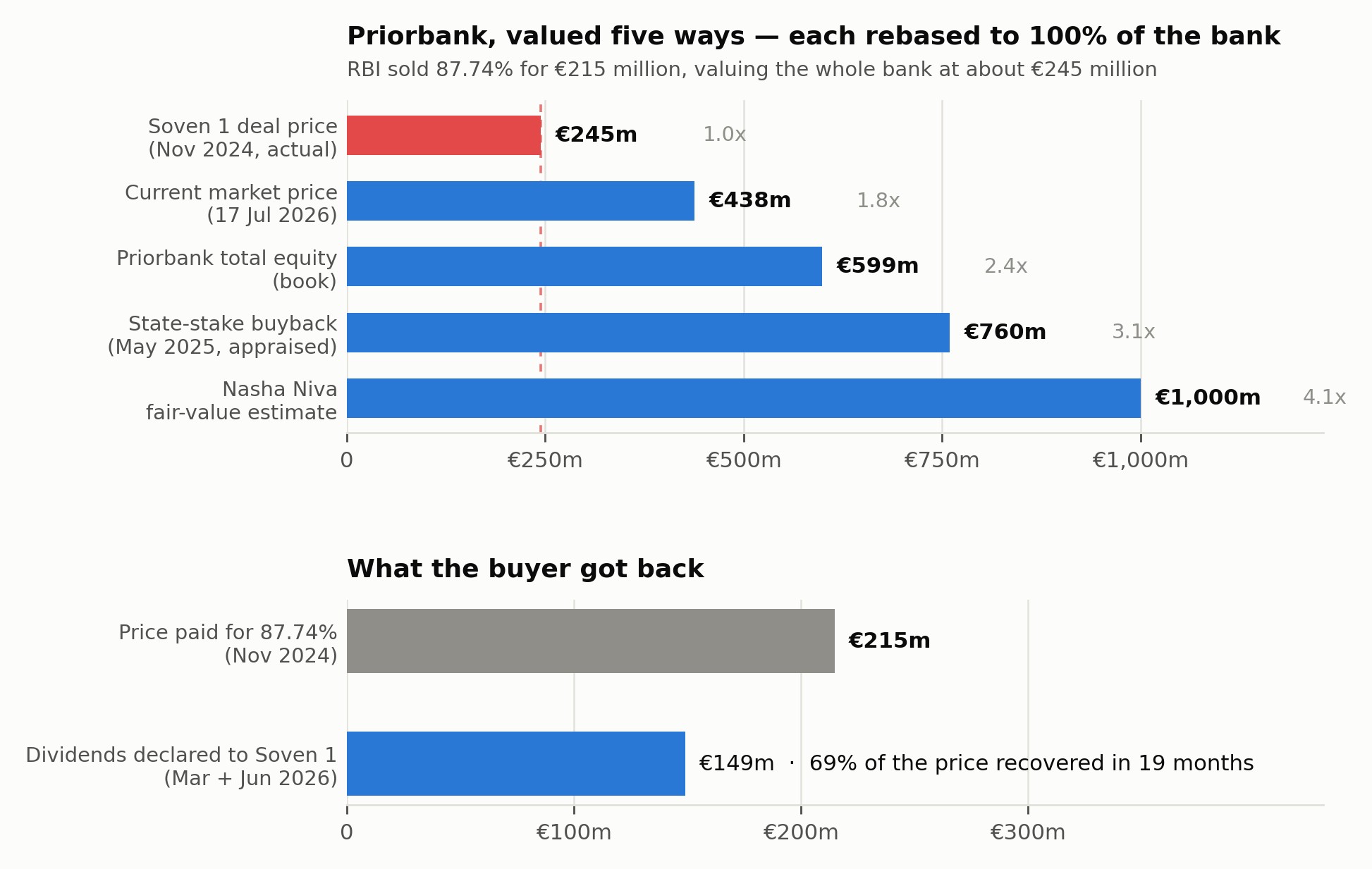
Figure 20. Priorbank valued on five bases, rebased to 100% of the bank, against the €215 million Soven 1 paid for 87.74%. Below, the dividends declared in the first 19 months. Source: RBI, Priorbank 2025 accounts, BCSE, Nasha Niva.
RBI’s reported cost of leaving rose at each stage: a €225 million price-to-book loss at announcement, €300 million at signing and a final €830 million total charge at closing. Priorbank remained profitable throughout. The Belarus Democratic Forum, the exile group led by Valery Tsepkalo, called the escalation “inexplicable.”
An Untraceable Mr. Al Otaiba
The next question is who bought the bank.
“Whoever ultimately owns Priorbank made every effort to conceal their identity, in Belarus, in the UAE and inside the bank itself,” said Oleksandr Aharkov, CEO of Anahata Solutions, a research firm supporting legal teams in cross-border disputes, which investigated the sale at Grizzly’s request.
Soven 1 has no traceable commercial history. Even UAE state media could not point to a single prior activity.
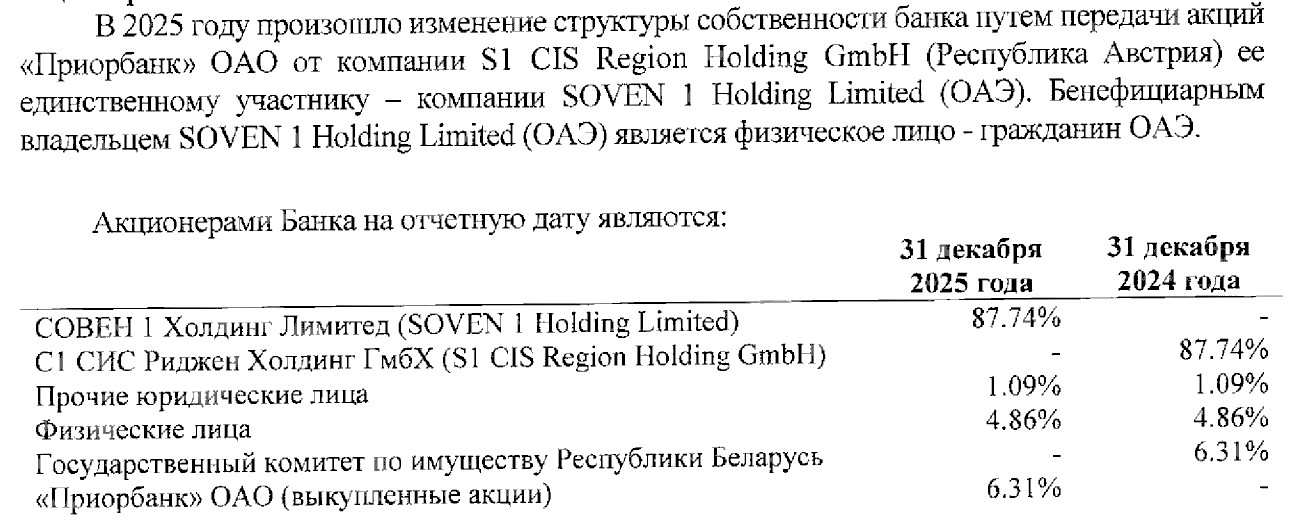
Figure 21. Priorbank’s 2025 report, showing its shareholders as of December 31, 2024, and December 31, 2025, and the 87.74% stake passing from S1 CIS Region Holding GmbH (Austria) to Soven 1 Holding Limited (UAE).
The ownership trail leads to Suhail Mohammed Ahmed Khalaf Al Otaiba. The Abu Dhabi Global Market registry records him as Soven 1’s sole shareholder and CEO since incorporation on December 28, 2022, fourteen months before RBI announced the sale. A second record comes from R1 Leasing, a Priorbank subsidiary. Its securities prospectus names Al Otaiba as the ultimate beneficial owner and reports his indirect stake at 95.84%.
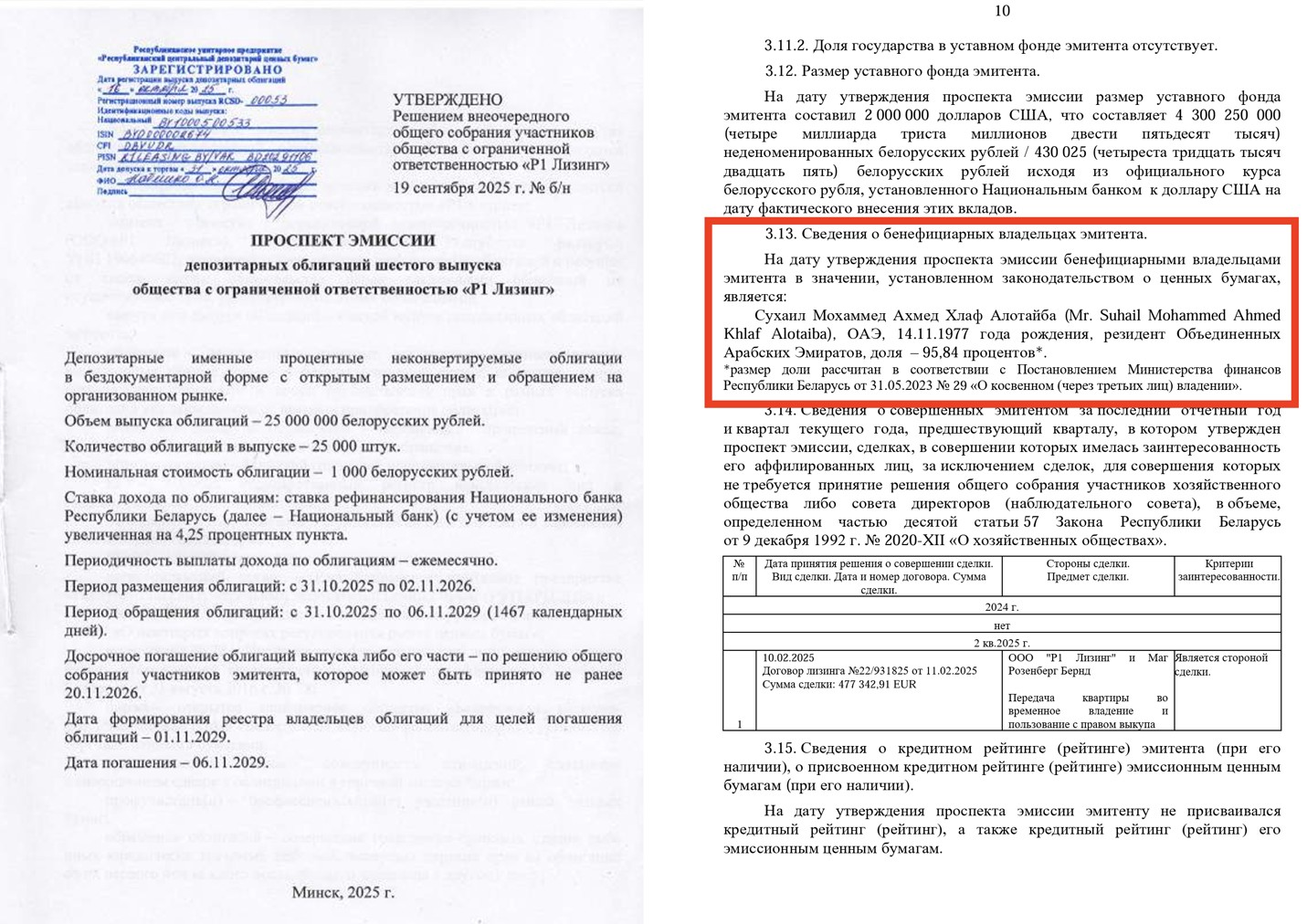
Figure 22. R1 Leasing prospectus. Source: Belarus Government Database
Table 7. Ownership structure of R1 Leasing LLC as of September 19, 2025, per its securities prospectus
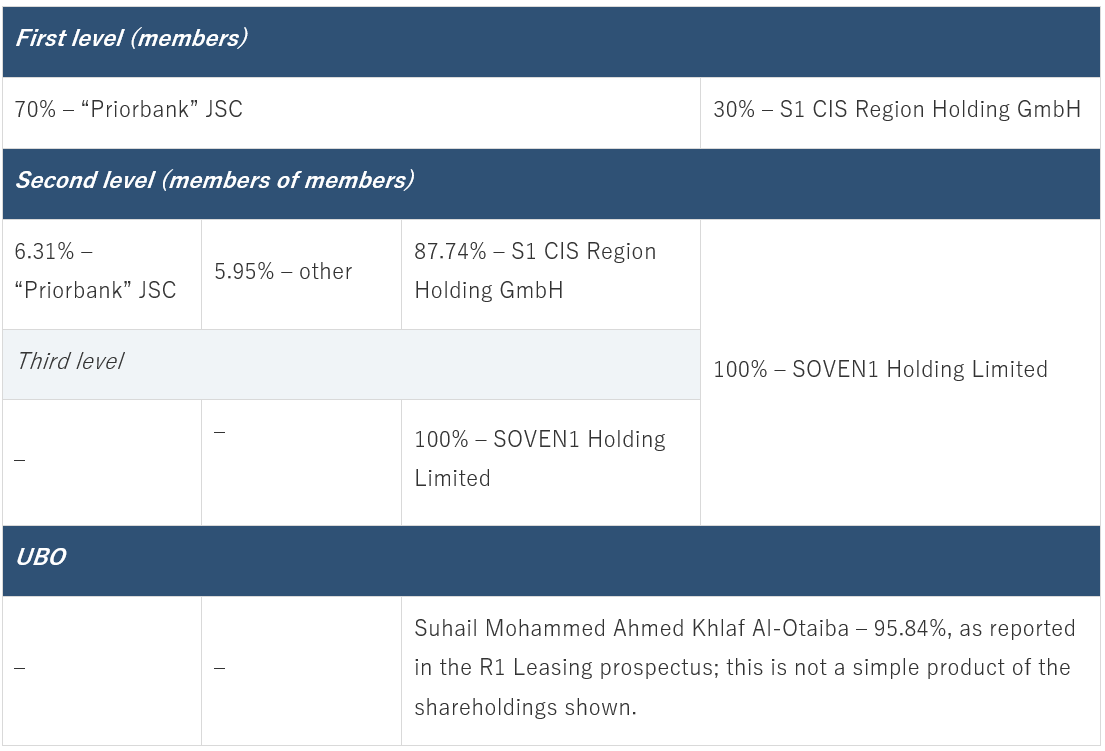
One man formally controls one of Belarus’s largest banks. The public record leaves the source of the €215 million purchase price unexplained.
Since 2019, he has served as CEO of TALC Investment LLC, a private Abu Dhabi investment house. The pattern across his career is consistent: he runs businesses that belong to TALC or to people connected with it. He founded and runs the retail brokerage Traders’ Hub. TALC acquired a stake in it. He held a management role at Resources Investment, formerly owned by TALC. TALC itself is opaque. It was founded by Mohammed Al-Dhaheri, who chaired its board until 2025 and holds its domain. Its current shareholders are not disclosed. The Belarus Democratic Forum concluded he “may be acting as a nominal director for undisclosed beneficiaries.” UAE law generally permits nominee holdings.
Soven 1’s subsequent activity adds another link to TALC. In March 2026, a legal notice in the Emirati daily Al Fajr disclosed changes at Lux Aurum, an obscure Dubai company. Two oil traders from the TALC orbit exited its shareholder register: Rabdan Petroleum Trading, whose shareholder is TALC and whose vice chairman is Al-Dhaheri, and Petroshore for Oil Products Abroad. Soven 1 took their place. Lux Aurum converted to a single-shareholder structure, suggesting Soven 1 now owns it outright. A vehicle presented to Belarusian regulators as one man’s private acquisition company stepped into a position vacated by trading firms from the group he runs.
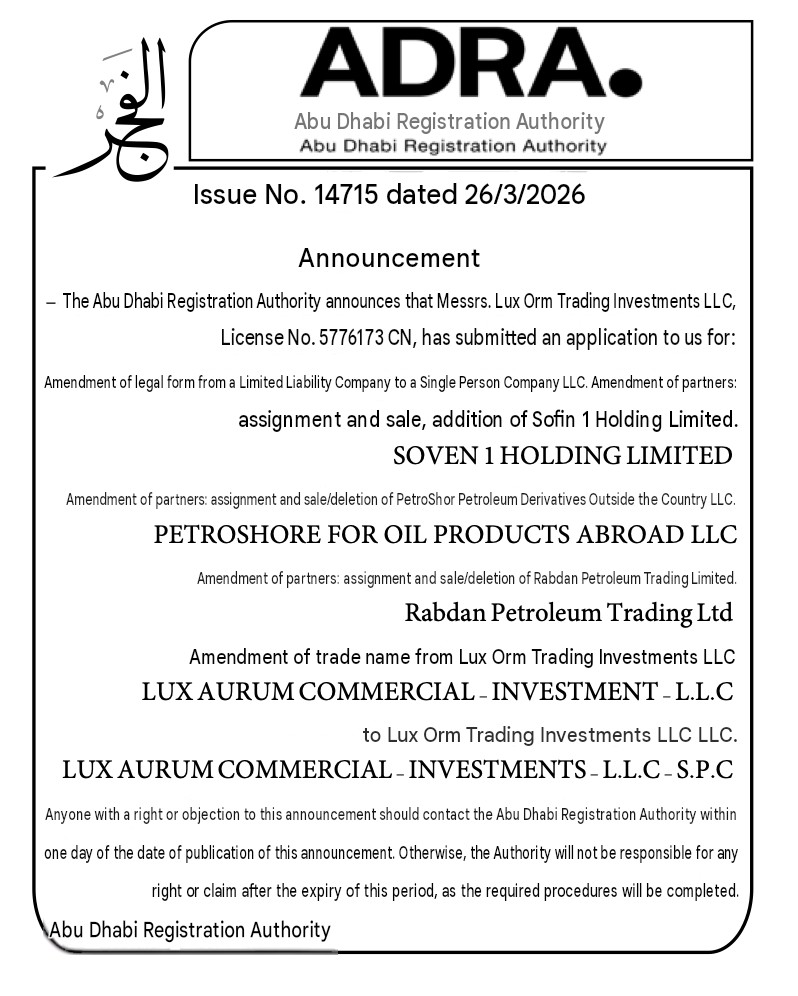
Figure 23. March 2026 legal notice in the Emirati daily Al Fajr disclosing changes at Lux Aurum, an obscure Dubai company. Translated from Arabic by Google Translate. Source: Alfajr News
The bank’s new management fits the pattern. In August 2025, Mohamed Al Dosari was confirmed as chairman of Priorbank’s management board. His official biography claims “26 years in leading UAE financial institutions.” It names none. Priorbank’s own site notes he has no finance degree.
RBI’s only substantive comment, delivered through a spokesman in April 2026, was:
“RBI sold its Belarusian subsidiary in 2024 and, accordingly, retains no economic interest in Priorbank, provides no operational services to Priorbank, and receives no income linked to Priorbank’s performance results. The ultimate beneficial owner of Soven has been disclosed to the relevant regulatory authorities and the media (Suhail Al Otaiba).”
“Raiffeisen has named Suhail Al Otaiba as Soven 1’s beneficial owner and says it disclosed this to regulators — but it has not explained how a company formed in late 2022 with no operating history financed a €215 million purchase,” said Steven Tian. “Some experts have questioned whether the buyer had the independent means to acquire a major bank; that financing trail is the question that would settle whether this was a genuine arm’s-length sale, and it remains unanswered.”
The “no operational services” claim is also inaccurate. RBI remains a correspondent bank for Priorbank’s USD, EUR and RUB transactions. Users report that Priorbank cards are among the few Belarusian cards still working in the EU.
The Buyer’s Lawyers Have Raiffeisen Ties
At closing, the buyer was advised by seven Austrian lawyers at rk partners rechtsanwaelte GmbH, a Vienna boutique spun out of the firm PHH in 2023. An industry report at the time listed Raiffeisen Group among the team’s clients. Co-founder Lukas Röper had worked in-house at Sberbank and VTB, both later sanctioned. In February 2022, he lectured Raiffeisen’s leadership.
The firm’s most striking connection involves an auditor. Markus Kern, a certified auditor and PwC audit partner until 2019, has been listed with rk’s advisory arm since at least December 2023. He simultaneously appears on the staff list of the Raiffeisen-Revisionsverband, Raiffeisen’s internal audit association, as an active bank auditor. One man, employed on both sides of the Raiffeisen relationship.
Figure 24. Markus Kern’s profiles on RK Advisory (top) and on the Raiffeisen-Revisionsverband’s website (bottom). Sources: RK Advisory, Raiffeisen-Revisionsverband
Röper said rk partners advised “from the very beginning.” Reform.news reports the firm kept representing Soven 1 during the “post-closing stage of the deal.” The same firm served RBI’s side of the relationship before the sale and the buyer’s side afterward.
How the Deal Shed Belarus’s “Unfriendly” Rules
An investigation by Reform.news offers a rationale for the deal’s convoluted structure. RBI sold 100% of Raiffeisen CIS Regional Holding GmbH, an Austrian vehicle that held the Priorbank shares. The buyer renamed it S1 CIS Region Holding. In September 2025, the buyer decided to liquidate it. Priorbank’s year-end accounts show the stake passing to Soven 1 by succession rather than sale. Each step arguably avoided Belarusian presidential Decree No. 93, which requires government consent and a levy of at least 25% of market value when owners from “unfriendly” states dispose of Belarusian shares. Austria is on that list. The UAE is not. Losing the label also cut dividend withholding from 25% to 5% under the Belarus-UAE tax treaty.
The separation remained incomplete. rk partners’ Kurzmann and Röper personally acted as liquidators of S1. Raiffeisen veteran Bernd Rosenberg retained his management-board seat. In November 2025, Priorbank bought BYN 4.66 million worth of banking-software licenses from its new owner. On that basis, Reform.news concluded that parties affiliated with RBI had bought the asset.
Who Stands Behind Priorbank’s Buyer?
Three explanations for the buyer’s role have emerged.
The first is that a Belarusian must be hiding behind Al Otaiba because foreigners cannot participate in Belarusian privatization. That is wrong on the law. Belarus’s privatization statute expressly lists foreigners among lawful privatization subjects.
The second is Nasha Niva’s. In an October 2024 investigation, the outlet argued the sale was a closed arrangement: RBI recovered part of its trapped money, and selected insiders were enriched. It narrowed the plausible buyers to regime-linked oligarchs holding funds in jurisdictions including the UAE. The circumstantial fit is real. The TALC orbit’s center of gravity is oil trading and logistics, precisely the sectors of sanctioned Belarusian capital such as Nikolai Vorobey’s network of sanctioned oil traders and logistics operators. But the records that would prove or disprove the link are confidential in the UAE and Belarus alike.
The third emerges from the corporate record itself: the capital is Emirati, raised within or alongside the TALC network. Another link in that network supports this interpretation. Mohammed Nasser Al-Shamsi sits on the boards of both TALC and Rabdan Petroleum. He serves as an International Affairs Specialist at Presidential Level in the UAE Ministry of Presidential Affairs. He sits on the board of International Holding Company, chaired by Sheikh Tahnoun bin Zayed Al Nahyan. The group’s flagship venture, Serdal International, pairs the TALC-founded Resources Investment with AD Ports Group, 75% owned by Abu Dhabi’s sovereign fund ADQ.
Aharkov’s assessment brings the different versions together. In his view, Soven 1 Holding does not fit the profile of a genuine purchaser of a stake in Priorbank. Its function is to formally hold the corporate rights in the bank. Soven 1 Holding may subsequently transfer Priorbank to another person without being directly constrained by EU sanctions rules because it is not an EU operator. The application of secondary sanctions may be complicated by Soven 1 Holding’s opaque corporate structure.
Nasha Niva’s “Cashback” Calculation
Whichever theory is right, the deal passed through gates only the Belarusian state controls. Under Presidential Edict No. 330, disposal of state-owned shares requires the president’s personal decision. The state’s exit at triple RBI’s per-share price was approved by Lukashenko himself. Under Article 123 of the Banking Code, Soven 1’s acquisition required prior National Bank approval, including an assessment of the acquirer’s business reputation. Neither decision has been published. Neither has the sale agreement.
In April 2026, Nasha Niva traced where it believed the discount had gone. Priorbank’s 2025 accounts show “gifts, donations and gratuitous sponsorship” rising from a historical BYN 5 million a year to BYN 119 million, about €36 million, a quarter of profit. No recipients are named. The bank nearly doubled government-bond holdings to BYN 971 million (≈€291 million). It more than doubled lending to state enterprises (BYN 122.4 million). It financed the state’s exit from its own shareholder register. According to Nasha Niva’s analysis, sponsorship spending, increases in government-bond holdings and state-enterprise obligations, and the state-share buyback together exceeded BYN 800 million, most of the discount to book. Its calculation assumes the sponsorship went to state entities. The outlet argues this “cashback” plausibly paid for permission to privatize the bank.
Belarus’s Exiled Opposition Sues Raiffeisen in Austria
Belarusian authorities have an established practice of confiscating property from political opponents. Valery Tsepkalo, sentenced in absentia to 17 years, leads the Belarus Democratic Forum in exile. His wife, Veronika, was sentenced in absentia to 12 years. Their dispute with Priorbank concerns the confiscation of their Minsk home. The family’s Minsk home was transferred to a Raiffeisen-linked entity under a reverse-lease arrangement. It remained legally in Raiffeisen’s hands when the regime moved to confiscate and auction it. Tsepkalo alleges the bank kept demanding payments but did nothing to protect the property:
“[Priorbank] did not agree to sell the building in Minsk at a commercial price and compensate us for the amount abroad. They did not appeal the ruling of the [Belarusian] court of first instance… They did not exercise their right to resolve commercial disputes with the state through international arbitration under the treaty between Belarus and Austria on the mutual protection of investments,” Valery Tsepkalo told Grizzly.
The Tsepkalos are pursuing the dispute in Austrian courts, seeking a compensation fund for victims of rights abuses in Belarus and of the war in Ukraine, financed from RBI’s profits in Russia and Belarus. The suit also targets the Priorbank sale directly: Tsepkalo describes the transfer to a buyer with no financial history as a structure designed to preserve RBI’s economic benefits behind an appearance of compliance. In March 2026, he petitioned a European Parliament hearing for sanctions without exemptions, including asset freezes and travel bans against RBI, former chief executive Johann Strobl and supervisory-board chairman Erwin Hameseder.
Figure 25. Tsepkalo’s family home after a search by Belarusian law enforcement. Source: Valery Tsepkalo’s archive
Red Flags in the Priorbank Sale That RBI Should Have Seen
The Priorbank sale left four issues that RBI’s due diligence should have addressed: the transfer of a systemically important Belarusian bank, the buyer’s limited history, its relationships with TALC and the source of the purchase money.
The asset was an 87.74% stake in a systemically important bank, including retained earnings the foreign shareholder could not repatriate.
Soven 1 was incorporated on December 28, 2022, about 21 months before the September 2024 signing and had no established operating or investment record. The European Commission’s guidance identifies newly created vehicles without economic substance as a potential circumvention indicator.
Al Otaiba’s roles connect the buyer to TALC. The March 2026 Lux Aurum transaction provides further evidence of that relationship, although it postdates RBI’s sale and could not itself have been a warning at closing. The acquisition’s financing remains undisclosed.
“It was impossible for RBI not to see these red flags when it sold Priorbank,” Aharkov said.
RBI’s spokesperson said it disclosed Suhail Al Otaiba as the ultimate beneficial owner to regulators and the media. Its statement does not explain the acquisition’s financing.
RBI has presented the sale as a completed exit. The buyer’s funding and continuing relationships with Raiffeisen deserve a fuller explanation that RBI has never provided.
Rasperia Turned an Escape Route Into a Cash Seizure
In Russia, RBI tried a different route to recover trapped cash. Rasperia began as a possible way to exchange cash stuck in Russia for an asset in Austria. It is a Cyprus-registered company long linked to Oleg Deripaska, the sanctioned Russian oligarch. Through Rasperia, he held 28.5 million shares, representing roughly 24% of the Austrian construction group STRABAG. EU sanctions have frozen those shares in Austria since 2022. The dispute is about who can turn them into usable value.
In December 2023, RBI announced that its Russian subsidiary would buy the STRABAG shares from Rasperia for roughly €1.5 billion. The attraction was simple: Rasperia would receive cash inside Russia, while RBI would get an asset in Austria. But Reuters reported U.S. pressure to abandon the transaction and warnings that RBI’s access to the dollar system could be curbed.
On May 8, 2024, RBI canceled the deal because it could not obtain the “required comfort” from the authorities. Within weeks, the U.S. Treasury sanctioned Rasperia after concluding that Deripaska still effectively controlled it. The EU listed it too.
Rasperia then sued. It asked a Kaliningrad court to make STRABAG, its Austrian shareholders and RBI’s Russian subsidiary compensate it for the EU asset freeze. The bank had played no part in that decision. CEO Johann Strobl said it had been “wrongly drawn into” the case.
In September 2024, the court froze the subsidiary’s shares, preventing a sale. On January 20, 2025, it awarded Rasperia €2.044 billion, including accrued interest, against STRABAG and its shareholders, enforceable against AO Raiffeisenbank’s assets. Withdrawals from the bank’s account totaled €2.109 billion in 2025. A second verdict of €339 million followed in December. Another €326 million was taken on March 20, 2026, bringing total cash seized to €2.435 billion. The second case’s cassation appeal was rejected on May 18, 2026. (RBI H1 2026, pp.84–86)
The damage reached reported profit in stages. RBI booked a net provision of €840 million in its 2024 accounts, reducing the €2.044 billion award by €1.204 billion it expected to recover from Rasperia’s frozen Austrian assets. It recorded another €1.608 billion in charges in 2025: €1.269 billion from the recovery write-off and interest, and €339 million for the second case. On July 24, 2025, RBI announced it had removed the expected recovery from its second-quarter accounts because the accounting criteria were “no longer met.” A further €16 million interest charge followed in the first half of 2026. (RBI Annual Report 2025, p.430)
Austria then tried to unlock the shares politically. In October 2025, it proposed removing Rasperia from the sanctions list so the shares could compensate RBI, holding up the EU’s 19th sanctions package in the process. No other member state agreed. The proposal failed.
The next attempt was an Austrian lawsuit. A Russian court allowed an Austrian claim of up to €2.85 billion without penalty. On July 30, 2026, a week after announcing the move, RBI filed its €3.15 billion claim against Rasperia in Austria. (RBI Q2 2026 presentation, slide 5)
Management described a positive outcome as highly likely and forecast enforcement proceeds six to twelve months after filing. A week after the announcement, RBI raised its 2026 cost guidance by €0.2 billion to €3.8 billion, including up to €150 million of Rasperia-related legal costs and expenses. Within two weeks, a brokerage model was already counting on the €3.15 billion in 2027. (RBI July 23, 2026 release)
A €1.5 billion swap that Washington blocked has become €2.435 billion in seizures that Moscow executed and a €3.15 billion claim that Vienna is now asked to grant.
Civil society sees the lawsuit very differently from management. In a joint statement on August 3, 2026, BankTrack and B4Ukraine described the claim as an attempt to revive, through the courts, the asset swap that collapsed in May 2024.
A Vienna victory could achieve through litigation what the failed purchase and Austria’s delisting proposal had not achieved: compensation from the frozen STRABAG stake. The Russian judgments behind the claim are widely regarded as shams. For the first time, an Austrian court would be ruling in line with a Russian judgment on Austrian soil.
That is why 17 organizations warned in late 2025 that the plan would “signal to Russian oligarchs that they have a viable path towards recuperating their frozen assets in Europe by seizing European assets in the Russian courts.”
In September 2026, the Austrian Greens filed a parliamentary question to Finance Minister Markus Marterbauer (SPÖ), Der Standard reported. They want to know when the ministry first learned that RBI intended to access frozen Russian assets through a court ruling, and what contacts took place between the bank and the competent authorities.
Ownership adds another obstacle. Swedish authorities found in July 2026 that Rusal remained under Deripaska’s effective control despite changes to its formal ownership. If the same finding applies to Rasperia, unfreezing and transferring the STRABAG shares could prove much harder than RBI’s guidance suggests.
Moscow Holds the Keys: Five Levers Already Pulled to Keep Raiffeisen in Russia
“Having studied the KGB playbook, I would imagine the Russian state is pulling every lever they believe they have at their disposal to try to keep Raiffeisen in Russia,” Tian told Grizzly.
Moscow has already used five mechanisms to prevent an exit or extract value from the subsidiary.
The decree lever. Putin’s Decree No. 520 of August 2022 prohibits investors from “unfriendly” states from selling stakes in designated Russian banks without his personal approval. AO Raiffeisenbank is on the list. Read literally, Raiffeisen’s exit from Russia requires the signature of the Russian president.
The judicial lever, used repeatedly. In September 2024, a Russian court froze the shares of Raiffeisen’s Russian division as an interim measure in the Rasperia litigation, expressly blocking any sale. RBI’s challenges failed. The freeze was lifted on August 4, 2025, after the first award had been paid. (RBI Annual Report 2025, p.532)
The administrative lever. In October 2025, Reuters reported that Russian authorities blocked RBI’s attempted sale of the unit outright, reportedly citing the bank’s role in processing TurkStream gas payments as the reason. The subsidiary is useful to the state precisely because it is not sanctioned. That usefulness is the reason it cannot leave.
The regulatory lever. The Central Bank of Russia continues to designate AO Raiffeisenbank a systemically important credit institution. On top of that sit the general exit tolls Moscow imposes on any departing Western company, which in other cases have included subcommission approval, mandatory discounts of at least 60% and the “voluntary” exit contribution to the federal budget.
The seizure lever. If Raiffeisen wins every euro of its €3.15 billion claim in Vienna, what protects the €12.6 billion still sitting inside Russia? Not much. The Russian state can take as much of RBI’s trapped cash as it wants, whenever it chooses, as it did with other Western companies that stayed. Moscow has already taken over €700 million from UniCredit, Deutsche Bank and Commerzbank, and $440 million from JPMorgan. Where courts are slow, decrees have seized Danone and Carlsberg outright. By the middle of 2025, Moscow’s own Kommersant, as cited by Reuters, counted $50 billion of Western assets confiscated in three years.
The incentive to take more is growing. Russia’s budget gap is widening as oil revenues come under pressure. RBI’s €12.6 billion Russian cash pool includes roughly €11.3 billion in account 319 at the central bank, placing a large share of its Russian assets within the state’s reach. RBI’s H1 2026 report discloses Rasperia enforcement and further-litigation risks.
Put the five together, and the conclusion is uncomfortable for anyone modeling a clean separation: the party that decides when, whether and at what price Raiffeisen leaves Russia is not Raiffeisen.
RBI is asking shareholders to trust two parties at once: a Russian state that has never kept a promise it found inconvenient, and a management team whose handling of Russian risk has already cost the bank billions.
Against this record, management’s recovery timetable became more optimistic between the Q1 and Q2 calls. On the Q1 call in May, RBI’s then-CEO Johann Strobl told investors, “We have not filed our claim yet, but we will absolutely do so at the time of our choosing,” and the bank’s CFO said recovery “might take up to 2 years from the time we file the claim.”
After the Q2 call, sell-side commentary distilled the message into “no more risk on Russian equity.” That is how the market has chosen to hear the recovery story.
“For management’s message to reach investors as ‘no more risk on Russian equity,’ that messaging just seems extraordinarily premature to me. The markets trading this stock as if it’s apparently discounted a complete return to normalcy, is profoundly disturbing. I don’t think management should feel confident at all that there is no more risk on Russian equity,” Tian said.
An August 6, 2026, brokerage note states: “We included EUR3,150m settlement for the claim against Rasperia in the CET1 capital estimates in 2027. We now estimate the CET1 ratio at 18.4% end of 2027, or EUR3.7bn excess capital at the end of 2027.” Its model expects a “cash settlement in H1 2027” and a special dividend that year. The projected payout therefore rests on collecting the lawsuit proceeds in time. On the July 31 earnings call, management said it was too early to discuss a special dividend.
That forecast turns a €3.15 billion legal claim into cash in H1 2027, a stronger year-end capital ratio of 18.4% and a special dividend. Each depends on winning the case and collecting proceeds under an EU sanctions framework that RBI calls “practically untested.” The spreadsheet has settled the case ahead of the court. (RBI H1 2026, p.86)
Exit Plans, Zero Departures
March 2022: RBI announced that it was “assessing all strategic options, including a carefully managed exit.” The routes it subsequently pursued to recover value have repeatedly stalled.
2023: Sberbank swap. RBI explored exchanging its Russian subsidiary for Sberbank’s frozen European assets. The proposal was never executed. By August 2023, RBI was pushing back its deadline for deciding on an exit.
December 2023 to May 2024: Rasperia purchase. The €1.5 billion STRABAG deal was canceled on May 8, 2024, after U.S. warnings over RBI’s access to the dollar system.
2024 to 2025: Direct sale. A court freeze blocked a sale from September 2024 until August 2025. An administrative block followed in October 2025.
2024 to 2025: Expected recovery. RBI’s 2024 net provision assumed €1.204 billion of enforcement proceeds. It removed that expected recovery from its June 2025 accounts, announcing the change on July 24.
October 2025: Delisting proposal. Austria sought to delist Rasperia so its frozen shares could compensate RBI. The proposal stalled the EU’s 19th sanctions package and secured no support from other member states.
July to August 2026: Old promises renewed. RBI’s new CEO said the group would pursue an exit from Russia.
The July 2026 Vienna lawsuit is another attempt to recover value from Russia. These figures measure different things: cash already taken, losses recorded in the accounts, the claim now before the court and the proceeds assumed in the brokerage forecast.
“I’m not convinced that Raiffeisen is going to be able to stage-manage its wind-down from Russia in the way that they seem to want to, and in the way that some equity analysts have already seemed to have modeled into their 2027 projections of this €3.15 billion recovery. I just don’t see things playing out in such a streamlined, easy, pain-free way,” Tian told Grizzly.
Five Obstacles Between a Court Victory and a Shareholder Payout
A successful lawsuit would be only one step toward getting money to shareholders. As Tian put it, the claim “substantively amounts, in economic terms, to an asset swap via the judicial system.” It pursues the same goal as the earlier STRABAG deal. Five obstacles remain, even if Moscow lets the process continue.
- Winning in Austria. RBI must persuade an Austrian court that Rasperia owes it damages for what a Russian court did to its Russian subsidiary. That is a novel legal argument. Rasperia will presumably defend the case and appeal, potentially taking it through the first-instance court, an appellate court and the Supreme Court. Completing that process and collecting proceeds on a contested €3.15 billion claim in six to twelve months would be extraordinary. The CFO’s May estimate allowed up to two years. Even a favorable ruling could award less than RBI seeks or make collection from the frozen assets more difficult.
- Unfreezing the assets. Winning a judgment would not itself release Rasperia’s shares. They remain frozen under EU sanctions. RBI would need a sanctions exception, known as the damages derogation, and authorization from the relevant national authority. The exception was created in June 2024 and extended in April 2026, but has never been tested on anything approaching this scale.
- Securing political acceptance. Brussels and Washington have already blocked this transfer of value in other forms: the U.S. opposed the 2024 purchase, and EU partners rejected the 2025 delisting. Rasperia remains designated by OFAC, the U.S. sanctions authority, so a transaction involving it would raise U.S. questions again. RBI says the Austrian proceedings have no U.S. nexus and assesses the secondary-sanctions risk as low.
The broader objection also remains. Letting one company recover losses from a sanctioned party’s frozen assets could encourage many others to seek the same route. Ten days before RBI’s July announcement, EU member states were debating whether RBI itself should be included in the sanctions package.
- Avoiding another Russian seizure. The Russian court allowed an Austrian claim of up to €2.85 billion without penalty. Roughly €300 million of RBI’s €3.15 billion claim falls outside that permission and remains exposed to penalties in the ongoing Russian proceedings.
The permission also does not stop Moscow from bringing new claims or issuing new decrees. Russian enforcement has already taken €2.435 billion from the bank between April 2025 and March 2026. Its €6.5 billion subsidiary remains exposed to more claims, a state takeover of the kind imposed on Danone and Carlsberg, or pressure on local staff as Austria transfers Rasperia’s assets. A fresh Russian seizure could absorb or exceed whatever RBI wins in Vienna.
- Turning the assets into cash. RBI seeks enforcement against 28.5 million frozen STRABAG shares, attached dividends and cash from a capital reduction. A full €3.15 billion court victory would not itself guarantee cash proceeds of that amount. Management said on July 31 that the form of settlement had not been decided, but it did not want to become a STRABAG shareholder and expected the shares to be sold to generate proceeds. A sale of such a large block could require a discount, and the share price can move before a sale. The amount and timing of cash recovery remain uncertain. (RBI Q2 2026 earnings call)
The date matters as much as the legal result. The brokerage forecast assumes cash arrives in H1 2027, helping fund a special dividend and lifting the year-end CET1 ratio to 18.4%. If appeals and sanctions approvals push collection into 2028, the dividend would move too. Money received later is worth less today, and the projected capital improvement would belong to a different year. A delay alone could weaken the investment case.
Russia took the first €1.87 billion six days after the appeal court upheld the award. RBI’s recovery depends on winning in court and securing the release of frozen assets. Meanwhile, the subsidiary remains within Moscow’s reach. Shareholders bear that imbalance even if the Vienna case succeeds.
Conclusion
Our findings point towards a previously unknown dependence of RBI on its Russia business and furthermore raise serious questions about RBI’s international role in sanction circumvention that extends beyond Russia to Iran and North Korea. Customs records link its Russian subsidiary to restricted-goods trade, while cash remains beyond Vienna’s reach. Russian central-bank placements supply roughly a fifth of group net interest income at a rate Moscow sets.
Contracts carrying AO Raiffeisenbank’s registration code cover $1.191 billion of trade in goods under Western restrictions in force at the time, including $106.75 million on the Common High Priority List. Our undercover approaches separately found managers willing to proceed with the proposed Iran trade and open an account for a fund buying drones for the war. In our view, this raises questions under Article 8a of Regulation 833/2014 and U.S. secondary sanctions, and invites civil claims of the kind that produced the BNP Paribas verdict. The shares fell 9.4% on one Bloomberg story about only $620,000 in sanction related fees.
RBI reports €735 million as legally restricted, while its pro-forma tables show €12.6 billion in Russia’s cash line, including roughly €11.3 billion at the central bank at RBI’s reporting rate. Our proposed 105% stress-case LCR leaves a modeled five-point cushion after deducting the full Russian cash balance and assuming €2.5 billion of Russian net outflows; it is distinct from the published 135% core LCR. Confiscation would still cost an estimated €6.5 billion. No such exit loss is provided for in the group accounts, and Deloitte does not list Russia among the group’s Key Audit Matters.
Priorbank shows how RBI exits. It went to a two-year-old Abu Dhabi shell at roughly 60% below book value. Dividends equivalent to about 70% of the price were declared to the buyer within 19 months, while Belarus received 3.1 times RBI’s per-share price for its stake. Shareholders bore an €830 million charge. We share experts’ and activists’ concern that the deal carries the marks of sanctions circumvention.
The Rasperia recovery case rests on a €3.15 billion Vienna claim and an EU framework RBI calls practically untested, yet the brokerage model already treats the proceeds as H1 2027 cash and a special dividend. Moscow seized the first €1.87 billion six days after the appeal ruling and €2.435 billion in total. Regulatory action, further seizures and delayed or reduced recovery could be expected. We call for formal inquiries in Vienna, Frankfurt, Brussels and Washington. Until RBI explains how it will absorb the cost of leaving Russia and where the Priorbank buyer’s money came from, we believe the discount is deserved and likely to widen.
The consequences extend beyond shareholders. “The work that Raiffeisen is doing in Russia right now is directly sustaining the Russian economy and providing the economic lifeline for the Kremlin to sustain its war efforts in Ukraine,” Steven Tian told Grizzly. “That money the Kremlin is receiving from Raiffeisen flows into the war chest Putin is using to kill innocent civilians in Ukraine.”