
Read below or open English PDF version, or auto-translated Simplified Chinese PDF version.
- International Games System Co., Ltd. (“IGS”, Taipei Exchange: 3293) is a Taiwan-based game developer and publisher that pivoted from arcade games to a game-licensing business, which now accounts for close to 70% of its total revenue.
- 54% of IGS‘ total revenue and one of the main growth drivers in recent years comes from Southeast Asia licensing. We identified an undisclosed off-balance-sheet entity, named JILI Games that is behind this licensing business.
- We believe IGS hides JILI Games due to undisclosed related-party transactions with it and JILI’s involvement in the illegal online gambling business in Southeast Asian countries such as Thailand, Malaysia, the Philippines, Indonesia, and Myanmar.
- According to our research, a significant share of revenue may have been from undisclosed related-party transactions with JILI rather than arm’s-length deals with independent partners.
- JILI and IGS’ disclosed subsidiary TaDa’s online gambling games are offered by shady operators in jurisdictions where online gambling is strictly illegal. Some of the operators we identified (IGS’ licensing customers) are reportedly involved in organized crime ranging from human trafficking to forced labor. Once regulators realize what TaDa has been doing in the illegal online gaming industry, we believe TaDa’s already obtained licenses in Europe could be in serious jeopardy.
- We find this illegal business to be immoral, risky, and unsustainable. This is why IGS is hiding the true source of its revenues from investors and regulators. We identified some of the channels IGS uses to funnel money from illegal gambling to the Taiwanese parent company without raising suspicions with regulators.
- We believe once investors start to figure out the true origin of IGS’ revenues and profits, the stock is due for a re-rating, as ties to illegal activities and organized crime introduce tremendous risks. Additionally, we think it is only a question of time until regulators from multiple jurisdictions crack down on IGS once it is identified as the behemoth behind illegal online gambling in multiple countries.
Content
Introduction and Background
International Games System Co., Ltd. (“IGS” or the “Company”; TPEX: 3293) is a Taiwan-based game developer and publisher headquartered in New Taipei City. According to its corporate history, IGS was formally established in 1991 and initially developed, manufactured, and sold commercial arcade machines.
In recent years, IGS has increasingly become a business-to-business supplier of online gaming content. It develops games and associated technology and licenses them to overseas agents, platforms and operators, receiving licensing fees or revenue-sharing payments. This business has produced an unusually high-margin revenue mix. In 2025, online-game licensing represented approximately 68% of consolidated revenue, compared with approximately 29% from self-operated online games and 3% from commercial machines.
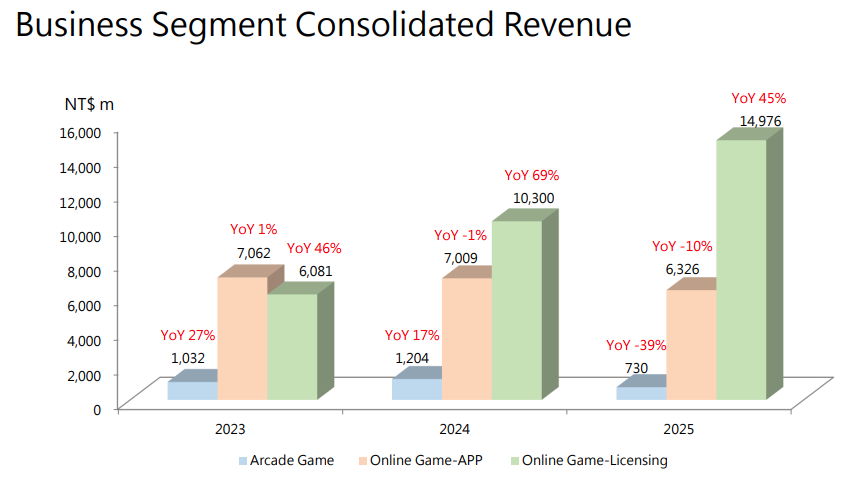
Source: Company filing
IGS reported consolidated revenue of NT$22.03 billion in 2025, up approximately 19% from NT$18.51 billion in 2024. Gross profit reached NT$21.50 billion, a gross margin of approximately 97.6%. Operating income was NT$13.07 billion, and net income attributable to IGS shareholders was NT$10.85 billion. Gross margin increased from 97% in 2024 to 98% in 2025, mainly because of continued licensing growth. The Company’s 2025 revenue was geographically diversified but concentrated in Asia: Southeast Asia accounted for approximately 54%, Taiwan 20%, the United States 10%, China 7%, Japan 2%, and other markets 7%.
TaDa Gaming is a brand through which IGS has pursued many regulated international markets outside its traditional Asian base. According to the company, TaDa was its fourth-largest product or business line in 2025 and rose to second place in the first two months of 2026. IGS does not disclose TaDa revenue as a separate financial line item. A network of overseas subsidiaries supports the international licensing business. FaDa B.V., a wholly owned Curaçao subsidiary, discloses activities including online-game sales and services. Public trademark records identify FaDa as the applicant for JILI-associated trademarks. JILI-branded games overlap significantly with TaDa’s content, technical features, and product catalogue. These connections make the legal, operational and economic relationships among IGS, FaDa, JILI and TaDa central to understanding IGS’ game licensing business.
IGS reported 54% of its total revenue in 2025 from Southeast Asia licensing, with JILI Games behind this business. The company’s filings did not mention JILI, and its Chairman seemed to slip up and mentioned it only at an investor conference in September 2025. JILI’s games are offered by some shady operators that are reportedly involved in organized crime ranging from human trafficking to forced labor, and the games are offered in Asian countries, most of which consider online gambling illegal. The industry expert interview revealed that there might be major undisclosed related-party transactions between IGS and JILI, and cryptocurrency payments might also have been used. However, IGS never mentioned cryptocurrency as a revenue source in its company filings.
JILI Games and Southeast Asia Licensing
IGS rarely discusses its Southeast Asian business in its filings, although the region has driven growth and profit in recent years. For example, JILI did not show up as a subsidiary nor as a brand in the company’s 2024 and 2025 consolidated financial statements and its annual reports. However, TaDa was disclosed as a subsidiary and was mentioned close to 30 times in its consolidated financial statements. According to management, Southeast Asia accounted for 54% of total revenue in 2025 and a similar 54% in 2024. The region therefore supplied the majority of revenue, yet receives little discussion in the filings.
At the company’s Institutional Investor Conference on September 26, 2025, Chairman Ko-Chu Lee stated, in response to an investor’s question, that the Southeast Asian licensing business is essentially JILI Games (starting around 47:34 of the video). This seemed to be a slip-up by the Chairman about JILI because right after the Chairman mentioned JILI, the two executives to his left seemed to be surprised and quickly exchanged glances with each other. It also appears that some text messages were sent.
“…不管是东南亚的授权跟美国的授权,我们是没有挂自己的品牌,那我们是直接提供我们的产品线,那挂在别人的平台上去做。那后来,我们觉得长期对公司的发展来讲,事实上我们也希望在授权这一部分,我们有自己的品牌。所以从去年度开始,我们就又创了,创造一个叫TaDa的这样的一个平台。我们直接用我们的平台方式授权给别人。所以后来我们才把TaDa这样的一个产品线再把它独立开来。要不然之前,或许如果说大家有在市场,去多了解的话,那以前我们的东南亚授权,我们都叫吉利。如果在这个产业,如果大家比较清楚的知道的时候,事实上是我们是用吉利的这样的一个产品线,在东南亚来做授权。但是一直来讲,我们都没有特别的强调吉利这个品牌,是因为虽然我们是在公司内部,我们称为吉利的这样一个产品线,但实际上运作到代理商那边,实际上这个品牌是看不到的。所以我们都统称为东南亚的授权,不管它授权给菲律宾,授权给越南,授权给任何一个东南亚的国家,我们都统称讲东南亚的授权。”
Translation [paraphrased]
“…For both our Southeast Asian and U.S. licensing businesses, we did not use our own brand. We simply provided our product line, which was then offered through other companies’ platforms. However, we later concluded that, from the standpoint of the company’s long-term development, we should have our own brand for the licensing business. Therefore, beginning last year, we created a platform called TaDa, through which we could license our products directly to other parties. We subsequently separated TaDa into an independent product line. Before that, if people are familiar with the market, they may know that we referred to our Southeast Asian licensing business as JILI. If you know this industry well, we actually use the JILI product line for licensing in Southeast Asia. We had never placed particular emphasis on the JILI brand because, although we internally referred to it as the JILI product line, the brand itself was not visible when the games were operated through our agents. Therefore, we referred to the business collectively as “Southeast Asian licensing.” Whether it is licensed to the Philippines, Vietnam, or any other Southeast Asian country, we call all of them Southeast Asian licensing.”
Despite JILI Games’ role as the key product portfolio behind the majority of revenue from Southeast Asian licensing, management rarely discusses the entity or product line. We reviewed the disclosed subsidiaries as of Q4 2025 but could not identify which might hold economic ownership of JILI Games. The company does disclose several subsidiaries related to TaDa Gaming.
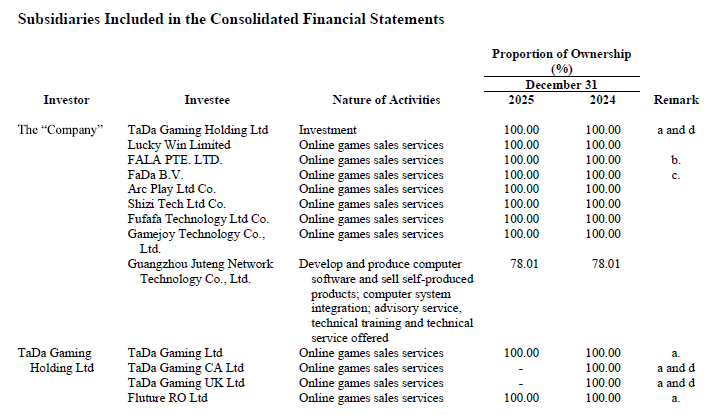
Source: Company filings
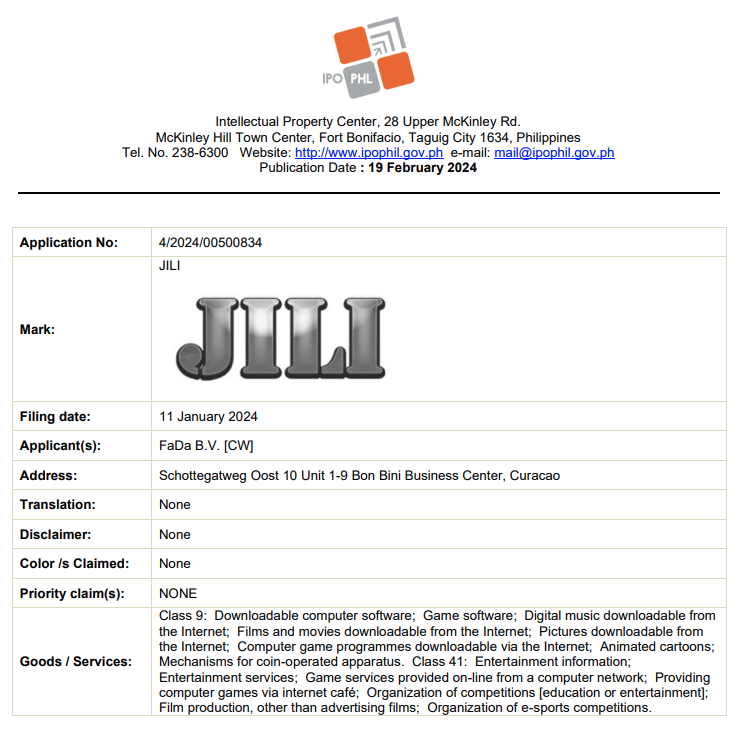
Intellectual property releases from several agencies suggest that FaDa B.V., IGS’ 100% owned subsidiary, applied for JILI’s trademark. For example, the Intellectual Property Office of the Philippines identifies FaDa B.V. as the applicant for the JILI trademark, with a filing date of January 11, 2024.
In addition, Indonesia’s official trademark gazette, p. 235, also identifies FaDa as the applicant for a JILI mark, filed on August 26, 2024.
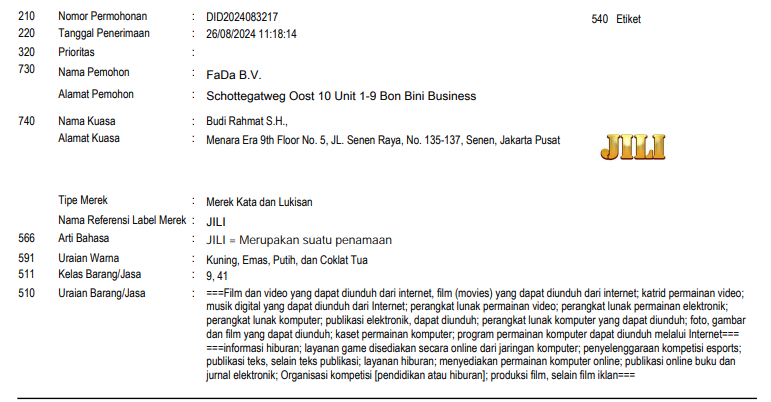
FaDa B.V. appears to be the main entity that applied for the JILI trademark in different countries. However, the ultimate beneficiary of JILI Games remains unclear.
Relationship Between JILI, IGS, and Underground Gambling Operators
An industry expert who has been in Taiwan’s gaming industry for over a decade told us that JILI and TaDa are essentially the same company. According to the expert, TaDa was created to obtain licenses in other regions, while JILI mainly licenses IGS’ games to underground online gambling operators in countries that may consider online gambling illegal.
Translation [Paraphrased]
Expert
“No problem. JILI is an underground subsidiary of IGS. Unless someone works in this industry, an ordinary investor would not know about this company. IGS is also extremely unlikely to mention JILI publicly. The reason is that JILI operates in a relatively gray area. In other words, the games it develops are licensed to what might be described as underground gambling operators, principally in Southeast Asia. The business originally started in the Philippines and now also has a fairly substantial presence in Thailand, Vietnam, and Malaysia.
…
What is particularly noteworthy is that two or three years ago, they established a company called TaDa. You should be able to find public news coverage about it. TaDa was created because, for operational purposes, they also needed an above-the-table company that could conduct game-licensing activities in a formal and regulated manner.
You can therefore think of the structure this way: when IGS wants to conduct an above-the-table licensing business, it tries to route that business through TaDa. However, when it wants to conduct under-the-table business, it uses JILI for this type of underground cooperation. People in our industry generally understand that JILI is equal to TaDa.”
Grizzly Research’s Investigator
“So JILI Games and TaDa Gaming are actually the same company, and the only difference is that TaDa is a new company IGS established in the past two years and placed above the table; is that correct?”
Expert
“Yes, that is correct. TaDa operates only above the table, so it applies for the so-called licenses. Last year, we were told that it had obtained a UK license. Then, in November last year, was that 2025 or 2026? Yes, last year in November, it also obtained a Canadian license. Essentially, TaDa tries to obtain those legal licenses. If you want to enter into an above-the-table commercial relationship with IGS, it will license the games to you through TaDa.
In parts of Southeast Asia, and more broadly across Asia, including Taiwan, cash gambling is generally illegal. Consequently, we will operate in an underground channel or gray area. By “gray area,” I mean that I may not operate directly in a particular country, but I license [the games] to underground casinos to operate in that country. Actually, like online games, it is underground. We call this a gray area because we do not directly operate [the gambling business ourselves], but we license [our games] to websites that do. Yes, we call it gray area.”
Technical and Personnel Links between JILI and TaDa
Our technical analysis shows highly similar source code in TaDa and JILI games, including identically chosen names for all or almost all CSS classes, the freely choosable labels used to apply visual styling. JILI games also reference “tada” as a variable option. This is almost 100% proof that the games are developed by the same programming team. The programmers appear to work on both platforms and switch “jili” or “tada” on or off through a configuration setting.
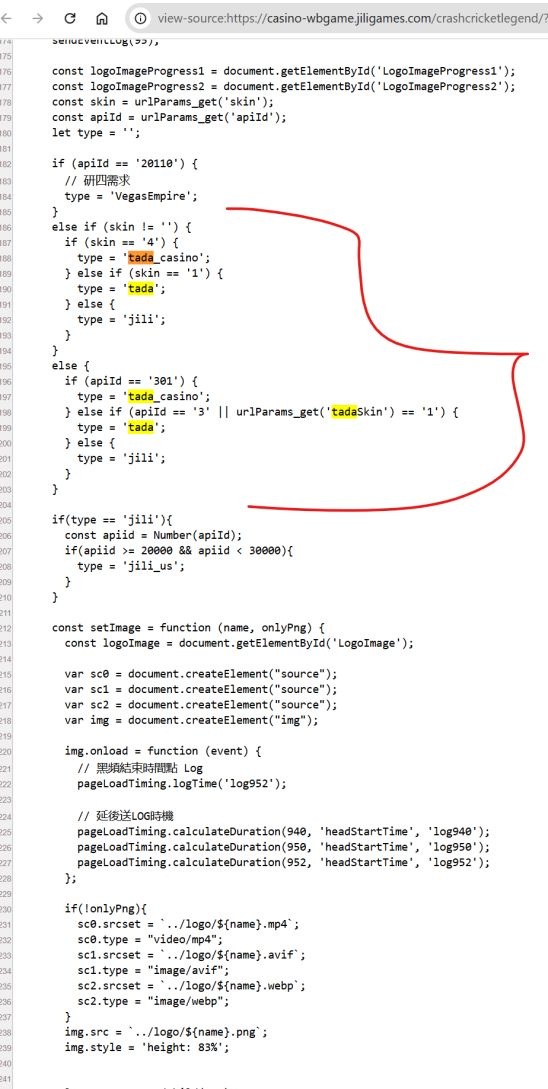
https://casino-wbgame.jiligames.com/crashcricketlegend/, retrieved on August 7, 2026
Using the variable set in the programs, players can play a TaDa game on the JILI server.
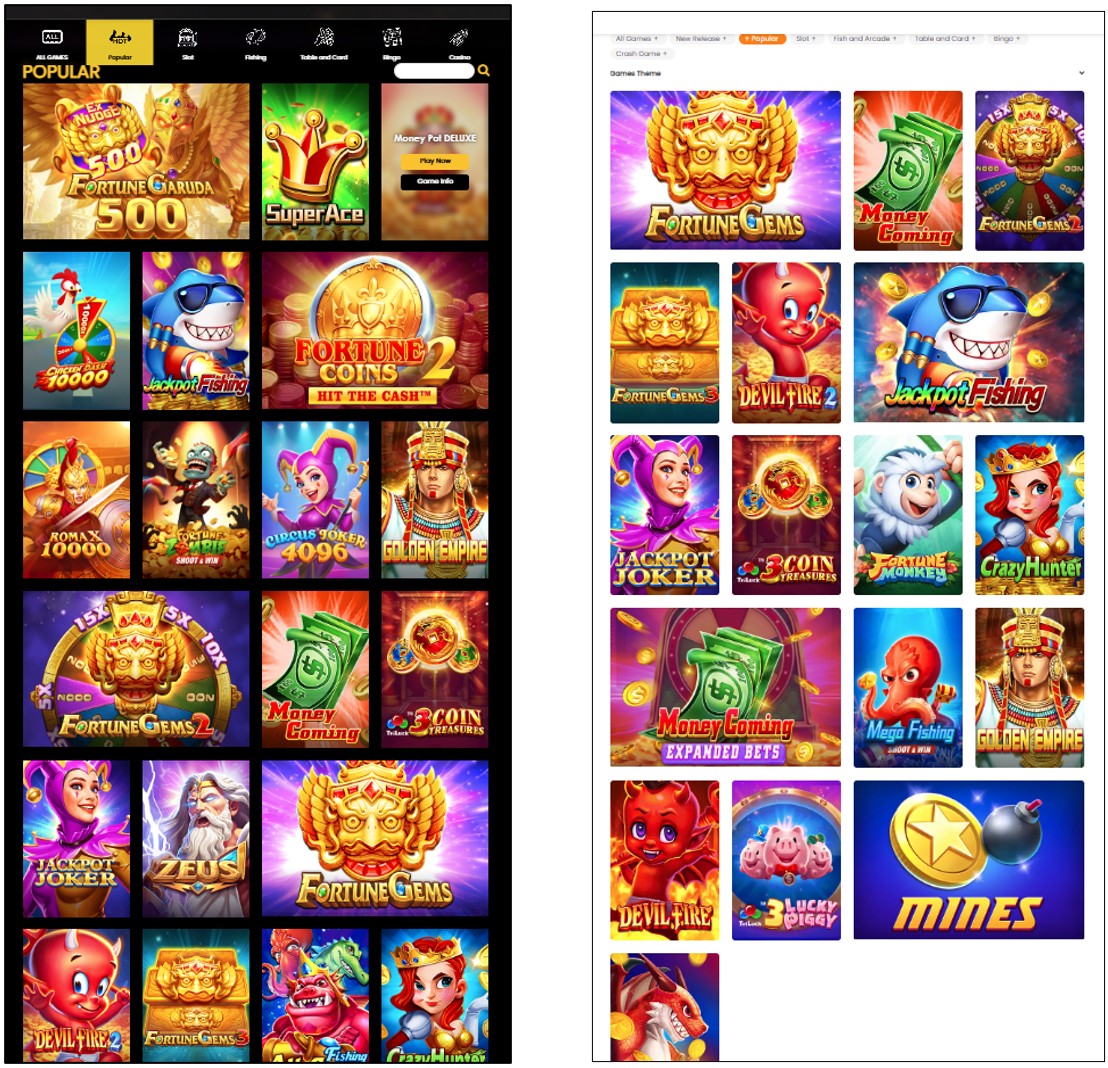
The games offered on JILI’s and TaDa’s websites overlap substantially. The screenshots below show their “popular” tabs. Fortune Gems, Money Coming, Jackpot Joker, and Devil Fire 2 appear identical in appearance.
In one of JILI’s games, Bonus Hunter, the game description part directly states, “Come with TaDa’s Bonus Hunter from wild west for the super prize!”

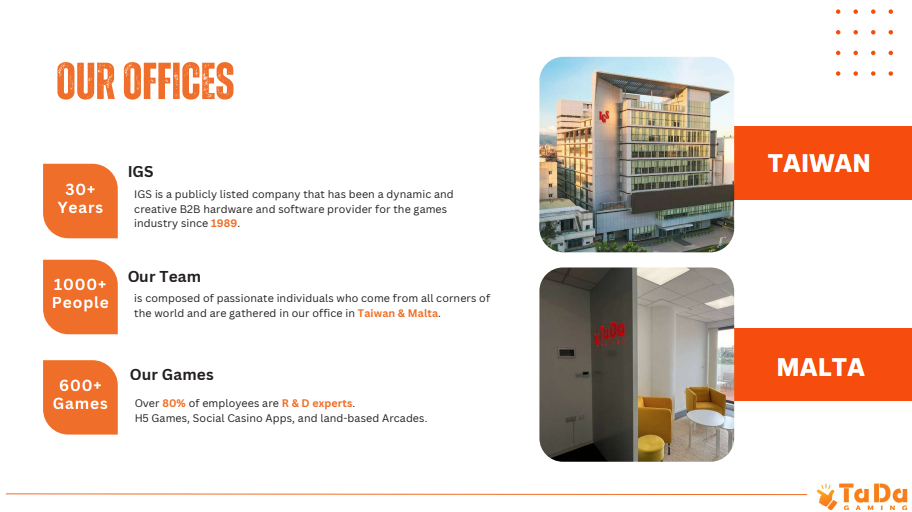
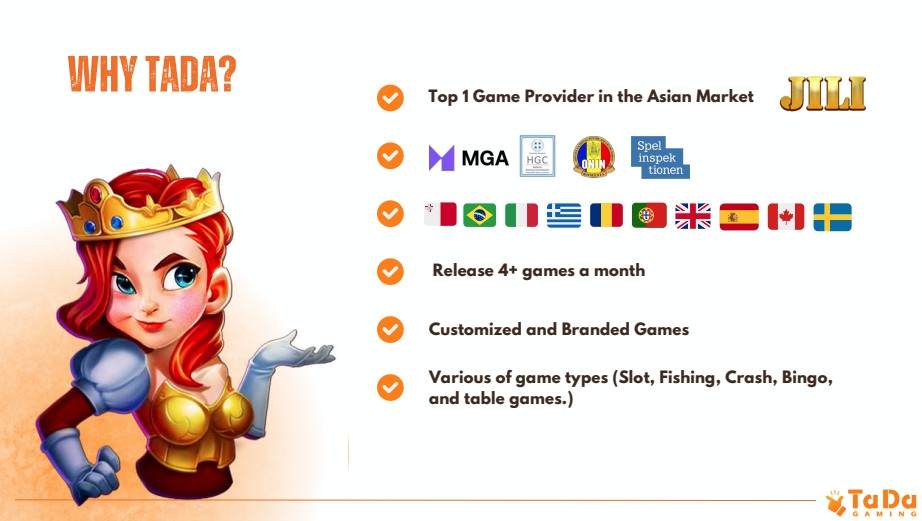
In its 2025 trade-show presentation, TaDa’s page 4 “OUR OFFICES” slide describes IGS as a publicly listed company that has offices in Taiwan and Malta, and on page 5 of “WHY TADA?” slide, it displays the JILI logo there and describes JILI as “Top 1 Game Provider in the Asian Market”.
A QTech Games article published in January 2025 quotes JILI Games representative JA Danika:
JA Danika from JILI Games added: “JILI Games prides itself on creating unique gaming journeys, so we’re dedicated to reimagining the slots space with more immersive gaming experiences. Accordingly, teaming up with QTech represents a fantastic opportunity to strengthen our product distribution across emerging territories and deliver our great games to a range of top-tier partners.”
A LinkedIn search identified a woman named JA Danika whose profile indicates that she has worked for IGS and TaDa Gaming for over 3 years and is now a Senior Business Development Manager at TaDa Gaming.
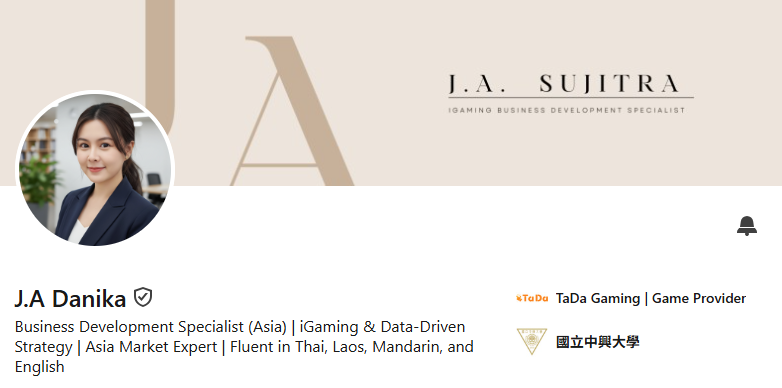
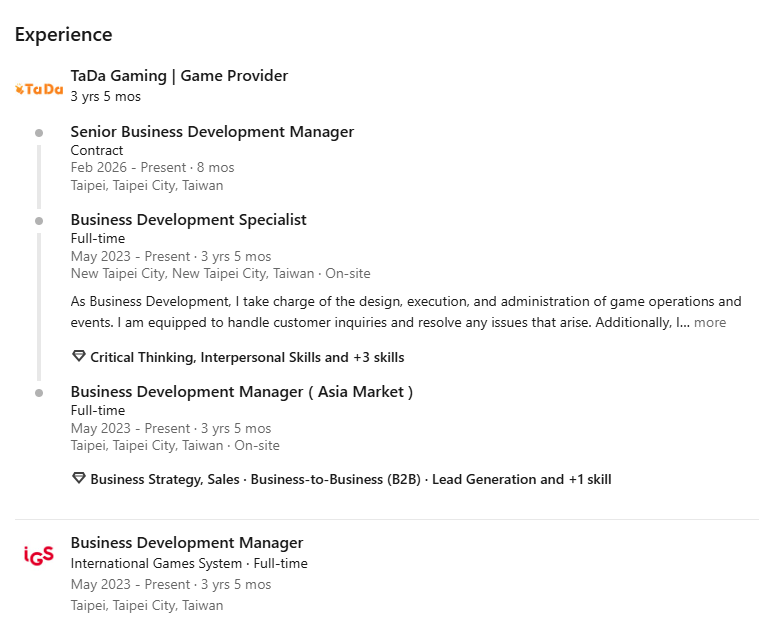
We strongly suspect she is the person quoted in the QTech Games article.
In the LinkedIn job-posting note below, a person responsible for game localization in the Philippines refers to JILI and TaDa together, separated by a slash.

Possible Undisclosed Related-Party Transactions Involving a Majority of IGS Revenue
According to management, Southeast Asia accounted for 54% of total revenue in 2025, and the company used the JILI product line for game licensing in Southeast Asia. In other words, JILI is responsible for over 50% of the company’s consolidated revenues. However, it appears that JILI does not show up as a subsidiary in IGS’ disclosures, leaving it unclear how its Southeast Asian game-licensing revenue reaches IGS.
An industry expert described 3 possible routes below. First, JILI would work with money-transfer intermediaries to funnel the money back to IGS through online games such as Golden HoYeah. Secondly, TaDa signs a licensing agreement with JILI, and JILI would give the money back to TaDa so that IGS could recognize the revenue. Lastly, cryptocurrency payment. We believe that as long as the revenue comes from JILI, which is controlled by IGS, the company should report such revenue as a related-party transaction.
- JILI works with money-transfer intermediaries in Southeast Asia. Those companies would play IGS’ games, such as Golden HoYeah (金猴爷), allowing money to move from JILI to the intermediaries and then to IGS through Golden HoYeah.
- A money-transfer intermediary helps an enterprise move funds to a designated entity, usually charging a percentage of the amount transferred. For example, an intermediary moving $1 million from company A to company B might charge a $20,000 transfer fee depending on the negotiated terms.
- TaDa signs licensing agreements with JILI. After earning revenue from licensing games to Southeast Asian operators, JILI would pay licensing fees to TaDa, and IGS could recognize the revenue from TaDa.
- The third possible route is through cryptocurrency wallets and USDT.
Golden HoYeah
According to the company, Golden HoYeah is one of its main online games. Management disclosed that it ranked No.5 by revenue contribution in 2025, only behind Southeast Asia licensing, Star31, U.S. licensing and TaDa Gaming. Golden HoYeah is available through a website and mobile apps on the Apple App Store and Android. Our analysis of the game discovers some abnormalities:
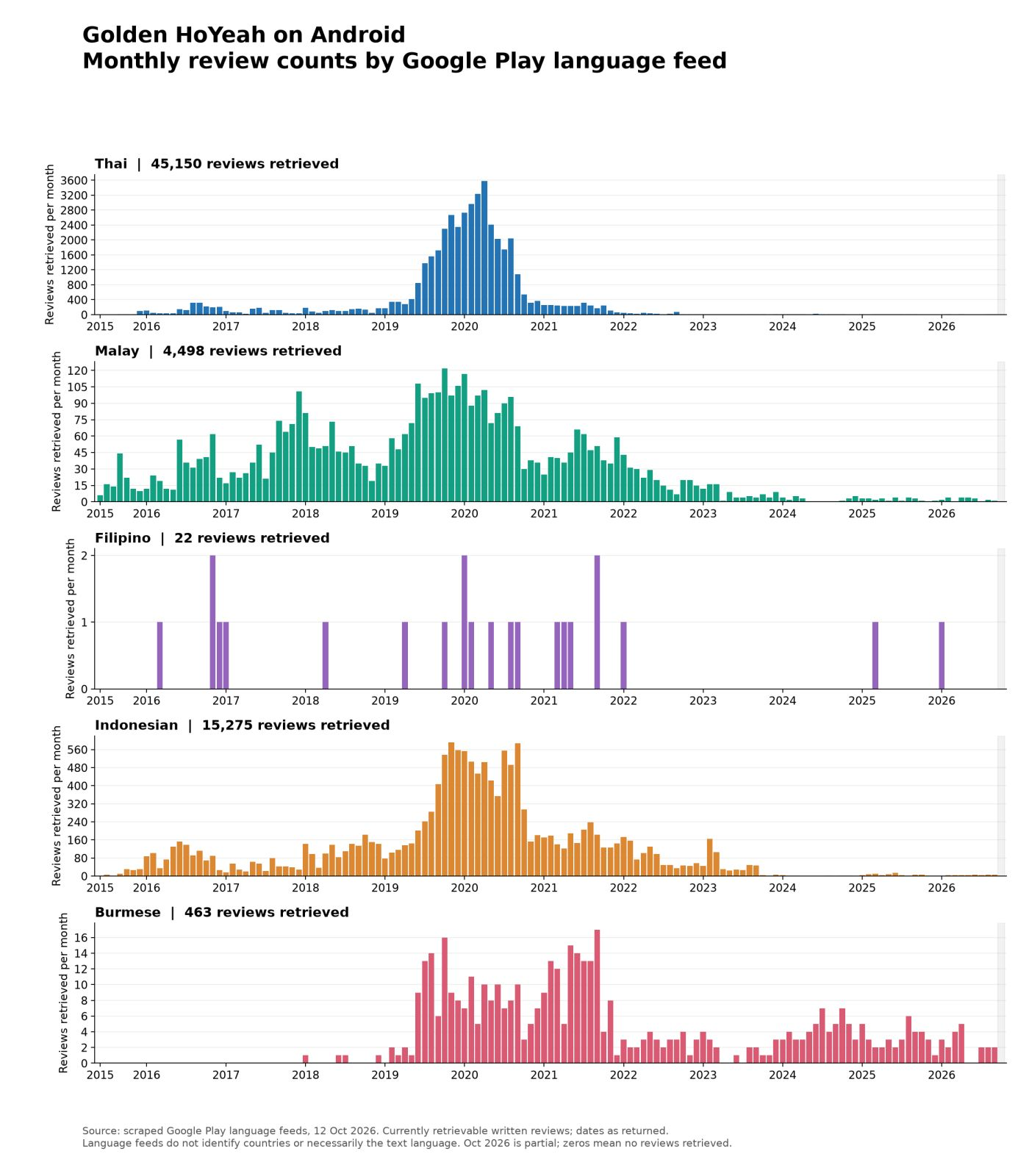
- It appears the popularity of the game decreased significantly after 2020, using the number of player reviews as a proxy. However, the company’s top grossing in certain countries stayed relatively resilient during this time period.
- Google Trends showed abnormally high interest from Myanmar (Burma) in the Golden HoYeah Slot game, yet the company never disclosed Myanmar as one of the key markets for the game.
Web Interest by Country and Mobile Application Market
Below is a screenshot of Golden HoYeah’s website.

We checked Google Trends for Golden HoYeah, and it shows that a large share of interest in the Golden HoYeah Slot game comes from Myanmar.
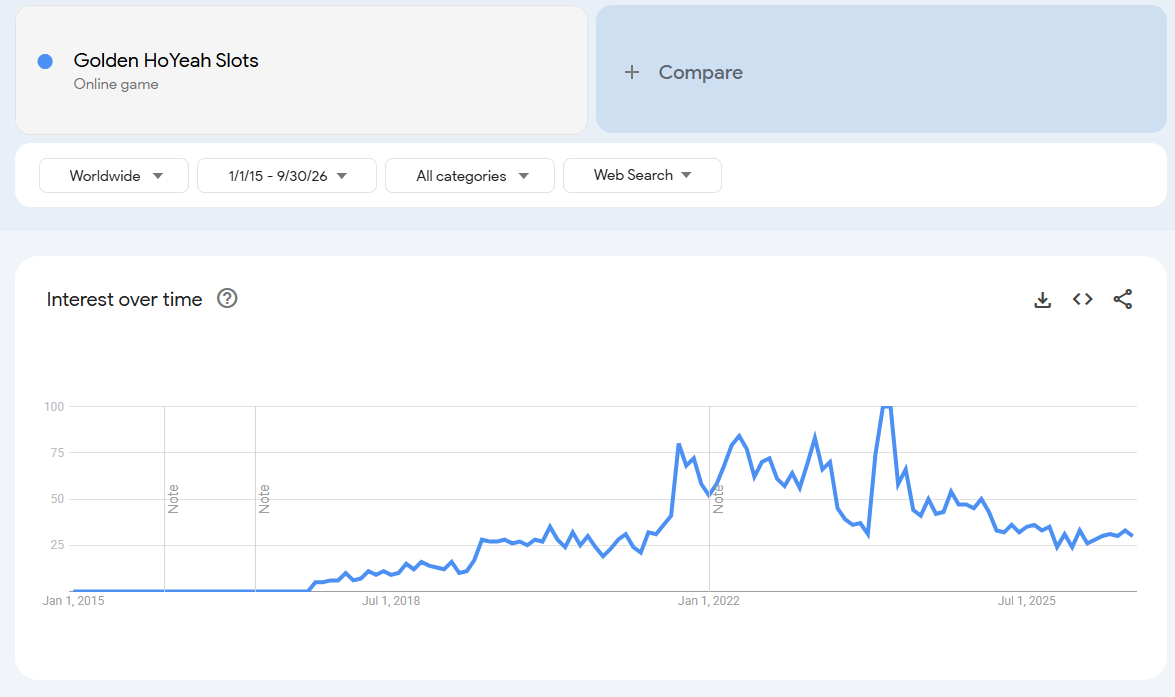
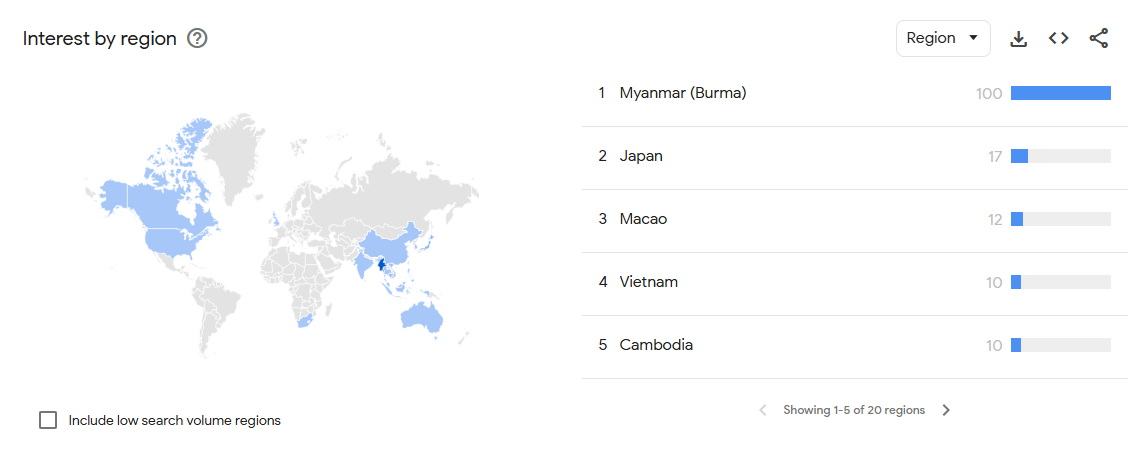
Myanmar’s share of interest appears unusually high to us for a small country. We could not find IGS’ disclosure identifying Myanmar as a meaningful market for Golden HoYeah Slot. Interest in the game has also declined sharply since January 2024.
Mobile App Reviews and Grossing Rankings
To assess user popularity, we used review counts on Android as a proxy in Thailand, Malaysia, Indonesia, the Philippines, and Myanmar. We look at Android because it is the dominant market leader in Southeast Asia. The diagram below uses the language feed as a proxy for the country. Third-party services like AppMagic provide Total Grossing rankings, which rank games by revenue, for Golden HoYeah over the years.
In Thailand, Malaysia and Indonesia, review counts on Android declined sharply since 2020, while Golden HoYeah’s Top Grossing rankings remained relatively resilient. Although outsiders cannot clearly determine what is happening, we suspect the industry expert’s allegation is true: JILI has worked with money-transfer intermediaries to move Southeast Asian licensing income back to IGS through Golden HoYeah.
Below are Top Grossing Ranking data from AppMagic for Thailand, Malaysia, the Philippines, Indonesia, and Myanmar ranging from January 2015 to September 2026.
Thailand
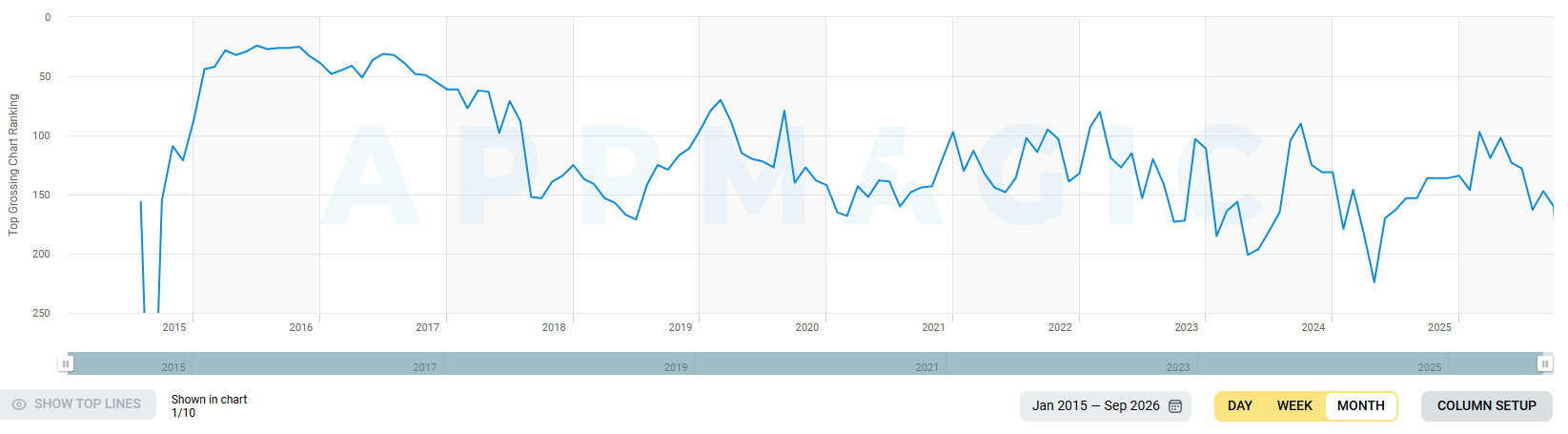
Top Grossing Ranking: Google Play Store (January 2015 – September 2026)
Malaysia
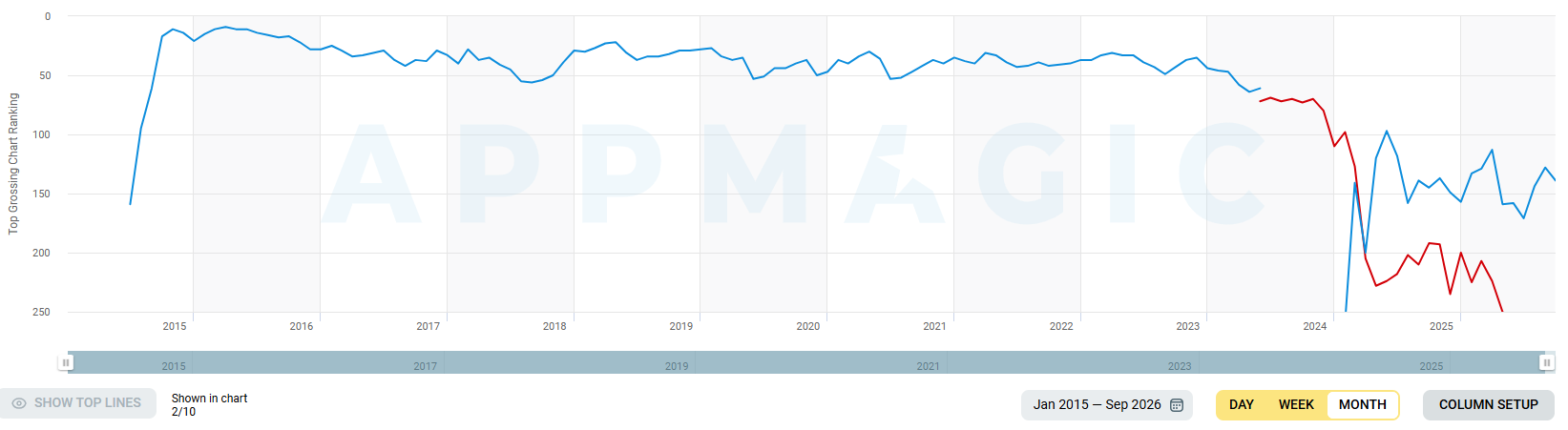
Top Grossing Ranking: Google Play Store (January 2015 – September 2026)
Blue line: Golden HoYeah – Casino Slots
Red line: Golden HoYeah – Pachislot
Philippines
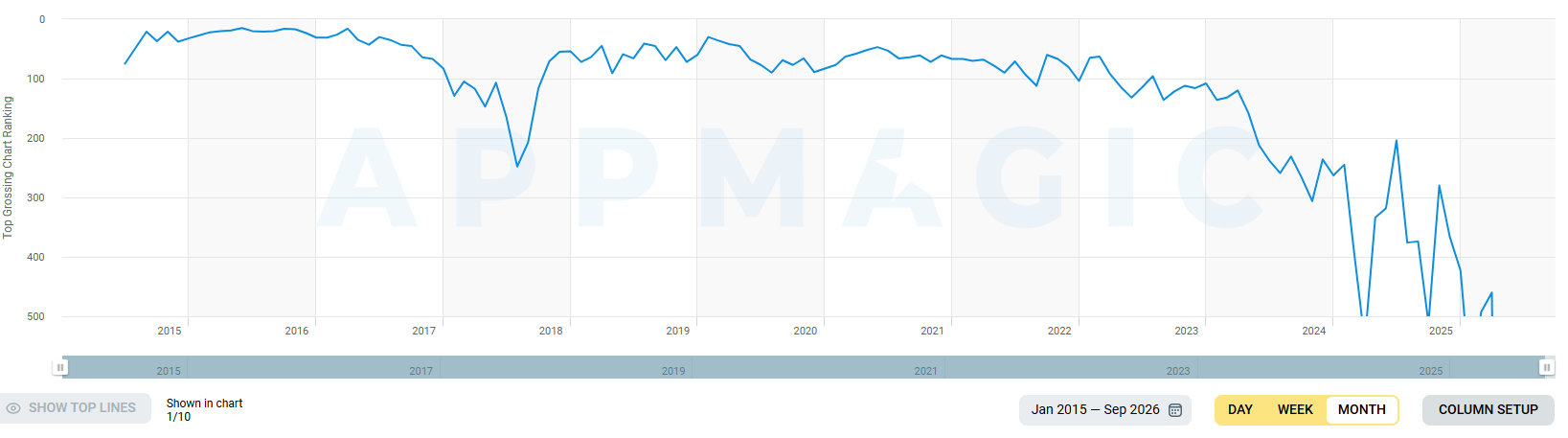
Top Grossing Ranking: Google Play Store (January 2015 – September 2026)
Indonesia
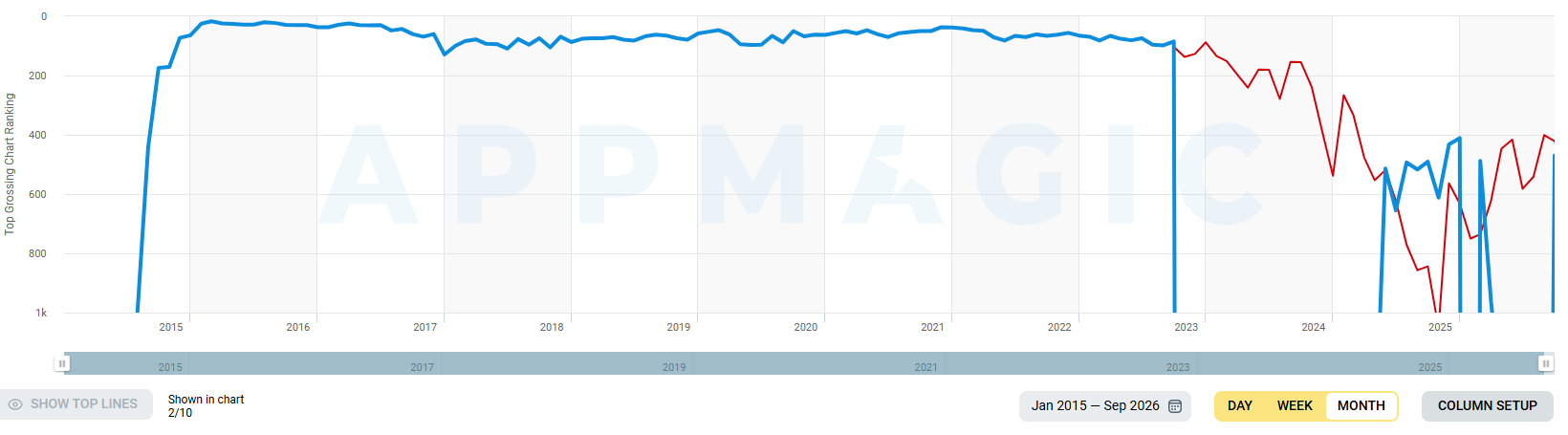
Top Grossing Ranking: Google Play Store (January 2015 – September 2026)
Blue line: Golden HoYeah – Casino Slots
Red line: Golden HoYeah – Pachislot
Myanmar
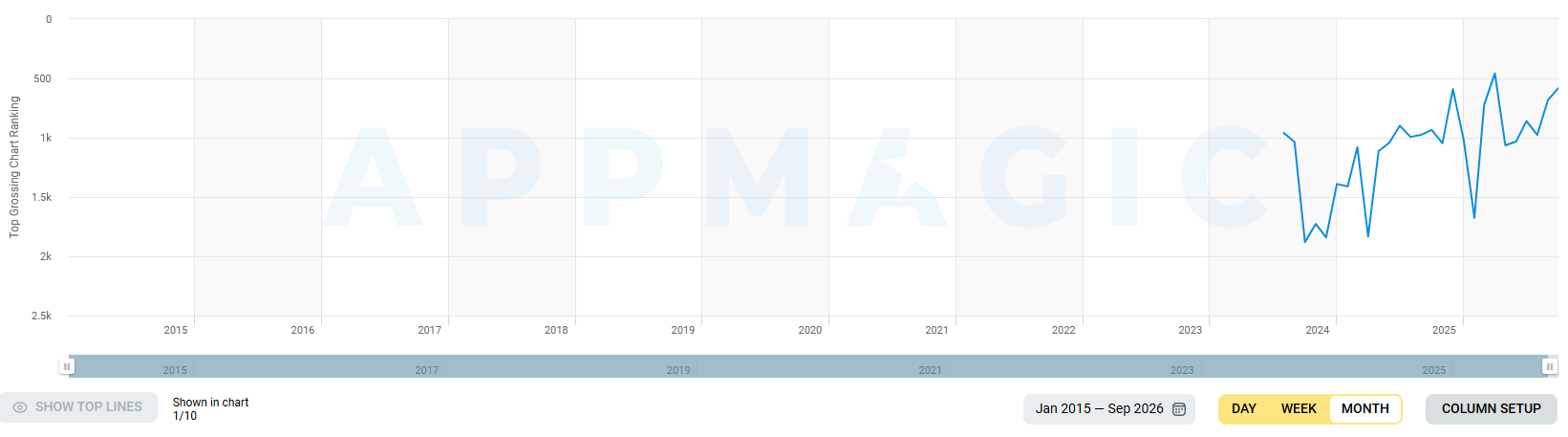
Top Grossing Ranking: Google Play Store (January 2015 – September 2026)
Note: AppMagic started tracking data from Myanmar in August 2024
What’s worth noting is that Myanmar’s Top Grossing Ranking has been in an uptrend since 2024 in the Google Play Store, according to AppMagic. However, reviews from Google Play seem to remain relatively flat.
We urge Taiwanese regulators to investigate IGS’ reported financials, focusing on the following issues:
- The flow of licensing fees from Southeast Asian online gambling operators to JILI, money-transfer intermediaries, TaDa Gaming and IGS.
- Agreements among IGS, TaDa Gaming and JILI Games governing payments between them, including how much JILI revenue was recognized through TaDa Gaming and ultimately as IGS revenue.
- An audit of IGS’ online games, including Golden HoYeah, to examine money flows and whether revenue comes from true external individual users or Southeast Asian money-transfer intermediaries.
- Whether JILI Games might have received cryptocurrency from in-game payments and, if so, how those payments were kept outside IGS’ audited financial reports, given that its filings do not mention cryptocurrency.
Licensing Exposure in Countries Where Online Gambling is Illegal
Almost all the major countries in Southeast Asia consider online casino gambling illegal. For example, according to this report, “Cambodia will suspend online gambling operations at all casinos across the country from October as part of measures to strengthen efforts to prevent and combat online scams and the circulation of funds from unclear sources, Sar Sokha, the Interior Minister said.” For Indonesia, this article has the headline “Indonesia vows to crack down on ‘blood-sucking’ online gambling. The 2026 AP report stated that more than 300 foreign nationals were arrested in a raid on an alleged online gambling operation in Jakarta. In Malaysia, the government prohibits unauthorized gaming houses, lotteries, bookmaking and betting operations. This paper stated that “all forms of sports betting (at bookmakers) and online gambling are illegal” in Malaysia. In Thailand, the diplomat confirmed that casinos and most gambling remained illegal when the legalization proposal was introduced. The proposed casino bill was subsequently withdrawn, according to AP July 2025. This report states that online gambling remains banned for online gambling in Vietnam. This article in 2025 reports that the Myanmar government reaffirms its determination to crack down on telecom fraud and online gambling. In the Philippines, PAGCOR continues to regulate domestic electronic gaming, and the separate offshore POGO/IGL sector was prohibited under Executive Order No. 74.
We doubt that all of IGS’ Southeast Asian licensing revenue comes from the Philippines. The industry expert also described a substantial JILI presence in Thailand, Vietnam, and Malaysia, all of which consider online gambling illegal. We suspect that a substantial amount of IGS’ revenue may come from licensing to operators in countries where online gambling is illegal and that IGS appears comfortable operating in this “gray area”.
A media report from the Philippines in August 2025 identified JILI as one of the main suppliers behind the country’s illegal online gambling market. We interpret its identification of JILI and IGS as clear evidence of JILI’s involvement with illegal operators in the country. The report stated:
“Global gaming giants JILI Game Provider and Evolution AB are emerging as the silent engines of the Philippines’ illegal online gambling market— fueling thousands of unlicensed sites that expose Filipino players to fraud, unsafe betting practices, and a total lack of consumer protection.
JILI, owned by International Games System Co. with a market capitalization of US $7.2 billion, and Evolution AB, under Entain PLC with a valuation of US $7.6 billion, are among the most popular upstream providers. Their games, which range from “scatter” titles like Super Ace to studio-based live baccarat, roulette, and bingo, are widely available on unlicensed domains aggressively promoted on social media.”
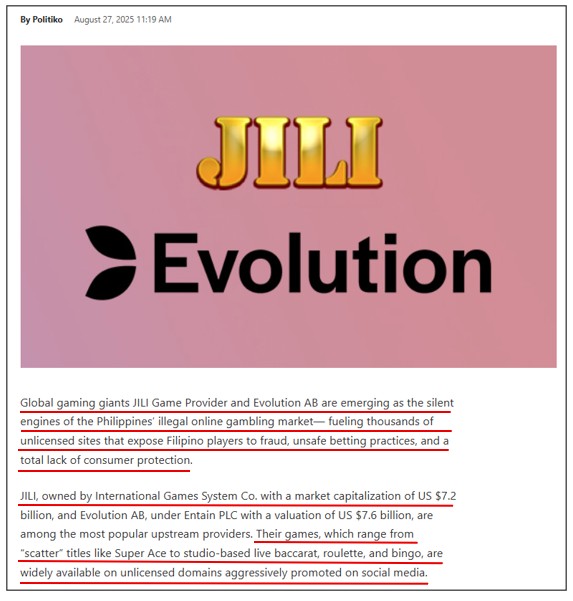
This is also additional evidence that indicates JILI is part of IGS.
Due Diligence and Research Suggest JILI Might Be Working with Some Very Bad (Sometimes Criminal) Operators in its Game-Licensing Business
IGS does not disclose which operators it works with in the Southeast Asia licensing business. However, we did find some online gambling brands that operate JILI games on their platforms in certain Asian countries, and those brands/companies are questionable at best.
1XBET
According to this article by a journal for CyberFinance Intelligence, 1xBet “represents the most sophisticated criminal gambling operation in modern history.” It was called “The Wagner Group of Sports Betting” by gambling industry experts.

The article further stated that the platform was “founded by three fugitives subject to international arrest warrants, has transformed from a regional illegal operation into a global criminal enterprise generating an estimated $2 billion annually while exploiting children, fabricating sporting events, and laundering money through some of the world’s most prestigious football clubs.”
This article described 1xBet as banned in its homeland, and it was also sanctioned in Ukraine. Its license was also cancelled in England, and it was run out of Morocco. In this 1xBet scam investigation report, it explained in detail how 1xBet operates, and one of the key findings is that “More than 100,000 partners used mirror sites, copyright infringement, and local influencers to push the brand into banned markets, while terms and conditions shifted legal liability to those partners.”
Our research found that 1xBet is operating many JILI games in Asian countries such as Vietnam, Thailand, Malaysia, Cambodia, Myanmar, Japan, and India.
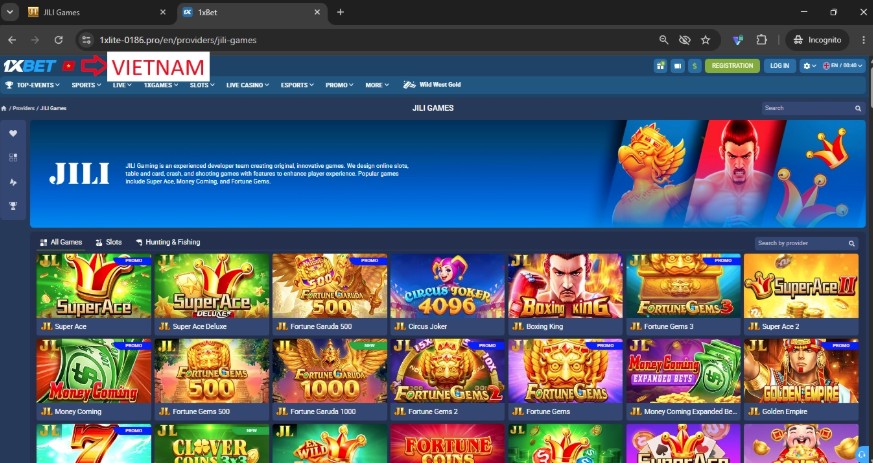
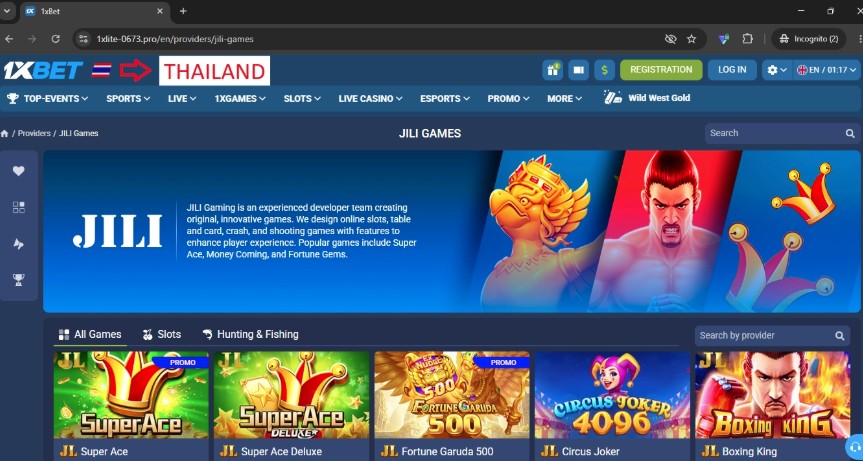
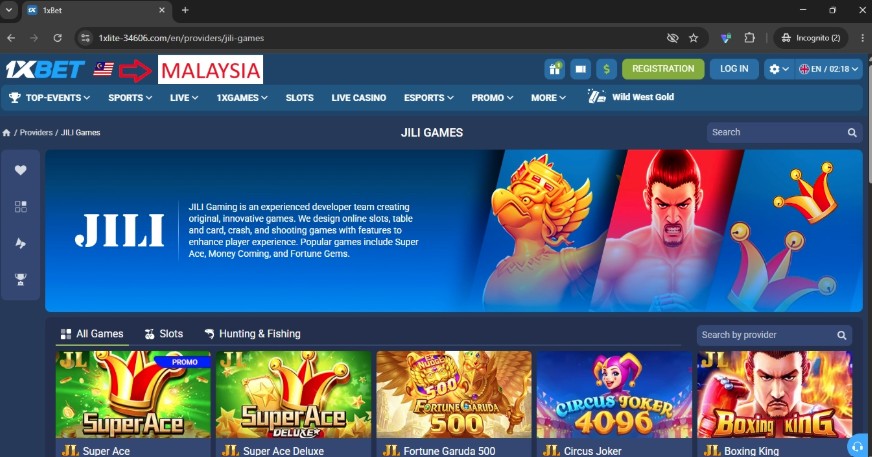
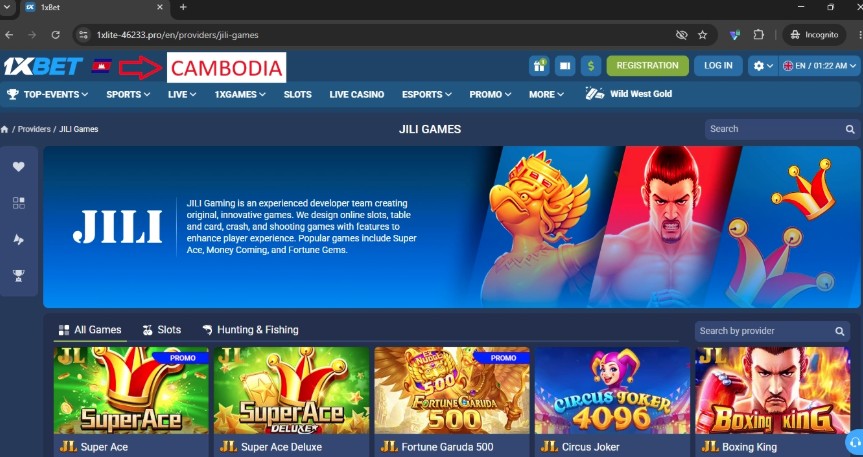
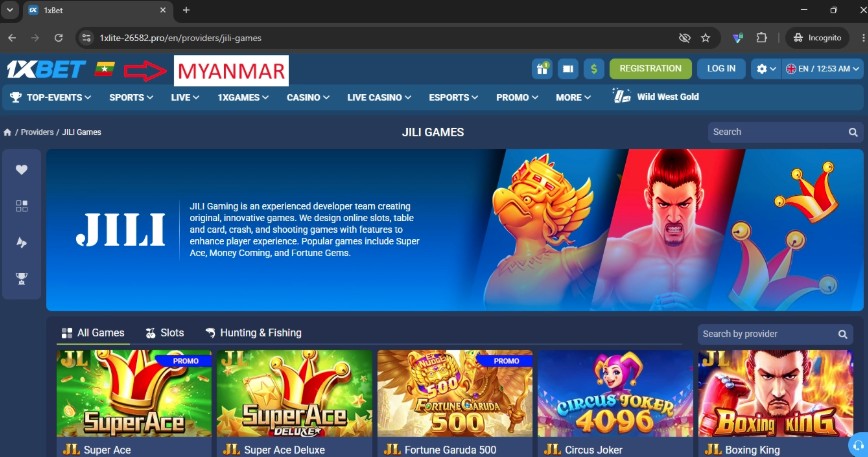

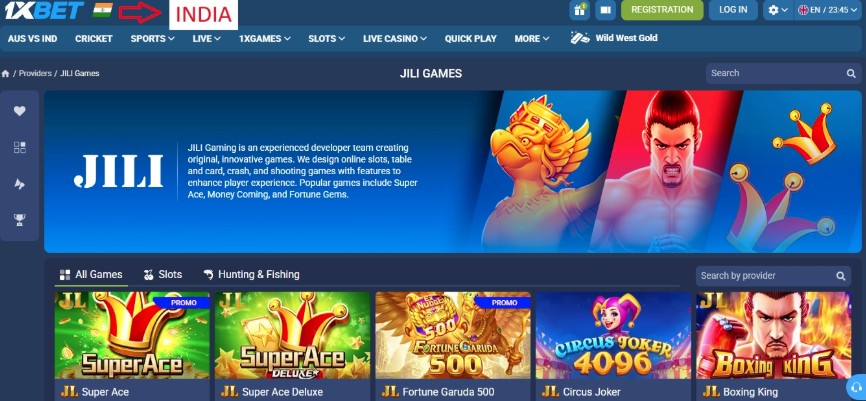
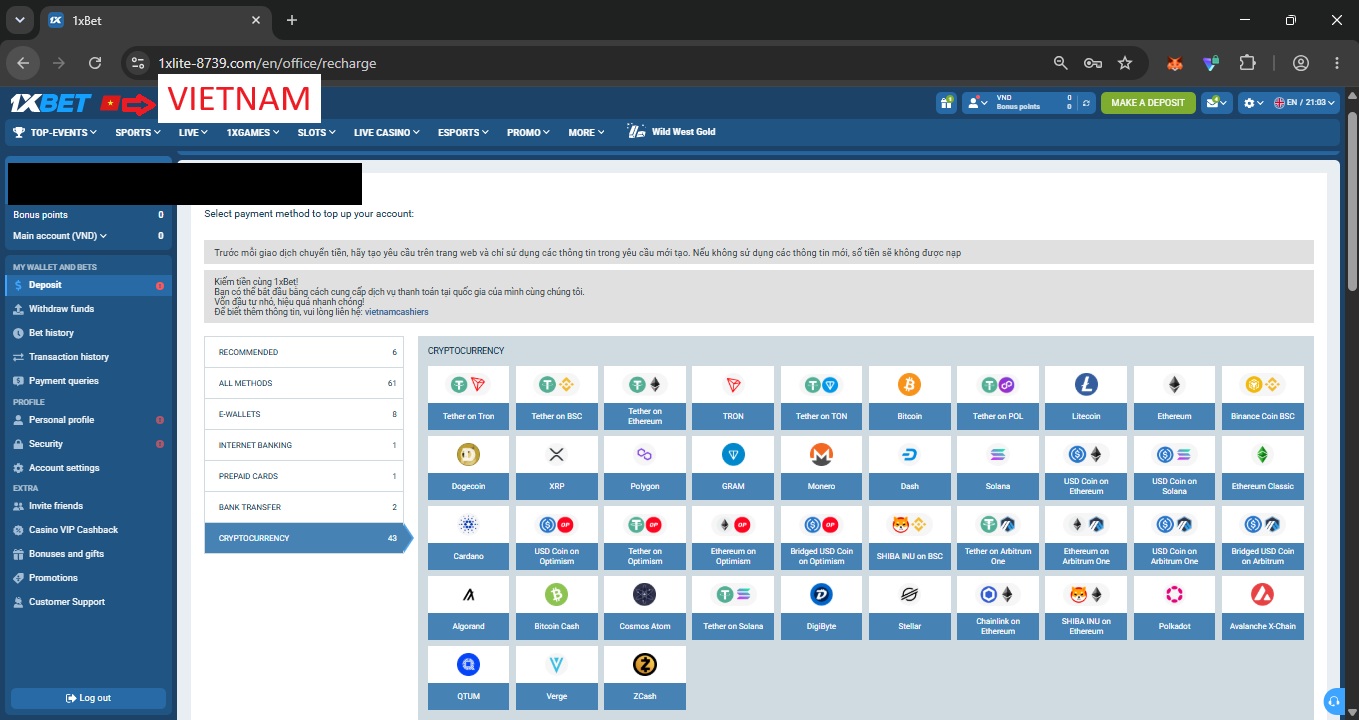
In addition, we found that these JILI games also accept cryptocurrency as a payment option. Below is an example from Vietnam.
OKVIP (and JUN88)
According to this World of Crime newsletter, OKVIP operates in Bavet, a place famous for human trafficking and enslaved workers. In addition, the article also mentioned that “Vietnamese-language Google Reviews of the OKVIP Bavet location allege that the company is a ‘blatant human trafficking fraud’ and that ‘they purchase people’.” It appears OKVIP has other associated brands. The picture below shows that brands such as Jun88, New88, and SHBET are part of the group.

In May 2026, the Vietnamese police recognized OKVIP as the central coordinating hub for a massive cross-border money laundering, online gambling, and fraud network.
“Through cyber reconnaissance, authorities uncovered several gambling websites, including 789Bet, Shbet, Hi88, and Jun88. These sites operated under an alliance model, sharing technical infrastructure and player data to optimize cash flow, with the “OKVIP” alliance serving as the central coordinating hub.”

We found that JUN88 is operating JILI games in countries such as Indonesia, Malaysia, Cambodia, Thailand, Vietnam, the Philippines, India, Japan, Turkey, Singapore, Myanmar, and South Korea. Cryptocurrency is accepted as payment.
SBOBET
In a presentation named “Scams, Slavery, and Surface-to-Air Missiles: Online Sports Betting in Southeast Asia” by the Eyewitness Project, the research director mentioned SBOBET as one of the banned offshore gambling companies by the Philippines that migrated to Cambodia. People from the Eyewitness Project tried to track down SBOBET’s office in June 2025, but were not able to due to tight security there. In 2025, Thailand and Cambodia had a major clash with each other, and according to this Bloomberg report, the Thai government claimed this clash with Cambodia as a battle against cybercriminals and the scam army.
We found that JILI games are operated on this site in countries such as South Korea, Indonesia, Malaysia, Thailand, Vietnam, India, Japan, Turkey, and Myanmar. In addition, cryptocurrency is accepted as payment.
BK8
According to this article, Victoria Paradise Resort and Casino in Sihanoukville, Cambodia, is known as a cybercrime center in the region, and BK8 also operates from there. BK8 is an illegal casino and sports betting platform that mainly targets the Malaysian market, according to the report. BK8’s UK operation was run as a “white label” brand through Isle of Man-based TGP Europe, and the former Suncity boss Alvin Chau used to control TGP Europe. However, Chau was sentenced to 18 years in jail in Macau in January 2023. This article stated that Chau was arrested on November 29, 2021, on “suspicion of money-laundering, fraud and masterminding an illegal betting network in mainland China.”
We found JILI games are offered in countries/regions such as Cambodia, South Korea, Indonesia, Malaysia, Vietnam, the Philippines, Thailand, India, Japan, China, Turkey, Singapore, Myanmar, and Taiwan. In addition, cryptocurrency is accepted as payment. The screenshot below shows JILI games are offered in Taiwan.
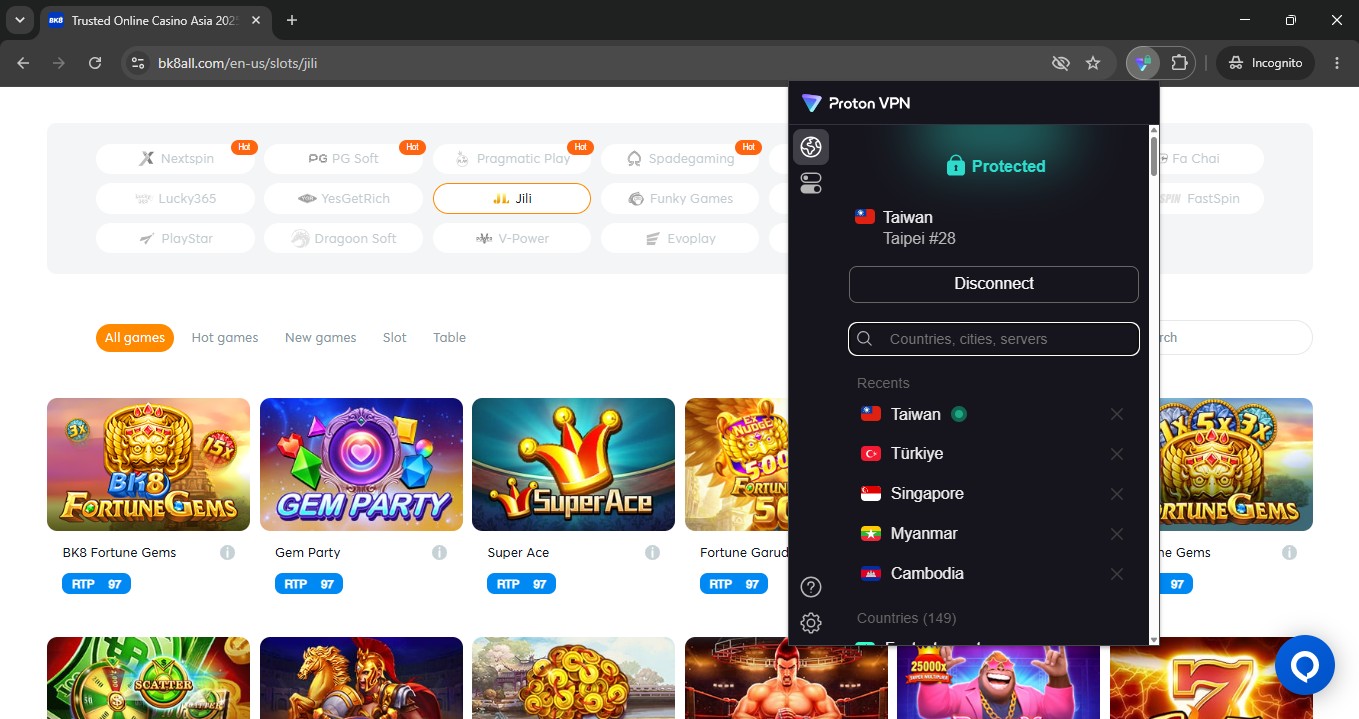
IGS is a publicly listed company in Taiwan, and online gambling is illegal in the region. Based on our understanding, according to Taiwan’s Criminal Code, a supplier of online gambling games could also be viewed as an accessory or joint offender to the operator (principal offender) that runs illegal online gambling games in the region. We believe IGS deserves thorough investigation from Taiwan’s law department and regulator for its business practices.
bj88
According to this report, bj88 offers an option to bet on live cockfighting in Vietnam, in which gambling is illegal. In addition, the report also alleges bj88 has links to Bavet, which is a Cambodian border city that is notorious for cyber slavery compounds.
We found JILI games are operated on bj88 in countries such as Indonesia, Malaysia, Thailand, Vietnam, the Philippines, India, and Japan. In addition, cryptocurrency is accepted as payment.
8xBet
According to this investigative report, 8xBet is the only client of a little-known company called Great Wall Corporation (aka QOO). And based on Great Wall Corporation’s own website, “Employees from all over the world meet here to provide our customers with the best gaming experience and we also cooperate with 8xbet Asia’s largest gaming site.”

The investigative report alleged that Great Wall Corporation was operating a call center in Bavet, Cambodia, that engages trafficked workers. “Many compounds have been fortified with high perimeter walls with razor wire and spikes, barred windows, surveillance cameras and armed private security,” said the UNODC’s Jeremy Douglas.

We found JILI games on 8XBet’s website in Vietnam and Thailand.
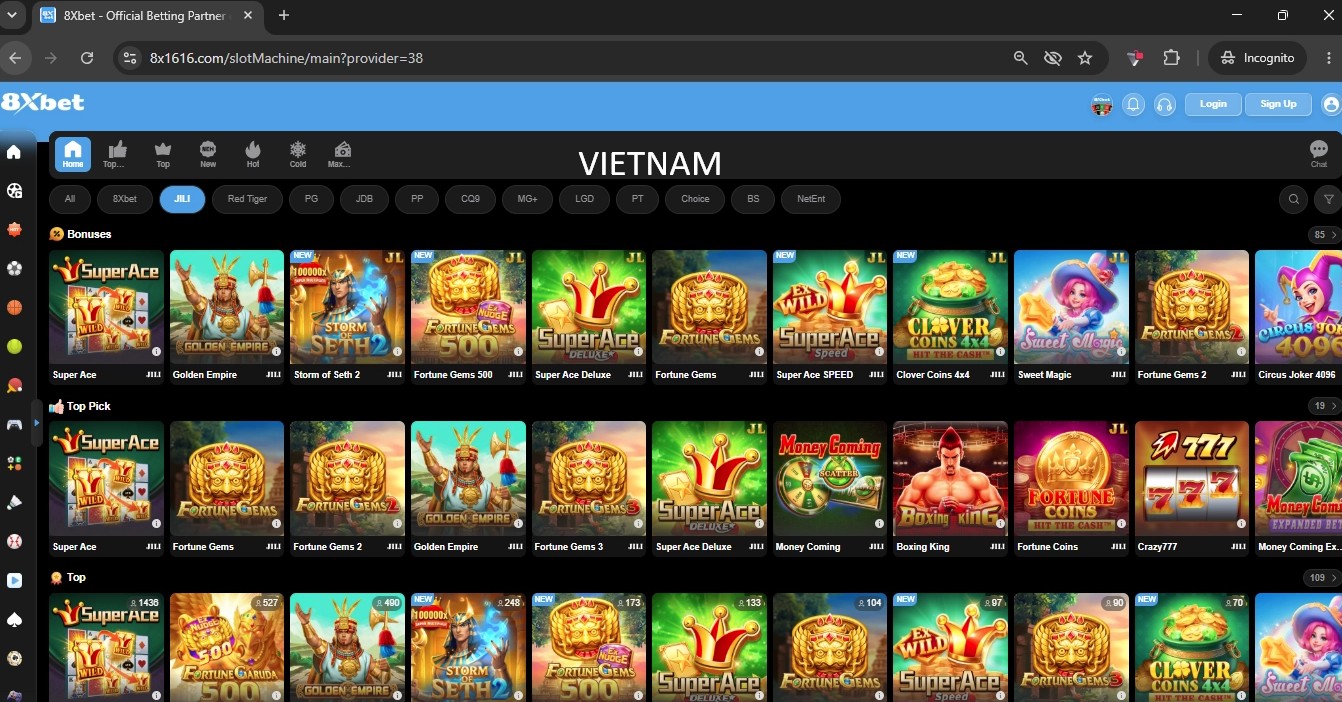
TaDa Games Are Offered by Questionable Operator in Questionable Regions
Fonbet
According to this article, Fonbet was previously subject to criminal investigation because it was providing online betting services using a website registered abroad. Later on, another investigation discovered that several people behind Fonbet were involved in money laundering back then.
We found that Fonbet is operating TaDa’s games in China. Please see the screenshot below that shows the browser tab where it says “Play TaDa Gaming games…”.
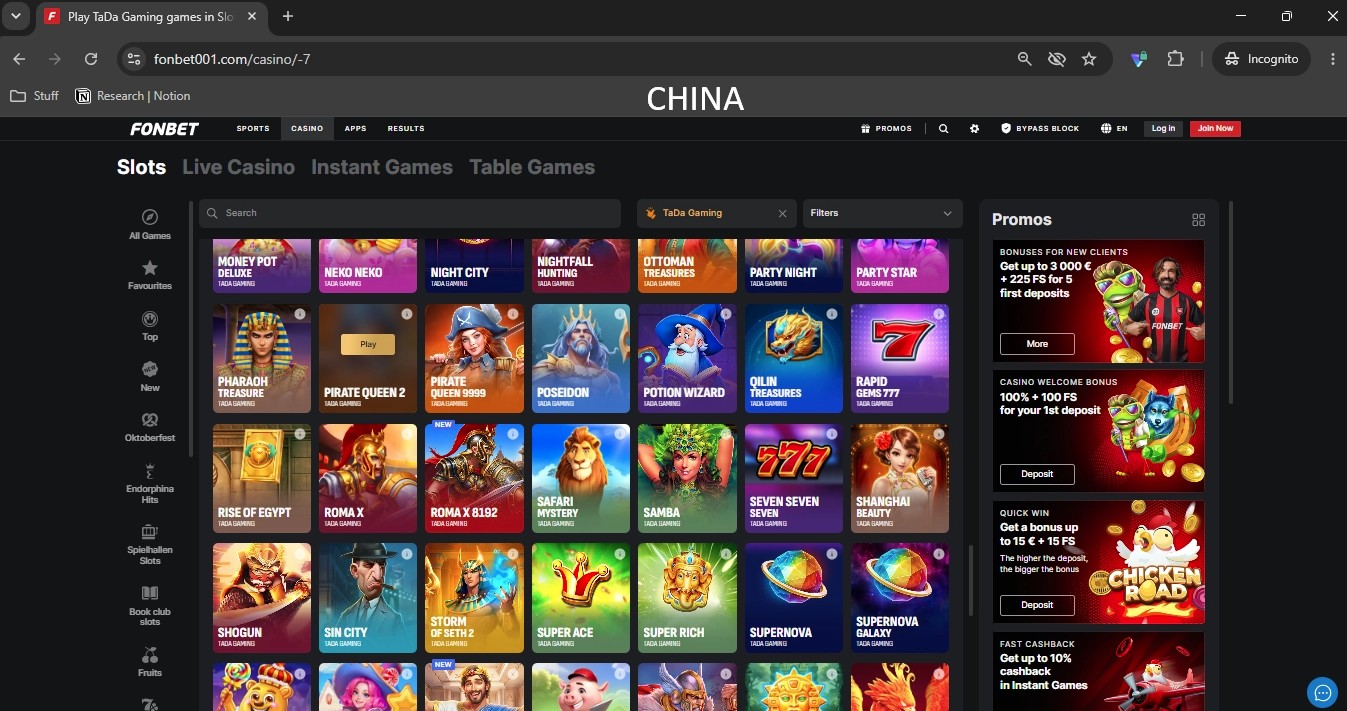
In addition, cryptocurrency is also accepted as payment.
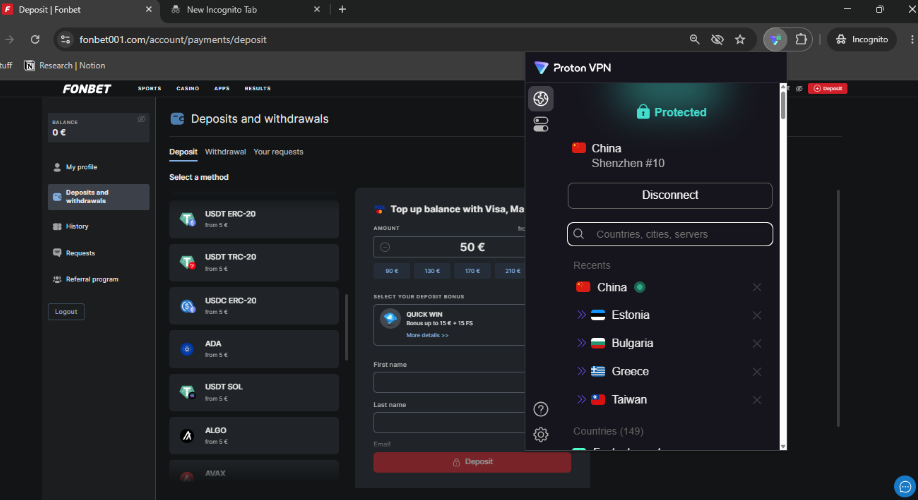
This is very alarming in two ways. First of all, China considers online gambling illegal, and the Chinese government is very serious about cracking down on online gambling. One expert we talked to told us that the company he used to work for once had employees arrested in China when they were trying to do proxy betting.
Grizzly Research’s Investigator
“Just going off topic a little bit. I remember you mentioned when you were working with Melco in Macau and Hong Kong, even if you were still an employee working for them, the consequences if any employee from the company worked with those “illegal” operators for the online casino, things like that. The consequences can be really severe for the individuals, as well as the company.”
Expert
“Yes. We had people, employees, some of them that were actually in China, that were trying to do proxy betting, and these people were all arrested. They were employees that were based in China. The Chinese government arrested them and took them away. It was something you didn’t want to mess around with.”
Be reminded that IGS has a 78% owned subsidiary in Mainland China, and the company and its associated employees could face serious consequences if the Chinese government determines this kind of online gambling game licensing practice violates its law.
Secondly, TaDa holds multiple licenses from countries in Europe, and it needs to hold a high business standard to maintain these licenses. For example, TaDa Gaming obtained an online gambling license from the UKGC (UK Gaming Commission), and in January 2025, the UKGC issued a notice titled “Industry warning notice: licensed software appearing on illegal market” where it stated:
“The Commission has found that, in some instances, third-party resellers are distributing games supplied by operators to the illegal market, often in breach of their contractual obligations. Commission licensees may have been negligent in allowing them to do so and in the process, place their own license at risk.”
We believe this is what is happening on TaDa since its games are being hosted by operators like Fonbet in countries that consider online gambling illegal. However, China might not be the only country where TaDa is providing its online gambling games. In a job posting from TaDa Gaming, it appears the posted position (Account Manager) is aiming to develop and sustain relationships with key customers, mainly in Turkey, and work with customers on marketing promotions and other activities to maximize revenues in Turkey.

According to this article, Turkey officially banned all forms of casinos, which include both online and land-based casinos within its borders, in 1998. All online gambling activities are illegal, except for state-sanctioned sports betting and lottery draws.
The job posting below indicates that only a couple of months ago TaDa Gaming was recruiting “Business Development Specialist” to develop new business opportunities in the Turkish iGaming market, who has experience selling casino content, sportsbook, or gaming platforms and has knowledge of Turkish player preferences and market trends.

These kinds of activities suggest that TaDa is active in Turkey’s online casino and gambling market, which Turkey considers illegal. Partnering with questionable operators and doing business in countries that consider online casino and gambling illegal, we would like to seriously question the credibility of TaDa, and we believe TaDa’s already obtained licenses in Europe could be in jeopardy once regulators realize how TaDa is conducting its business.
We understand we can’t identify all the operators that IGS, JILI, and TaDa are working with, and it might be true that not every operator the company is working with has a suspicious history or is involved in crimes. However, the fact that we can identify this many questionable operators that are hosting the company’s online gambling games in countries that deem them illegal suggests there are likely a lot more going on.
Regulatory and Legal Exposure and Dividend Risk
IGS has historically distributed approximately 90% or more of net income to shareholders. This high payout ratio, the share of earnings paid as dividends, makes the shares attractive as an income investment and ties future dividends closely to current earnings. The principal exposure is the rapidly growing overseas licensing business. Even when IGS acts solely as a developer or content supplier, its revenue depends on agents, platform operators and other counterparties distributing and monetizing its games. Restrictions on online casino activity, operator suspensions, blocked payment channels or local licensing requirements could reduce player activity, interrupt settlements, delay receivable collections or terminate distribution arrangements. IGS could therefore suffer financially without direct enforcement action against it.
This risk is particularly relevant in Southeast Asia, where online-gambling laws, enforcement practices and licensing regimes vary substantially and can change quickly. A previously tolerated arrangement may become commercially unviable after changes in government policy, advertising restrictions or payment controls, or action against local operators. IGS does not publish a country-by-country revenue breakdown for Southeast Asia, so investors cannot independently measure exposure to an individual jurisdiction, operator or regulatory regime.
The legal entities, brands and intermediaries in the licensing chain add uncertainty. Public evidence connects IGS subsidiaries with JILI and TaDa, but the company has not published a comprehensive reconciliation identifying which entity contracts with each operator, collects customer revenue and bears the regulatory obligations. If regulatory, tax or audit scrutiny determined that certain intermediaries should have been consolidated, treated as related parties or disclosed more fully, IGS could face additional taxes, penalties, professional fees, financial-statement revisions or reputational damage.
Earnings sensitivity could be substantial because licensing revenue carries a gross margin of almost 100% in this case. Much of any lost licensing revenue could therefore reduce operating profit directly, while research and development, employee compensation, legal and compliance expenses may not fall at the same rate. Regulatory disruption could disproportionately reduce net income. Potential provisions for fines, doubtful receivables, tax assessments or legal costs would create further downside.
In an illustrative scenario, if IGS maintained a 90% payout ratio, a 20% decline in net income would ordinarily reduce dividends per share by approximately 20%. The reduction could be greater if the board retained more cash during a regulatory investigation or market disruption. If earnings declined by 20% and the payout ratio fell from 90% to 60%, the dividend would decline by approximately 47% relative to its prior level. With no earnings decline, reducing the payout ratio from 90% to 60% would lower the dividend by one-third.
Conclusion
IGS’s strong results in the past few years, high profit margins, and generous dividends rely heavily on licensing games for online gambling operations in Southeast Asia. Many of these operations are illegal under local laws and are run by some of the operators with reported ties to organized crime. The company has not clearly disclosed the scale of this exposure or the true nature of its relationship with JILI Games that is behind its Southeast Asia licensing business. Evidence indicates that a large portion of the related revenue might come from undisclosed related-party transactions rather than independent third parties, and that both JILI and TaDa Gaming have been used in ways that obscure these activities.
These facts create substantial risks for shareholders. If investors come to recognize the true origin of a large share of IGS’s revenue and profits, the stock is likely to face a significant re-rating. At the same time, regulators in multiple jurisdictions may eventually identify IGS as a major supplier behind illegal online gambling and take action. Either development could sharply reduce the licensing income that currently supports the company’s earnings and dividend payments. Taiwanese regulators could also scrutinize the company’s financial reporting and related-party disclosures, raising further questions about the reliability of recent audited results.
In short, IGS’s current financial performance appears unsustainable once the risks attached to its core Southeast Asia business are properly understood. Investors should weigh these risks carefully before relying on the company’s high payouts or assuming that recent growth will continue.